Key facts: Water Extraction
- Removing liquid water is far faster than evaporating it, so extraction comes before any drying equipment is set up [1].
- Wet building materials and furnishings should be dried within 24 to 48 hours to help prevent mold growth [2].
- Restorers classify water by contamination level; clean, gray and black water are handled differently [3].
- Floodwater and sewage can carry bacteria and chemicals, so protective gear matters during extraction [4].
How it works
Why the water has to come out first
Water in a house exists in two forms that need very different handling. There is the liquid you can see, sitting on a floor, soaked into carpet or pooled in a basement, and there is the moisture that has already moved into materials: drywall, wood framing, subfloor and concrete. Extraction deals with the first. Drying equipment deals with the second. Doing them in the wrong order wastes days.
The reason is simple physics. Evaporating water takes a great deal of energy, and a dehumidifier can only pull out so many pints a day. A carpet holding several gallons per square yard, or a basement with an inch of water across the slab, would keep the air saturated for a week if you tried to dry it in place. A powerful vacuum or pump moves that same water in minutes. Industry guidance for water restoration treats thorough extraction as the step that shortens everything after it [1].
Extraction also limits how far water travels. Water wicks sideways through carpet pad and upward into drywall and baseboards. The longer it stands, the more material it reaches. Getting it out quickly keeps a kitchen leak from becoming a hallway, dining room and basement ceiling problem.
Finally, extraction is time-sensitive because of mold. The U.S. EPA advises drying wet materials and furnishings within 24 to 48 hours to help prevent mold growth [2]. In a Connecticut summer, with humid air off Long Island Sound, that window can feel short. In winter, cold rooms dry slowly. Either way, the clock starts when the water arrives, not when someone notices it.
Signs
Signs you need professional extraction, not a mop
A towel and a shop vacuum handle small spills. These situations usually need more.
Water across more than one room
Once water has spread past a single room, it has almost certainly moved under walls, baseboards and flooring where a mop cannot reach.
Carpet squishes underfoot
If pressing on carpet pushes water up, the pad underneath is saturated. Pad holds far more water than the carpet face.
Standing water in the basement
An inch or more on a basement slab is too much for a wet vacuum, and it often hides a failed sump pump or a drain backup.
Water came from outside or a drain
Floodwater, groundwater and sewage are contaminated. Extraction needs protective gear and a different cleaning plan.
Ceiling bulging or dripping
Water pooled above a ceiling is heavy. It needs to be released and extracted in a controlled way before drywall gives way.
Hardwood starting to cup
Edges of boards rising means water is under the floor. Specialized floor extraction mats can pull it out if used early.
Equipment
The equipment used to remove water
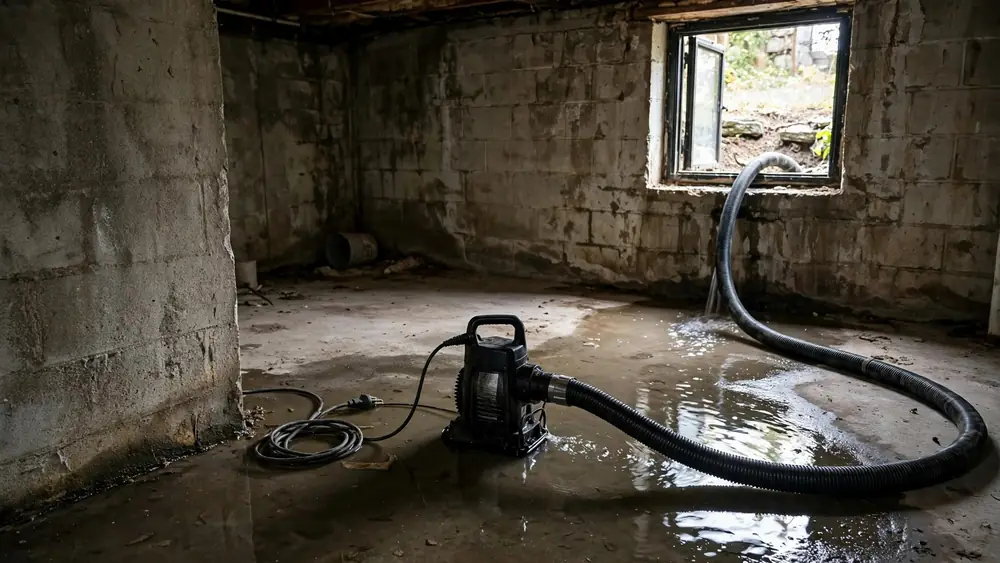
Restorers use different tools depending on how deep the water is and what it is sitting in. Submersible pumps handle the deepest water: they sit in a basement or crawl space and push water out through a hose until only a thin layer remains. Pumps cannot pick up the last half inch or so, which is where vacuums take over.
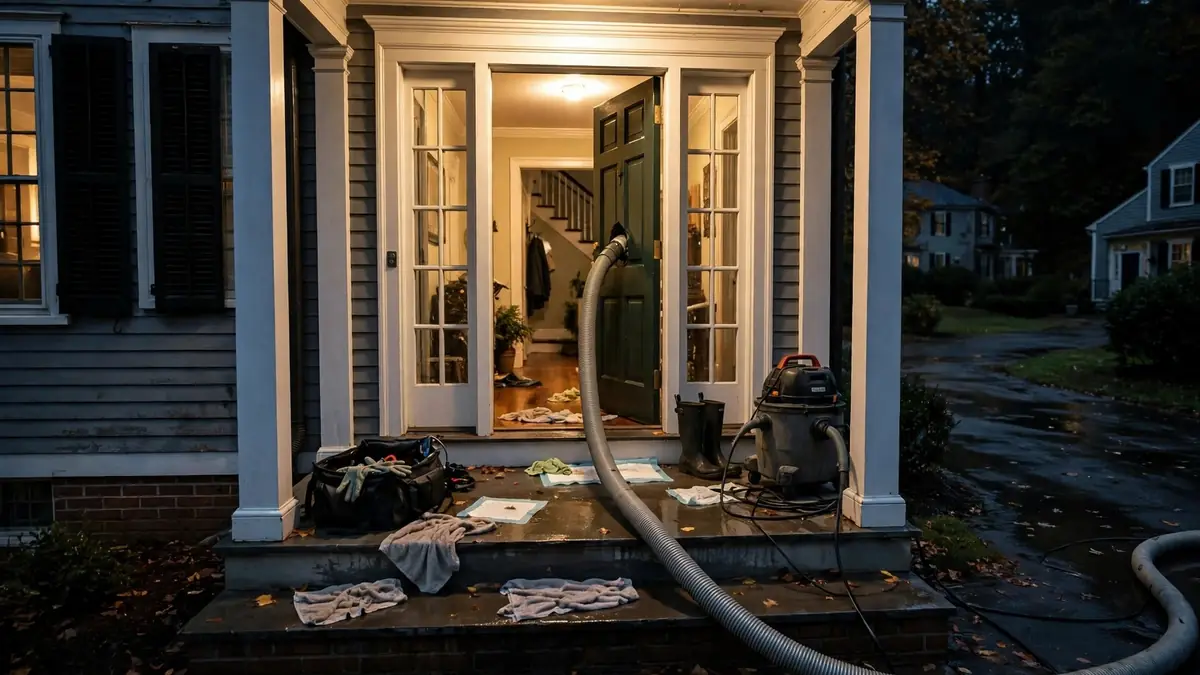
Truck-mounted extractors are large vacuum units mounted in a van with hoses run into the house. They have far more suction than portable units and can pull water out of carpet and pad efficiently. In dense Connecticut neighborhoods, such as Bridgeport's two- and three-family streets or New Haven's narrow lots, the van may have to park some distance away and run long hoses, which the contractor can explain.
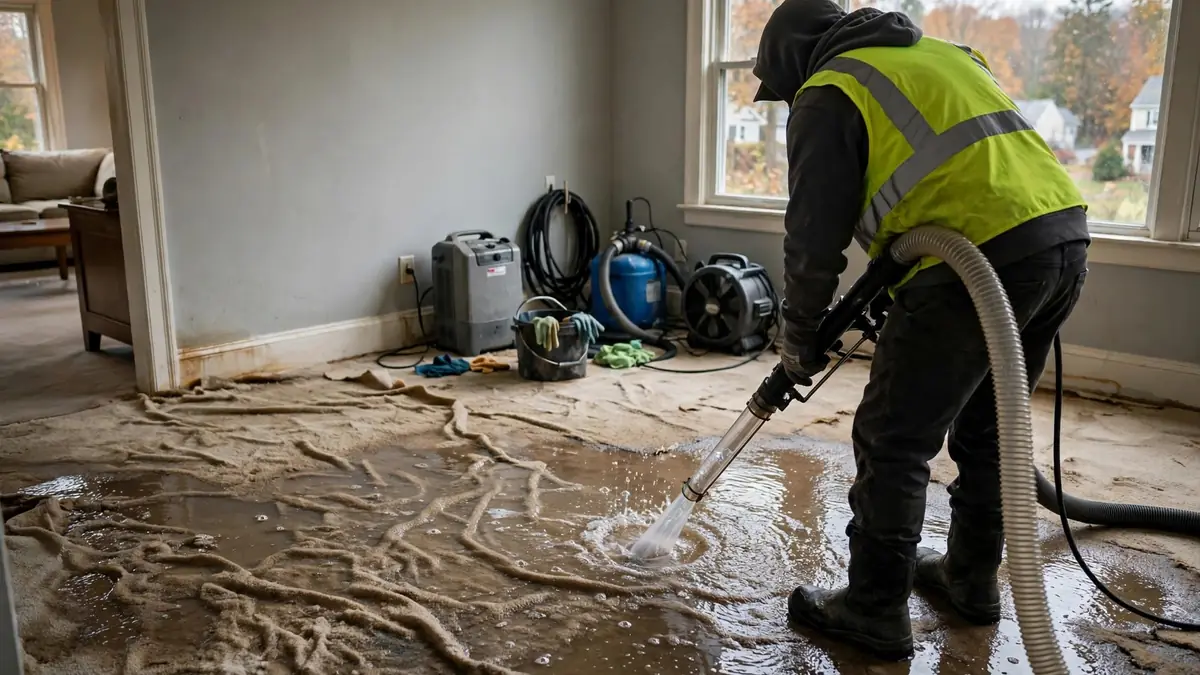
Portable extractors and commercial wet vacuums are used in apartments, upper floors and places hoses cannot reach. Weighted extraction tools, sometimes called stand-on or ride-on wands, press down on carpet while vacuuming so the pad gives up its water. Floor drying mats sealed to hardwood with a vacuum pull water out of the gaps between boards and from the subfloor below.
Before and after extraction, a technician maps moisture with meters and often a thermal imaging camera. The camera does not see water directly; it shows temperature differences that suggest wet areas, which are then confirmed with a meter. That map shows how far the water traveled and guides the drying setup.
The job
How a water extraction visit usually goes
Each house is different, but most jobs follow this order.
- 1
Stop the source
The first question is always where the water is coming from. A burst supply line is shut off at the main valve, a failed sump pump is replaced or bypassed, and an outside flood waits for water levels to drop.
- 2
Make it safe
Power to wet areas is checked and shut off if needed, trip hazards are flagged and the water is categorized as clean, gray or black, which decides the protective gear and what can be saved.
- 3
Document the damage
Photos, video and moisture readings are taken before anything is moved. Your insurer will want to see the water as it was.
- 4
Move contents
Furniture is lifted onto blocks or moved to a dry room, and anything that should not get wetter, such as books, rugs and electronics, is moved first.
- 5
Pump and vacuum
Pumps remove deep water, then extractors work across carpet, pad, hard floors and concrete, usually in several passes from different directions.
- 6
Decide on carpet and pad
Clean-water carpet can sometimes be floated and dried in place. Pad is usually removed. Carpet soaked by sewage or floodwater is normally discarded.
- 7
Map remaining moisture
Readings in walls, floors and framing show where water is still hiding, and that map sets up the structural drying stage.
- 8
Hand off to drying
Air movers and dehumidifiers go in, sized to the space. Extraction alone never finishes the job.
Water categories
How the type of water changes extraction
Water is classified by how contaminated it is, which drives safety and what can be kept.
| Category | Common sources | What extraction involves | What can usually be saved |
|---|---|---|---|
| Category 1 (clean) | Burst supply line, overflowing sink, ice maker line | Fast extraction with standard gear; drying can start right away | Carpet, pad in some cases, most furniture and hard floors if handled quickly |
| Category 2 (gray) | Washing machine or dishwasher discharge, toilet overflow without feces | Protective gloves and cleaning or sanitizing after extraction | Hard surfaces and some furniture; pad is usually discarded |
| Category 3 (black) | Sewage, river or coastal floodwater, long-standing water | Full protective gear; porous materials removed after extraction | Very little porous material; hard surfaces after cleaning and disinfection |
| Clean water that sat | A clean leak left for days | Treated as a higher category because bacteria grow in standing water | Depends on time and smell; often treated like gray water |
Carpet
Carpet and pad after extraction
Carpet itself is surprisingly resilient. The face fibers and backing can often survive a clean-water soaking if the water is removed quickly and the carpet is dried flat. Pad is a different story. It is a sponge by design, it holds a large share of the water, and it rarely dries well in place, so many restorers pull and replace it as a matter of routine.
There are two common approaches. In-place drying leaves the carpet attached and uses extraction plus air movers blowing across and sometimes under the carpet. Floating means detaching the carpet from the tack strip, pulling the wet pad and drying carpet and subfloor separately. Which one fits depends on how long the water sat, the water category and the type of carpet.
With gray water, carpet can sometimes be cleaned and kept, though pad is normally discarded. With black water, which includes sewage and most outside floodwater, carpet and pad are usually removed and thrown away because they cannot be reliably cleaned [4]. Area rugs, especially wool or handmade ones, are usually sent out for specialist cleaning rather than dried on site.
Hard floors
Getting water out of hardwood, tile and laminate
Water on a hard floor looks easy to clean up, but the problem is what goes under it. In a solid hardwood floor, water slips into the joints between boards and soaks into the subfloor. Boards then absorb it from below and swell, which pushes their edges up into the familiar cupped shape. Engineered and laminate floors are even less forgiving; many laminate products swell at the seams and do not recover.
For hardwood, early extraction is the best chance. Specialized drying mats are laid over the floor and connected to a vacuum, which draws water up through the joints. Combined with dehumidification, this can let a lot of solid hardwood floors flatten without being replaced. Our hardwood floor drying page goes into detail.
Tile and stone do not absorb much water themselves, but water can sit under them in the setting bed or move into the walls behind them. Vinyl plank floors trap water underneath. In each case, the contractor checks below the surface with moisture meters rather than trusting how dry the top looks.
Contaminated water
When the water came from outside or a drain
Water that came from a flooded street, a rising river, the Sound during a storm, or a backed-up sewer is never treated as clean. It can carry sewage, bacteria, fuel and chemicals. The U.S. EPA advises treating flooded items as contaminated and wearing protective gear, including gloves and boots, during cleanup [4].
In those cases, extraction is done with protective equipment, porous materials that were soaked are generally removed, and surfaces are cleaned and disinfected before drying. If a basement flooded from outside, our flooded basement cleanup page explains the full process, and sewage backup cleanup covers drain backups.
Why it fails
Why some extraction jobs still end in mold
When water damage goes badly, the cause is rarely the extraction equipment. It is usually one of four things. The first is delay: water that sits for days moves deep into materials and starts to grow bacteria, and the job becomes demolition instead of drying. The second is incomplete mapping: water that ran under a kitchen cabinet base or into a wall cavity is missed, dries slowly and grows mold behind a clean-looking surface.
The third is stopping too early. Carpet that feels dry on top can still have wet backing, and drywall can read dry at eye level while the bottom few inches stay wet. Restorers use meter readings, not touch, to decide when a material is dry. The fourth is mixing up water categories: drying sewage-contaminated material in place without cleaning it spreads the problem.
A good contractor explains what they are reading, where the water went, and why each material is being kept or removed. Asking to see the moisture readings is a reasonable request.
DIY vs pro
What you can safely do before help arrives
If it is safe to move around, these steps limit the damage.
- Shut off the waterFind the main shutoff, often in the basement near where the water line enters, or at the meter. Closing it stops a broken pipe from adding more water.
- Keep away from electricityDo not walk through water that may be in contact with outlets, extension cords or appliances. If the panel is in a wet basement, leave it to a professional or the utility.
- Take photos firstRecord the water, the source and damaged items before cleaning. It helps the insurance claim.
- Lift and move belongingsGet furniture off wet carpet and move books, papers, photographs and electronics to a dry room.
- Use a wet vacuum on small areasFor a small clean-water spill, a shop vacuum on a hard floor is fine. Avoid household vacuums, which are not made for water.
- Do not run the HVAC if ducts got wetForced air can spread moisture and contamination; ask the contractor first.
- Leave contaminated water aloneIf the water came from outside or a drain, wait for someone with protective gear.
Connecticut specifics
Extraction in Connecticut houses
Connecticut's housing changes the job. Much of the state's older stock in Bridgeport, New Haven, Waterbury and Norwalk was built before modern waterproofing, with fieldstone or block foundations that let groundwater seep in during heavy rain and snowmelt. Many homes have finished basements added decades later, often with carpet laid straight onto concrete, which turns a few inches of water into a full extraction and demolition job.
Multi-family buildings are common, including the two- and three-family houses known in New England as triple-deckers [5]. A leak on the third floor can reach the units below through ceilings and wall cavities, so extraction may need to happen in more than one apartment at once, with the owner and tenants involved.
Along the shoreline from Greenwich to Stonington, coastal storms can push saltwater into low-lying homes. Hurricane Sandy in October 2012 brought evacuations to towns across the state [6]. Saltwater adds corrosion and residue to the usual concerns, and extraction is followed by thorough rinsing and cleaning.
Winter adds its own twist. A pipe that froze and burst during a January cold snap may flood a house while the owners are away, and the water may have been running for a day or more. Our burst pipe water damage page covers what that looks like.
The visit
What to expect when the restorer arrives
The contractor you are connected with should start by asking questions: where the water came from, when it started, whether it has stopped and which rooms are affected. They will usually walk the house with a moisture meter before unloading equipment, so they can see the full extent before planning extraction.
Expect them to explain the water category, what they intend to remove and what they hope to dry in place. They should photograph and record readings for your insurer. They will move furniture, set up pumps or extraction hoses and work room by room. On a large job, a second crew member may begin moving contents while the first extracts.
When extraction is done, drying equipment usually goes in the same day. Air movers are noisy and dehumidifiers add heat, so you may want to stay elsewhere while they run. The contractor should tell you how often they will return to check readings and move equipment.
Safety
Safety around standing water
Electricity is the first concern. Water and live circuits are a dangerous mix, and the main panel in many Connecticut homes is in the basement, which is exactly where water collects. If you cannot reach the panel without stepping into water, do not try. Leave it to the restorer, an electrician or your utility.
Gas appliances are the second concern. A furnace, boiler or water heater that has been underwater should not be restarted until it has been checked by a qualified technician. If you smell gas, leave the house and call your gas utility and 911 from outside.
Contamination is the third. Floodwater and sewage can carry harmful bacteria, so gloves, boots and eye protection are needed, and children and pets should be kept away [4]. Finally, wet floors are slippery, wet ceilings can collapse, and soaked carpet and furniture are very heavy. Let the crew move them.
Prevention
Reducing the chance of a repeat
Most indoor water damage comes from a short list of sources: washing machine hoses, water heater tanks, toilet and sink supply lines, ice maker lines, failed sump pumps, and pipes that freeze. Replacing rubber washing machine hoses with braided ones, checking supply lines under sinks every year and knowing where your main shutoff is all reduce the risk.
In basements, a working sump pump with a battery backup and a high-water alarm can stop a small groundwater problem from becoming a flood. Keeping gutters clean and downspouts extended away from the foundation reduces the water that reaches basement walls in the first place.
For winter, Ready.gov recommends insulating pipes in unheated areas and letting faucets drip during extreme cold to help prevent freezing [7]. Leaving the heat on at a steady setting when you travel is one of the simplest protections a Connecticut household has.
Repair or replace
Dry it in place, or tear it out?
Extraction leads straight to this decision for every material in the wet area. The guiding questions are how contaminated the water was, how long the material has been wet and whether it can physically recover. Clean-water drywall that was wet for less than a day and is not sagging can often be dried. Drywall soaked with floodwater, or wet long enough to grow mold, is cut out.
Insulation behind wet drywall generally does not dry well and is often removed. Solid wood framing and subfloor are usually dried in place. Cabinet bases made of particleboard swell and may need replacement, while solid wood cabinets often survive. Our guide to wet drywall explains the signs in detail.
The contractor should be able to explain each decision in terms of the material and the readings. You can ask why something is being removed and what would happen if it were left.
Related problems
What standing water often points to
Standing water is frequently the visible part of a larger problem. A flooded basement may mean the sump pump failed, which is covered on our sump pump failure cleanup page. Water coming up through a floor drain usually points to a sewer issue. Water spreading from a ceiling after a cold snap usually means a burst pipe in an exterior wall or attic.
After extraction, the remaining moisture becomes the focus. Structural drying handles the walls, framing and subfloor, and mold prevention after water damage explains how to keep growth from starting. If you are still trying to work out what happened, our guide to what to do after water damage puts the first steps in order.
Insurance
Extraction and your insurance claim
Most homeowners policies treat sudden, accidental water damage, such as a burst pipe, differently from gradual leaks or outside flooding. Flood damage from rising water is generally excluded from standard homeowners policies and covered instead through separate flood insurance, such as the National Flood Insurance Program [8]. The details depend on your policy.
Either way, insurers expect you to take reasonable steps to prevent further damage, and extraction is usually the first of those steps. Keep a record of when the water started, when you noticed it and when extraction began. The Connecticut Insurance Department offers consumer help if you have questions about a claim [9]. Our guide on working with your insurance adjuster covers the process.
FAQ
Water extraction questions from Connecticut homeowners
How soon does the water need to come out?
As soon as it is safe. The EPA advises drying wet materials within 24 to 48 hours to help prevent mold, and extraction is the step that makes that possible. The sooner the liquid water is out, the more can be saved.
Can I use a shop vacuum instead?
For a small clean-water spill on a hard floor, yes. For water in carpet, across several rooms or in a basement, a shop vacuum removes too little too slowly, and the pad and subfloor stay wet.
Is my wet carpet a loss?
Not always. Clean-water carpet extracted quickly can often be dried. The pad is usually replaced. Carpet soaked by sewage or outside floodwater is normally discarded.
How long does extraction take?
Often a few hours for a typical room or basement, longer for a whole floor or deep water. Drying afterward usually takes several days, and the contractor will check readings along the way.
Could the basement water hurt someone?
It can be. Water near electrical panels, outlets or appliances is a shock risk, and groundwater, floodwater or sewage can carry bacteria. Stay out of it until power is confirmed off and the source is known.
Do I need to move out during extraction?
Usually not for the extraction itself. Drying equipment is loud and runs around the clock, though, and if the water was contaminated, staying elsewhere may be wiser.
Who does the extraction work?
A local restoration contractor who runs extraction equipment in Connecticut homes and works independently of this site. Your call goes straight to them, and anything you agree is between the two of you.
Does water extraction stop mold?
It is the first and most important step, but drying the structure afterward matters just as much. Mold prevention depends on getting every material back to normal moisture levels.
What should I photograph before extraction?
The standing water, the source if you can see it, each affected room from several angles, damaged belongings and any water lines on walls. Photos taken before cleanup help document the claim.
Sources and citations
- [1]IICRC — ANSI/IICRC S500 Standard for Professional Water Damage Restoration
- [2]U.S. EPA — A brief guide to mold, moisture and your home
- [3]Wikipedia — Water damage
- [4]U.S. EPA — Flooded homes: cleanup and safety
- [5]Wikipedia — Triple-decker
- [6]Wikipedia — Hurricane Sandy
- [7]Ready.gov — Winter weather
- [8]Wikipedia — National Flood Insurance Program
- [9]Connecticut Insurance Department