
Key facts: Mold Prevention
- Controlling dampness is what controls mold indoors, because spores cannot practically be removed from household air [1].
- Mold prevention is mostly a race against time: materials dried inside about 48 hours rarely grow it [1].
- Indoor humidity under 60 percent, and ideally in the 30 to 50 percent band, discourages mold [1].
- Professional mold remediation follows the ANSI/IICRC S520 standard [2].
How it works
Why water damage leads to mold
Molds are fungi that reproduce by releasing tiny spores into the air [3]. Those spores are found indoors and out, in every season, and there is no practical way to keep them out of a house. The EPA's advice comes down to one idea: keep things dry and mold has nothing to work with [1].
Spores land on surfaces all the time and do nothing until they get water. Once a material stays wet, they germinate and begin feeding on whatever organic material they find: the paper face of drywall, wood, cardboard, dust, carpet backing. That is why water damage is so closely tied to mold. A leak turns ordinary building materials into food with a water supply.
Mold growth is a matter of time and conditions. The EPA advises drying water-damaged materials within 24 to 48 hours to help prevent growth [1]. Warm, humid conditions favor faster growth, which is why a flooded Connecticut basement in August is more urgent than a dry leak in a heated room in January. But no season is safe if materials stay wet.
Signs
Early signs that mold is getting a start
Act on these before they become visible colonies.
Musty, earthy smell
Often the first sign. It means microbes are active somewhere, even if nothing is visible.
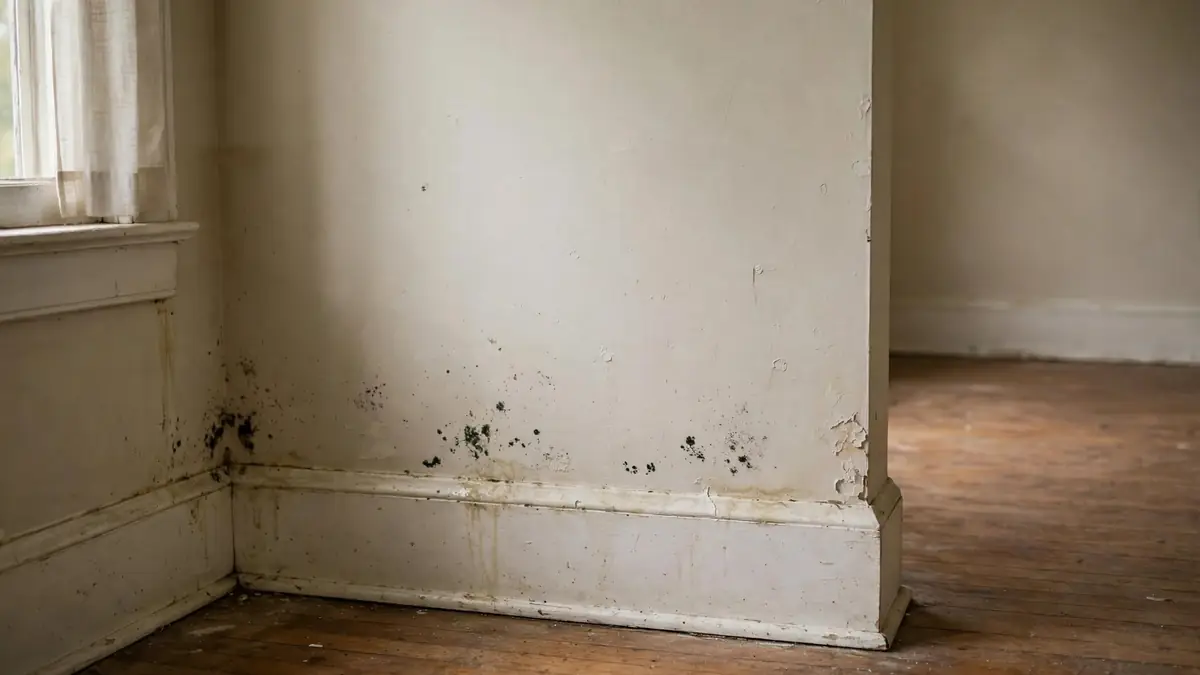
Small dark or white spots
Specks on drywall, baseboards, the backs of furniture or stored items.
Stains that keep spreading
Water stains that grow or darken over days suggest moisture is still present.
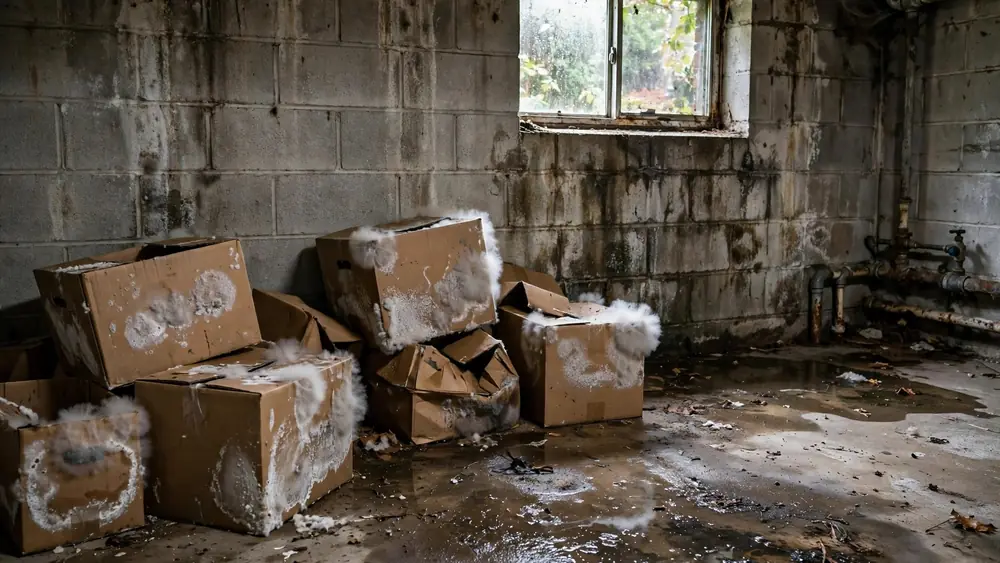
Fuzzy growth on cardboard
Boxes on a damp basement floor are among the first places mold appears.
Warped, soft or peeling materials
Soft drywall or peeling paint in a damp area means it stayed wet.
Allergy-like symptoms indoors
Some people notice sneezing or irritation that improves when they leave the house [1].
The window
The 24 to 48 hour window
The clock starts when the water arrives. In the first day, the job is mostly extraction and getting air moving. By the second day, wet porous materials that have not started drying are at real risk. After 48 hours, the EPA's guidance shifts: materials that were wet that long and cannot be cleaned and dried may need to be discarded [4].
This does not mean mold appears at exactly 48 hours. Growth depends on temperature, the material and the water's contamination. It means that drying within that window is the best protection, and that waiting longer changes the decisions. If water sat for days before anyone found it, assume growth may have started and plan accordingly.
The job
How mold prevention fits into water damage restoration
Prevention is really just thorough, fast drying.
- 1
Stop the water
No drying plan works while water is still coming in.
- 2
Extract quickly
Remove liquid water so drying can begin as early as possible.
- 3
Remove what will not dry in time
Pad, saturated insulation, swollen particleboard and drywall soaked by contaminated water.
- 4
Clean surfaces
Wipe or wash hard surfaces that were wet, especially with gray or black water.
- 5
Dry aggressively
Air movers and dehumidifiers run continuously, sized to the water load.
- 6
Monitor
Daily moisture readings confirm materials are drying on schedule.
- 7
Check hidden areas
Wall cavities, under cabinets and below flooring are checked before closing up.
- 8
Control humidity
Keep indoor humidity below 60 percent after the job, especially in basements.
Materials
How long common materials can stay wet before mold is likely
General guidance; conditions in your home decide.
| Material | Mold risk if wet | Usual action after water damage |
|---|---|---|
| Cardboard and paper | Very high | Discard if soaked; freeze important documents |
| Carpet pad | Very high | Usually removed and replaced |
| Drywall paper facing | High | Dry within 48 hours or cut out |
| Fiberglass insulation | High (traps water) | Usually removed if soaked |
| Wood framing and subfloor | Moderate | Dry in place with monitoring |
| Concrete and block | Low (but holds water) | Clean and dry; control humidity |
| Tile, metal, glass | Very low | Clean and dry |
Humidity
Why humidity matters after the water is gone
Even after the visible water is gone, humid indoor air can keep materials damp enough for mold. The EPA suggests holding indoor humidity under 60 percent, with 30 to 50 percent as the target range [1]. Relative humidity measures how close the air is to holding all the moisture it can at its temperature [5].
A small digital hygrometer expenses little and tells you where your home stands. In Connecticut summers, basements often sit well above 60 percent without a dehumidifier. Running one, emptying it or draining it to a pump, and keeping doors and windows closed on humid days makes a large difference.
Already growing
When mold is already visible
Prevention turns into remediation once mold is growing. The EPA suggests that small areas, roughly under ten square feet, can often be cleaned by a homeowner with detergent and water while wearing gloves, goggles and an N-95 respirator, as long as the moisture problem is fixed [4]. Larger areas, contamination inside walls or HVAC systems, and growth after sewage or floodwater are better handled by professionals.
Professional mold remediation follows the ANSI/IICRC S520 standard, which covers containment, removal and verification [2]. The basic principle is the same as in prevention: fix the water, remove what cannot be cleaned and dry everything.
Chemicals
Do sprays and bleach prevent mold?
Many people reach for bleach after a leak. The EPA does not recommend using biocides like chlorine bleach as a routine part of mold cleanup, because dead mold can still cause allergic reactions and the real goal is removing growth and moisture [4]. Bleach can also damage materials and is dangerous when mixed with ammonia or other cleaners.
Some restorers apply antimicrobial products to framing after cleaning, especially after contaminated water. These can be part of a good job, but they never replace removal of wet porous materials and thorough drying. Be cautious of anyone who proposes spraying instead of drying.
Why it fails
Why mold appears after a water damage job
Mold after a restoration job usually traces back to one of three mistakes. Drying stopped before hidden materials were dry. A wet material, such as insulation behind drywall or pad under carpet, was left in place. Or the source of moisture was never fixed, such as a slow plumbing leak or groundwater seeping through the foundation.
Closing a wall over damp framing is a classic cause. So is laying new flooring over a subfloor that was never confirmed dry. The protection is simple: ask for final moisture readings before rebuilding, and do not rush the rebuild.
DIY vs pro
What homeowners can do to prevent mold
Most of mold prevention is common sense done quickly.
- Move wet items out fastGet soaked boxes, rugs and fabrics out of the wet area and dry or discard them.
- Run a dehumidifierEven a household unit helps in a small, closed area.
- Keep air movingFans help, but only with clean water and never blowing contaminated dust around.
- Do not seal up wet wallsWait for readings before painting, patching or installing flooring.
- Fix the sourceRepair leaks, clear gutters and check the sump pump.
- Call for help with large areasWater across rooms, wet walls or any sewage needs professional drying.
Connecticut specifics
Mold risk in Connecticut homes
Connecticut's humid summers and many below-grade spaces make basements the most common place for mold. Older stone and block foundations let moisture through, and finished basements trap it behind drywall and carpet. Coastal homes along Long Island Sound face extra humidity and, after storms, saltwater flooding.
Winter brings a different pattern: ice dams on roofs push meltwater into attics and exterior walls, and the wet insulation and roof sheathing can grow mold out of sight [6]. Attics in older homes with little insulation or ventilation are especially prone. After any winter roof leak, check the attic in spring for staining or musty smells.
The visit
What a restorer checks for mold risk
On a water damage visit, the contractor should look at how long materials have been wet, what the water category is, and whether there is any visible growth or odor already. They will map moisture, decide what needs to come out and set up drying. They should note any growth they find and explain whether it calls for remediation.
If you are concerned about mold that may already be present, ask about it directly on the call. Some situations call for a separate assessment before work begins.
Safety
Mold and health
Mold can cause allergic reactions, asthma attacks and irritation of the eyes, skin, nose and throat in sensitive people [1]. People with asthma, allergies, weakened immune systems or chronic lung disease should avoid areas with visible growth and leave cleanup to others.
Disturbing moldy materials releases spores, so removal is done carefully, often with containment and HEPA filtration. If you clean small areas yourself, wear gloves, goggles and an N-95 respirator, and do not dry-brush mold, which spreads spores [4].
Prevention
Long-term moisture control
After the restoration, keep the house dry. Maintain gutters and downspouts, run a basement dehumidifier in humid months, vent bathrooms and dryers to the outside, and fix leaks promptly. Insulate cold surfaces such as pipes and exterior walls to reduce condensation [1].
Store belongings in plastic bins rather than cardboard in basements, keep them off the floor and leave a small gap between stored items and exterior walls so air can circulate.
Repair or replace
Rebuilding to resist mold
When rebuilding after water damage, especially in basements, choose materials that tolerate moisture: closed-cell foam or rigid foam insulation, moisture-resistant drywall or panels, and tile or vinyl flooring instead of carpet. Leave a small gap between drywall and the concrete floor so wicking cannot start again.
These choices do not make mold impossible, but they give you more time to react if water returns.
Hidden areas
Places mold hides after a leak
Some places rarely get checked. Under kitchen and bathroom cabinets, where water runs behind the toe kick. Inside wall cavities behind tile. Under vinyl and laminate flooring that trapped water. Behind baseboards. Above ceilings where insulation sits on drywall. In the HVAC system if ducts or an air handler got wet.
A thorough restorer checks each of these with moisture meters and, where needed, opens small inspection holes. If you notice a musty smell weeks after the job, one of these areas is the usual suspect.
HVAC
Heating and cooling systems after water damage
Forced-air systems can spread moisture and spores through the whole house. If ductwork in a basement or crawl space was submerged, or the furnace or air handler sat in water, the EPA advises not running the system until it has been checked and cleaned as needed [4]. Wet duct insulation and filters should be replaced.
Running the system with a fresh filter after drying is complete can help circulate dry air, but ask the contractor before turning it on.
By source
Mold risk by type of water damage
The source of the water changes how urgent prevention is.
| Water source | Water category | Mold prevention focus |
|---|---|---|
| Burst supply pipe found quickly | Clean | Fast extraction and drying; most materials kept |
| Slow leak behind a wall | Clean but long-standing | Open the wall, check for growth, dry framing |
| Roof leak or ice dam | Clean to gray | Remove wet attic insulation, dry sheathing and ceilings |
| Groundwater in the basement | Gray | Remove pad and lower drywall, dry the slab, humidity control |
| Outside floodwater | Black | Remove porous materials, clean and disinfect, then dry |
| Sewage backup | Black | Full removal of porous materials, cleaning, disinfection and drying |
Basements
Keeping a Connecticut basement mold-free year round
Basements deserve their own plan because they are cool, partly underground and surrounded by damp soil. In summer, warm humid air entering a cool basement reaches its dew point on cold walls, pipes and floors, and condensation forms even when no water leaks in. That is why so many basements smell musty in July and August without any obvious leak.
The steps are straightforward. Run a dehumidifier set to keep humidity around 50 percent, with a hose to a drain or condensate pump so it runs continuously. Keep basement windows closed on humid days. Insulate cold water pipes so they stop sweating. Move stored items off the floor and away from exterior walls. Check the sump pump each season and keep gutters and downspouts working.
If the basement is finished, look for the early signs listed above every few months, especially at the bottom of walls and under any carpet near exterior walls. A small problem found in May is far easier to deal with than one discovered when the room is cleared out in the fall.
Records
Documenting drying to show mold was prevented
A written drying record is useful long after the equipment leaves. It shows when the water arrived, when drying started, the daily moisture readings and the final dry readings for each material. If you sell the house, a buyer's inspector may ask about past water damage, and the record shows it was handled properly.
It also helps with insurance. If a musty smell appears months later, the record makes it easier to tell whether it is related to the original event or a new moisture problem. Ask your contractor for a copy of the final report and keep it with your home documents.
Renters
Mold prevention for renters and condo owners
Renters and condo owners often share responsibility for water and mold. The building owner or association usually handles the structure, plumbing and common areas, while the occupant handles belongings and day-to-day ventilation. Report leaks to the landlord or association in writing right away, take photos and keep copies.
Inside your unit, run bathroom fans, avoid drying laundry indoors without ventilation and use a dehumidifier if humidity stays high. If you notice a musty smell or spots after a leak from another unit, tell the owner or manager promptly so drying can be checked before growth spreads.
Contents
Keeping mold off belongings after a leak
Furniture, clothing, books and stored items can grow mold just as walls do. Move anything wet out of the affected room as soon as possible. Hard furniture can be wiped and dried; upholstered pieces that stayed wet for more than a day or two often develop odor and growth deep in the padding. Clothing and linens should be washed and dried completely, not left in a damp pile.
Books and papers are difficult. Wet pages stick together and grow mold quickly. Important documents and photographs can be frozen in sealed bags to stop growth until they can be dried properly. Anything that already smells strongly musty or shows growth on soft surfaces is usually not worth keeping.
Leather goods, shoes and bags stored in damp basements are frequent victims. Bring them upstairs to a dry room, wipe them clean and let them dry slowly away from direct heat. Check them again after a week; a faint white bloom means they need another cleaning and a drier place to live.
Insurance
Mold and insurance
Many homeowners policies limit or exclude mold coverage, especially mold caused by long-term leaks or humidity. Mold resulting from a sudden, covered water event may be covered, often with limits [7]. Acting quickly after water damage protects both your home and your claim, because insurers generally expect you to prevent further damage. The Connecticut Insurance Department can help with coverage questions [8].
FAQ
Mold prevention questions from Connecticut homeowners
How soon after water damage does mold grow?
Growth can begin within 24 to 48 hours on wet materials, faster in warm, humid conditions. Drying within that window is the best prevention.
Should I spray bleach after a leak?
Not as a routine step. The EPA does not recommend biocides like bleach as a substitute for removing growth and drying. Never mix bleach with ammonia.
What humidity should my basement be?
Under 60 percent, and closer to 30 to 50 percent if you can manage it. A dehumidifier and a simple hygrometer help you keep it there.
Can I clean small mold spots myself?
Areas under about ten square feet can often be cleaned with detergent and water while wearing gloves, goggles and an N-95 respirator, once the moisture is fixed.
Do I need mold testing?
Usually not to start. If mold is visible, the priority is removing it and fixing the moisture. Testing can help in specific cases, such as hidden growth or health concerns.
Why does my house smell musty after the job?
Something is still damp or a hidden area was missed. Ask the contractor to recheck moisture readings in walls, under cabinets and under flooring.
Does insurance cover mold?
Policies vary. Mold from a sudden covered water event is sometimes covered with limits; mold from long-term leaks often is not.
Who checks the house for mold risk?
An independent water damage contractor serving your ZIP code. This referral line connects the call, and the contractor explains on that call how they would dry the house and limit mold risk.
Sources and citations
- [1]U.S. EPA — A brief guide to mold, moisture and your home
- [2]IICRC — ANSI/IICRC S520 Standard for Professional Mold Remediation
- [3]Wikipedia — Mold
- [4]U.S. EPA — Mold cleanup in your home
- [5]Wikipedia — Relative humidity
- [6]Wikipedia — Ice dam (roof)
- [7]Wikipedia — Homeowner's insurance
- [8]Connecticut Insurance Department