
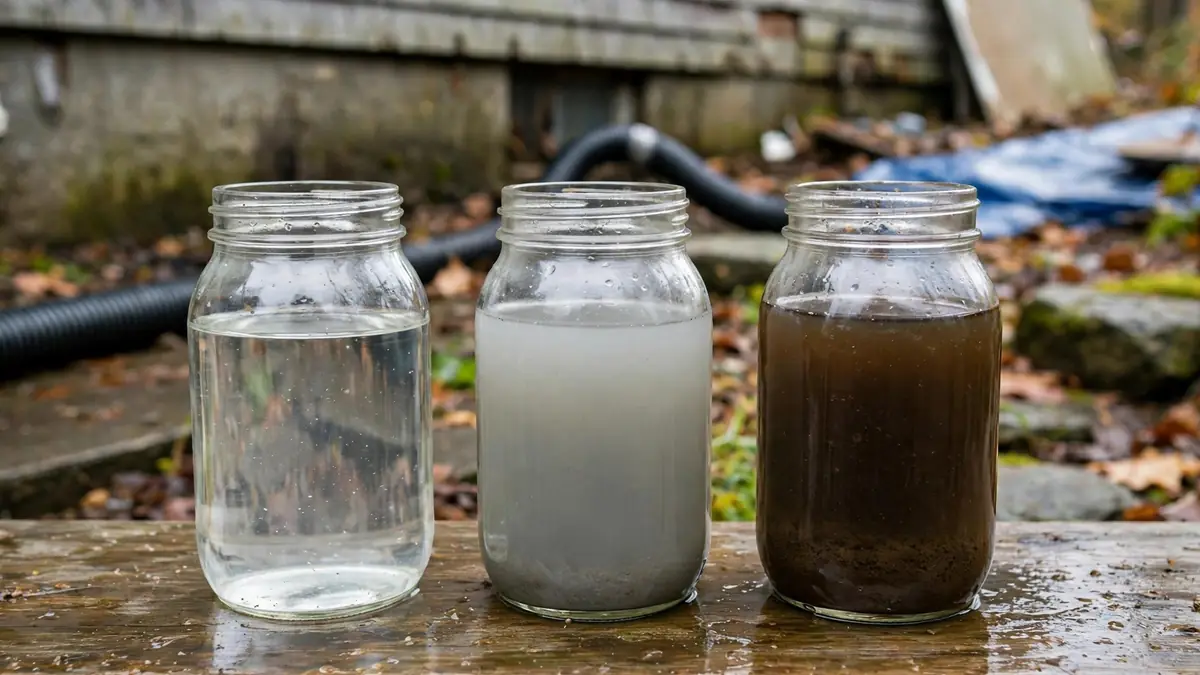
Key facts: Water damage categories
- Water damage is commonly classified as Category 1 (clean), Category 2 (gray) or Category 3 (black) [1].
- The ANSI/IICRC S500 standard is the industry reference for water damage restoration, including contamination categories [2].
- Floodwater and sewage can contain bacteria and chemicals; treat items they touch as contaminated [3].
- A clean-water leak can become more contaminated the longer it sits [1].
The short answer
Three categories, from clean to contaminated
Category 1 is clean water from a source like a burst supply pipe. Category 2, often called gray water, has some contamination, for example from a washing machine or dishwasher drain. Category 3, called black water, is grossly contaminated: sewage, floodwater from rivers or the sea, and water that has sat long enough to grow bacteria [1].
These categories are used in the industry standard for water restoration [2], and they decide how jobs such as sewage backup cleanup are handled. They are about what is in the water, not how much of it there is. A small sewage backup is Category 3; a large burst pipe is still Category 1 if it is caught quickly.
The categories
The three categories side by side
General definitions used by restorers.
| Category | Common sources | Risk | Typical handling |
|---|---|---|---|
| 1 (clean) | Burst supply line, sink overflow, ice maker line, rain through a window | Low at first | Extract and dry; most materials can be kept if fast |
| 2 (gray) | Washing machine or dishwasher discharge, toilet overflow without feces, aquarium | Can cause illness if ingested | Clean, often discard pad; dry |
| 3 (black) | Sewage, river or coastal floodwater, long-standing water | Serious health risk | Protective gear; remove porous materials; clean, disinfect, dry |
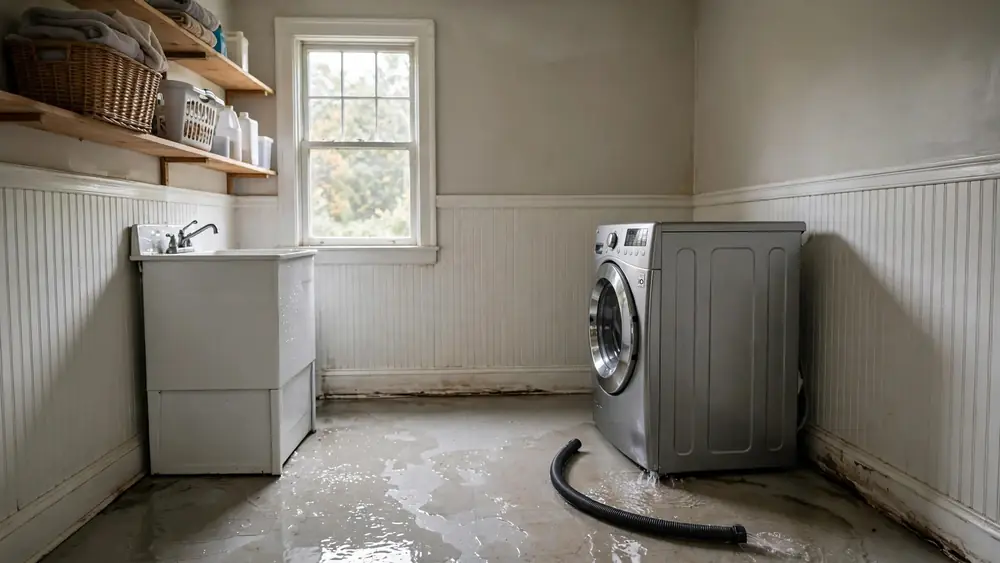
Changing categories
Why clean water does not stay clean
A Category 1 leak can become Category 2 or 3 over time. Water that sits warm for days grows bacteria and picks up whatever it touches: dust, fibers from carpet, soil in a basement, residue from cleaning products. Water that runs through floors and wall cavities picks up more. That is why restorers ask not just where the water came from but when.
Groundwater that seeps through a foundation is usually treated as at least Category 2, because it has passed through soil. Rainwater from a roof leak can start clean but carry debris from the attic. When in doubt, restorers treat water at the higher category.
Examples
Real-world examples
How common Connecticut situations are usually categorized.
Burst pipe found in an hour
Category 1. Fast drying saves most materials.
Burst pipe found after a week away
Often treated as Category 2 or 3 because it sat.
Washing machine overflow
Category 2. Pad usually goes; hard surfaces cleaned.
Basement seepage after rain
Usually Category 2 because it passed through soil.
Floor drain backup
Category 3. Sewage.
River or storm surge flooding
Category 3. Contaminated outside water [3].
What it changes
How the category changes the job
The category drives three things. First, protection: Category 3 work calls for gloves, boots, eye protection, protective suits and respirators, and keeping vulnerable people away [3]. Second, what is kept: porous materials soaked by Category 3 water, such as carpet, pad, drywall, insulation and upholstered furniture, are usually discarded because they cannot be reliably cleaned. Third, the order of work: contaminated areas are cleaned and disinfected before drying begins.
With Category 1 water, the focus is speed. Water extraction and drying start right away, and much more can be kept.
Safety
Staying safe around contaminated water
Avoid skin contact with gray or black water, wash hands with soap and clean water after any contact and keep children and pets out of the area. Do not eat or drink in the affected rooms. Throw away food, medicine and cosmetics that floodwater touched [3].
If you develop symptoms after exposure, such as stomach illness, rash or a wound that becomes red and painful, seek medical advice and mention the exposure.
Classes
Categories and classes are different things
Restorers also talk about classes of water damage, which describe how much water there is and how hard it will be to dry, from a small area with little absorption to deep saturation of dense materials such as hardwood, plaster and concrete. Category is about contamination; class is about the drying job. A Category 1, high-class loss is clean but big; a Category 3, low-class loss is small but dirty.
Belongings
What the category means for your belongings
With Category 1 water caught quickly, most belongings can be dried: furniture lifted off wet carpet, clothing washed, books fanned open in a dry room. With Category 2, hard items are cleaned and washable items laundered, but soft items that soaked up the water, such as rugs, cushions and pet beds, are often discarded.
With Category 3, the rule is strict: porous items that were soaked, including mattresses, upholstered furniture, stuffed toys, carpet, paper and cardboard, usually cannot be made safe [3]. Hard, non-porous items such as metal, glass, hard plastic and sealed wood can usually be washed and disinfected. For irreplaceable photos and documents, ask about specialist cleaning before discarding them; freezing them in sealed bags buys time.
Connecticut examples
Where Connecticut homes see each category
Category 1 is typical of the burst pipes that follow cold snaps, especially in kitchens and bathrooms on exterior walls. Category 2 often comes from basement seepage during spring thaw, washing machine overflows and dishwasher leaks. Category 3 arrives with river flooding in valleys such as the Naugatuck, storm surge along Long Island Sound and sewer backups when heavy rain overwhelms older city systems.
Coastal floods deserve a special mention. Seawater pushed ashore in a storm is treated as Category 3 not because salt is dangerous in itself but because surge water picks up sewage, fuel and debris on its way in. It also leaves salt behind, which has to be rinsed off before drying.
Questions
Questions to ask about your water category
- What category is this and why?The answer should mention the source and the time.
- What will you remove because of it?Porous materials in Category 2 and 3 losses.
- How will you protect the rest of the house?Containment for Category 3.
- Will you disinfect before drying?Required for contaminated water.
FAQ
Water category questions
Is rainwater clean?
Rain itself is clean, but water coming through a roof or window can carry debris and is often treated as Category 1 or 2 depending on its path.
Is a toilet overflow Category 3?
If it contains feces, yes. A clean-bowl overflow is usually Category 2.
Can Category 3 carpet be cleaned?
Generally no. Carpet and pad soaked by sewage or floodwater are usually discarded.
Does the category affect insurance?
Not directly, but the cause does. Sewage and outside flooding are often covered differently from burst pipes.
Who will come if I call?
An independent, licensed local restoration contractor. This site is a call-in referral service; any agreement is between you and them.