
Key facts: What to do after water damage
- Starting the drying in the first day or two is the single best protection against mold [1].
- Floodwater and sewage should be treated as contaminated; wear protective gear [2].
- Never use generators or gas-powered pumps indoors because of carbon monoxide [3].
- Standard homeowners policies generally exclude outside flooding, which flood insurance covers [4].
The short answer
The first five things to do
Stop the water if you can. Make the area safe from electricity. Photograph everything before you move it. Get belongings out of the water. Start drying, or call someone who can, within a day. Those five steps, in that order, prevent most of the damage that follows a leak.
The rest of this guide explains each step, what to avoid and what to expect over the following days. For short spoken-style answers, see our water damage FAQ; for the work itself, see restoration services.
The first hour
The first hour: safety and stopping the source
- 1
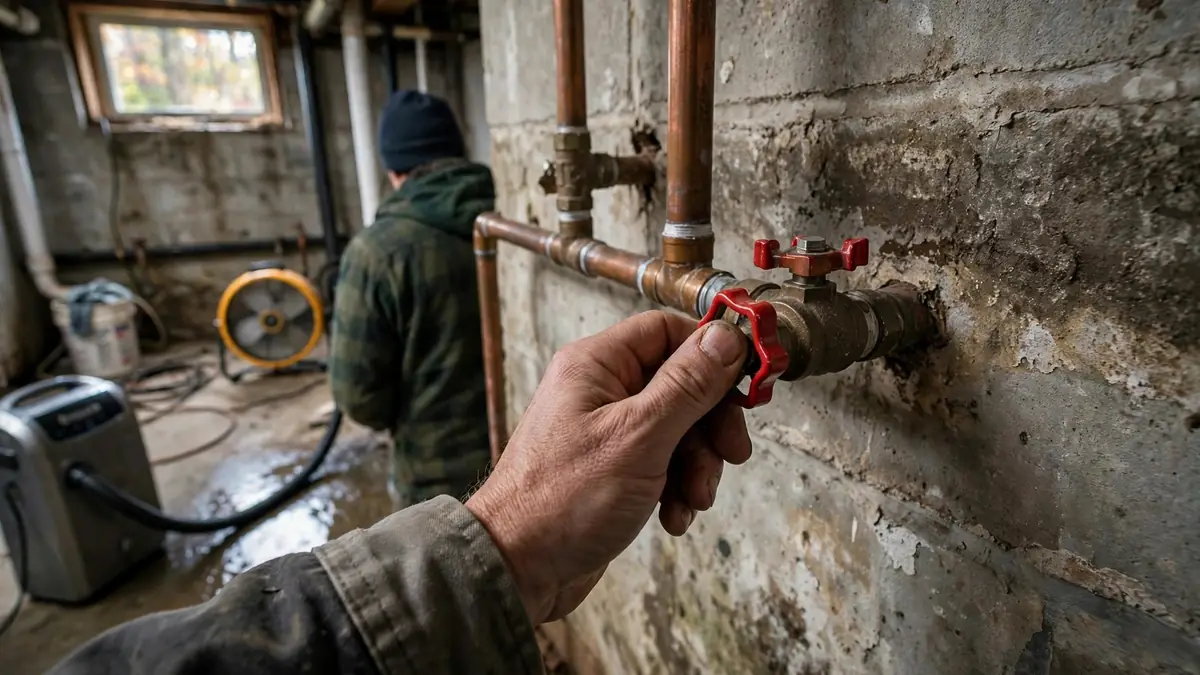
Find and close the main valve
Usually in the basement where the water line enters, or near the meter. On a well, also switch off the well pump breaker.
- 2
Keep away from electricity
Do not step into water that may touch outlets, cords or appliances. Shut off circuits only from a dry spot.
- 3
Watch the ceilings
A ceiling that sags or bulges may be holding water. Keep people and pets out from under it.
- 4
Leave contaminated water alone
Water from a drain, toilet backup or outside flood is contaminated [2].
- 5
Smell gas? Leave
Get everyone out and call your gas utility and 911 from outside.
Document
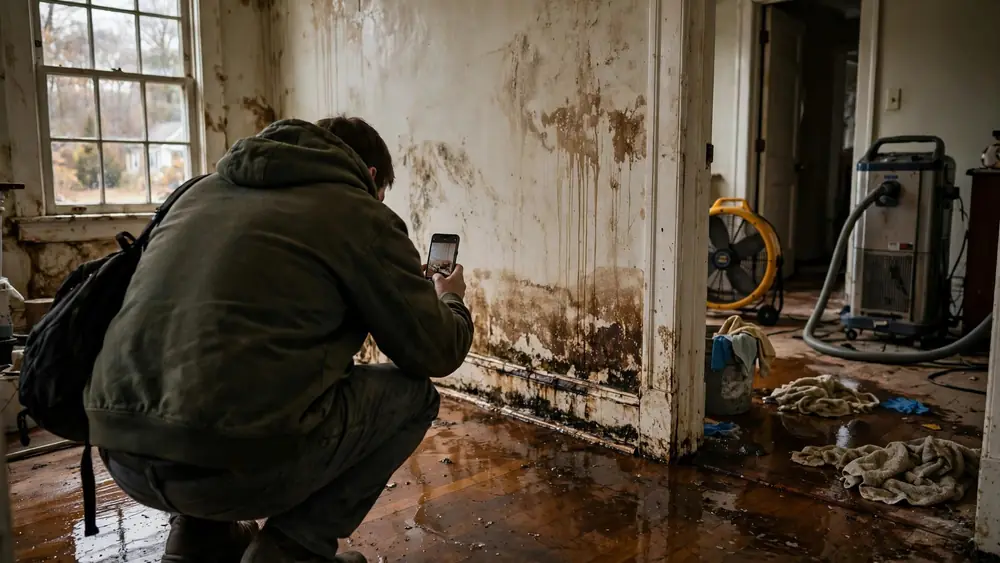
Photograph before you clean
Before moving anything, take photos and video of every affected room from several angles, the source of the water, any water lines on walls and damaged belongings. Include close-ups of model and serial labels on damaged appliances. These images show your insurer what the damage looked like before cleanup changed it.
Write down when you found the water, when it likely started and what you did. Keep receipts for anything you buy, such as fans, tarps or a wet vacuum.
Protect
Protect belongings and the house
Once it is safe to move around.
- Move furnitureLift it off wet carpet or put foil or blocks under the legs.
- Rescue documents and photosMove them to a dry room; freeze important wet papers in bags.
- Pull up area rugsThey hold water against floors.
- Open cabinet doorsSo air can reach under sinks and behind toe kicks.
- Keep heat on in winterIt helps drying and stops more pipes freezing.
- Do not use household vacuums on waterOnly wet vacuums made for it.
The first day
The first day: getting water out and air moving
Liquid water has to come out before anything can dry. A wet vacuum handles small clean-water spills on hard floors. Water in carpet, across several rooms or in a basement needs professional water extraction. Then drying equipment, meaning air movers and dehumidifiers, has to run continuously.
The EPA advises drying wet materials within 24 to 48 hours to help prevent mold [1]. That window is why calling early matters. If you are waiting for a contractor, run a dehumidifier in the closed-off wet area and keep air moving across clean-water surfaces.
What to call
Who to call for what
Different problems need different trades.
| Problem | Who to call |
|---|---|
| Broken pipe or failed fixture | Plumber |
| Water in floors, walls, carpet or basement | Water damage restoration contractor |
| Wet electrical panel or outlets | Electrician or your utility |
| Gas smell | Gas utility and 911, from outside |
| Roof leak or ice dam | Roofer, plus a restorer for interior damage |
| Septic backup | Septic contractor, plus a restorer for cleanup |
| Claim questions | Your insurer or agent; Connecticut Insurance Department for help [5] |
Insurance
Report the claim early
Call your insurer or agent as soon as the immediate danger is handled. Ask what they need, whether they will send an adjuster and whether you should wait before discarding damaged items. Most policies expect you to take reasonable steps to prevent further damage, which includes starting the drying.
Coverage depends on the cause. Sudden pipe bursts are commonly covered, outside flooding usually needs flood insurance [4] and sewer or sump backup often needs an endorsement. Our insurance adjuster guide covers the process.
The first week
The first week: drying, decisions and repairs
Drying usually takes three to five days, sometimes longer. During that time, the contractor takes daily moisture readings and moves equipment as areas dry. Decisions about drywall, flooring and cabinets are made from those readings. See how long drying takes and wet drywall: save or replace.
Repairs, meaning new drywall, paint, flooring and trim, start only after everything is confirmed dry. Rebuilding over damp materials is a common cause of mold weeks later.
Renters
If you rent your home
Tenants should tell the landlord or property manager right away, in writing, with photos, and keep a copy. The landlord is generally responsible for the building and for arranging repairs; your belongings are usually covered, if at all, by renters insurance. In multi-family buildings, warn the units below and above, because water rarely stays in one apartment. If the unit cannot be lived in, ask both the landlord and your renters insurer what help is available for temporary housing.
Away from home
If you find the damage after time away
Coming home to water after a trip is common in Connecticut winters. The steps are the same, but assume the water has been running a while. Close the main valve before anything else, then check every floor and the basement, because water travels. Keep the heat on or restore it, since a cold house slows drying and may have more frozen pipes waiting to thaw. Tell the contractor how long you were away, because longer exposure usually means more material has to come out.
Avoid
Common mistakes to avoid
- Waiting to see if it dries on its ownHidden moisture in walls and floors rarely dries fast enough.
- Using bleach as a fixCleaning and drying matter more than chemicals [6].
- Running gas generators indoorsCarbon monoxide can kill [3].
- Throwing things out before photosYour claim needs evidence.
- Closing walls too soonAsk for dry readings before rebuilding.
FAQ
Questions about the first steps after water damage
How soon should I call a restoration company?
As soon as the source is stopped and the area is safe. Starting drying within 24 to 48 hours gives the best chance to save materials and avoid mold.
Should I turn off the electricity?
Turn off circuits to wet areas only if you can reach the panel from a dry spot. Otherwise leave it to an electrician or the utility.
Can I stay in my home?
Often, if the water is clean, the power is safe and the heat works. With sewage, extensive flooding or no heat, staying elsewhere is safer.
Who will come if I call the number on this site?
Your call is connected to an independent, licensed local restoration contractor. Any agreement is made directly between you and them.