
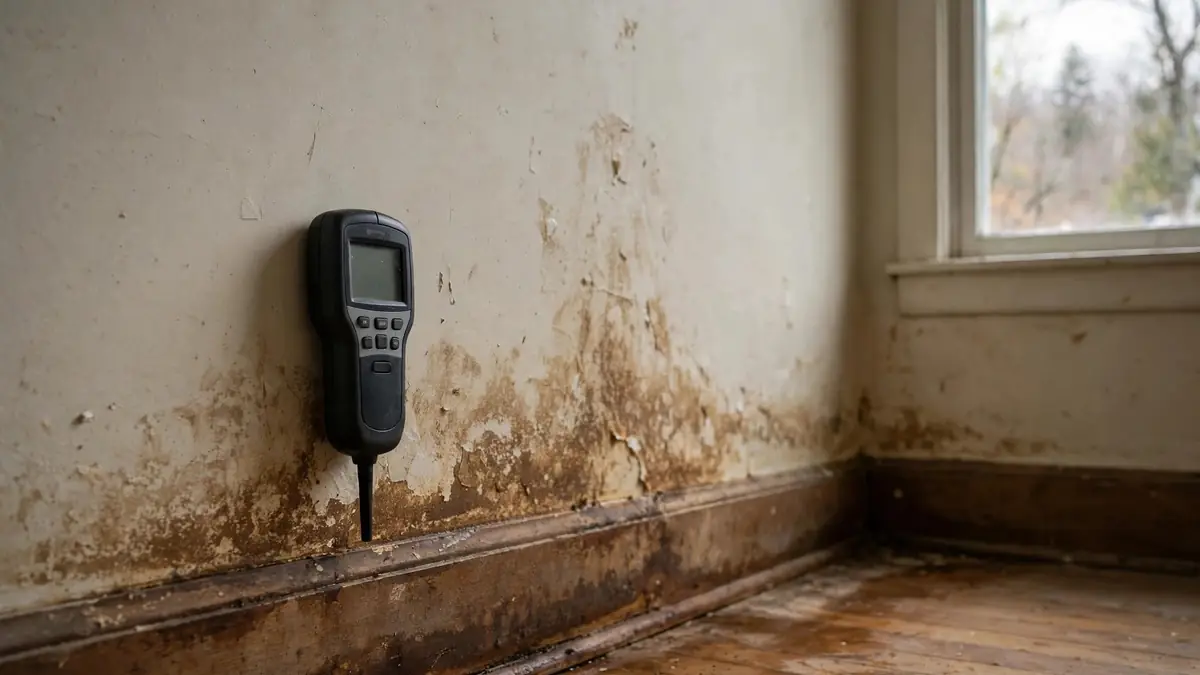
Key facts: Wet drywall: save or replace
- Drywall is a panel of gypsum plaster faced with paper, which wicks water and can support mold if it stays wet [1].
- Drywall left wet past roughly two days is far more likely to grow mold on its paper facing [2].
- Porous materials soaked by floodwater or sewage are usually removed [3].
- Wet materials that cannot be cleaned and dried within 48 hours may need to be discarded [4].
The short answer
When drywall can usually be saved
Drywall can usually be dried and kept when the water was clean, it was wet for less than a day or two, the board is still firm and flat, and there is no mold. It usually has to be replaced when the water was contaminated, the board is sagging, crumbling or swollen, it has been wet for days, or mold is growing on it.
Drywall is gypsum pressed between paper facings [1]. The gypsum core tolerates some water and dries out; the paper is what mold likes to eat. That is why time matters so much, and why fast structural drying decides most outcomes.
Decision guide
Save or replace: the usual decision
General patterns; readings and inspection decide.
| Situation | Usual decision | Why |
|---|---|---|
| Clean water, wet under 48 hours, firm | Dry in place | Gypsum recovers; paper intact |
| Clean water, ceiling sagging | Replace that section | Sagging board has lost strength |
| Gray water (washer, dishwasher) | Often replace the lower part | Contamination in the paper |
| Floodwater or sewage | Cut out above the water line | Cannot be reliably cleaned [3] |
| Wet for days, musty smell | Replace | Mold likely in the paper or cavity |
| Wet insulation behind it | Open the wall | Insulation holds water against the board |
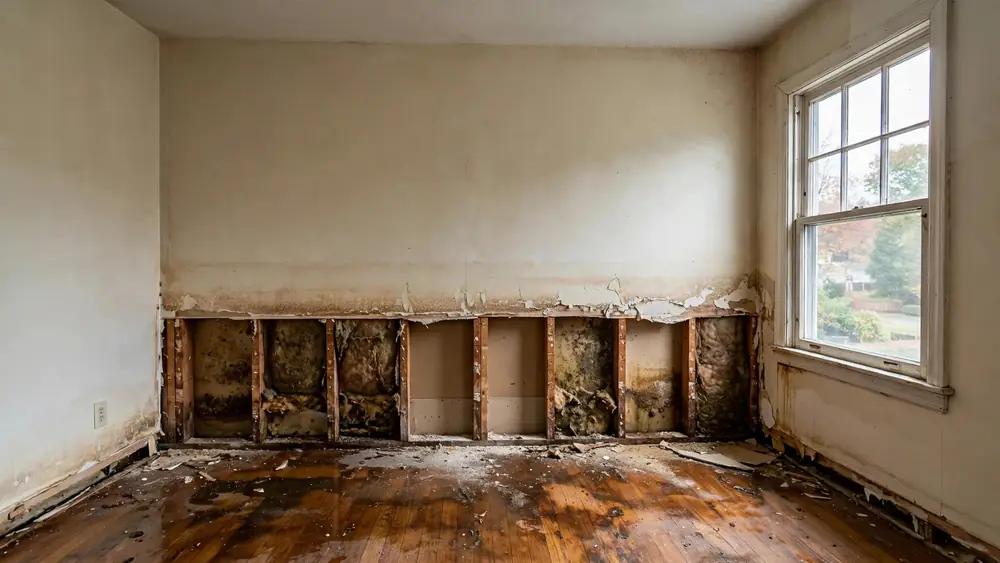
Flood cuts
What a flood cut is
A flood cut is a straight horizontal cut through drywall, a little above the highest wet reading, that removes the bottom of the wall. It lets the contractor take out wet insulation, dry and clean the framing and inspect for mold, then replace just the lower section. It is common after basement flooding and contaminated water.
The height depends on the readings, not a fixed number. Water wicks up drywall above the visible line, so the cut is usually placed a bit higher than the stain.
Signs
Signs drywall needs to come out
Any of these usually means replacement.
Sagging or bowing
Ceilings that bulge or walls that bow have lost strength.
Soft or crumbling
Pressing leaves a dent, or the edge crumbles.
Visible mold
Spots on the paper or behind it.
Strong musty smell
Growth is likely inside the wall.
Contaminated water
Sewage or floodwater soaked the board.
Paper delaminating
The facing peels away from the core.
Drying in place
How drywall is dried in place
When drywall can stay, the contractor removes baseboards, drills small holes near the floor or behind the baseboard line and sets air movers and dehumidifiers. Some use injection systems that push dry air into the wall cavity. Daily readings track the board and the framing until both are dry.
Paint and patching wait until then. Painting damp drywall seals moisture in and can lead to peeling, staining and mold.
Ceilings
Wet drywall ceilings
Ceilings are a special case because water pools on top of them. A ceiling holding water is heavy and can fall. If you see a bulge, keep people out of the room; a contractor will usually release the water by puncturing the low point over a bucket.
A ceiling that stays flat and firm after the water is released can often be dried, especially if the insulation above is removed. A ceiling that sagged is usually replaced.
Plaster
What about plaster walls?
Plaster on wood lath, common in older Connecticut homes, behaves differently. It is denser, absorbs water more slowly and dries more slowly, and it is usually worth keeping if it stays attached to the lath [5]. Sagging plaster ceilings are removed. In homes built before 1978, paint on plaster may contain lead, so cutting and sanding need care [6].
Insulation
The insulation behind wet drywall
What sits behind the drywall often matters as much as the board itself. Fiberglass batts in an exterior wall soak up water, sag and hold it against the back of the drywall and the framing. Even if the board could dry, wet insulation keeps the cavity damp for a long time, so it is usually removed through a flood cut and replaced once the framing is dry. Closed-cell spray foam, found in some newer and renovated homes, does not absorb much water and may stay, though it can trap water against wood if the leak came from inside the cavity.
Interior walls between rooms usually have no insulation, which makes them easier to dry in place with venting holes.
Moisture-resistant board
Choosing drywall for the rebuild
When drywall is replaced, especially in basements, bathrooms and laundry rooms, moisture-resistant or mold-resistant board is worth considering. These products use treated facings or fiberglass mats instead of plain paper, which gives mold less to feed on. They are not waterproof and still need to be dried if they get wet, but they buy time.
In basements, leaving a small gap between the bottom of the drywall and the concrete floor keeps the board from wicking water from a damp slab. Pairing that with a baseboard that can be removed easily makes future inspections and drying simpler.
Joint compound, tape and paint all need dry conditions to cure properly. Patching and painting in a room where humidity is still high can lead to cracking joints and slow-drying paint, so keep the dehumidifier running through the finishing stage. Once the paint has cured, a final walk-through with the contractor to check the repaired areas for stains or soft spots closes the job properly and gives you a chance to ask any remaining questions.
Questions
Questions to ask your contractor about drywall
- What do the readings show?Ask for the numbers in the wall and in an unaffected area.
- Why this cut height?It should follow the readings.
- Is the insulation coming out?Wet insulation usually should.
- Is there mold behind it?Ask them to look once the wall is open.
FAQ
Wet drywall questions
How long can drywall be wet before it must be replaced?
There is no fixed limit, but the EPA's 24 to 48 hour guidance is a good rule. Clean-water drywall dried within that window can often be saved.
Can I just paint over a water stain?
Only after the board is confirmed dry, and with a stain-blocking primer. Painting damp drywall traps moisture.
Do I need to replace the whole wall?
Usually not. A flood cut removes only the wet lower section.
Is wet drywall dangerous?
Sagging ceilings can fall, and drywall soaked with contaminated water should be handled with protective gear.