
Key facts: Ice dam leaks
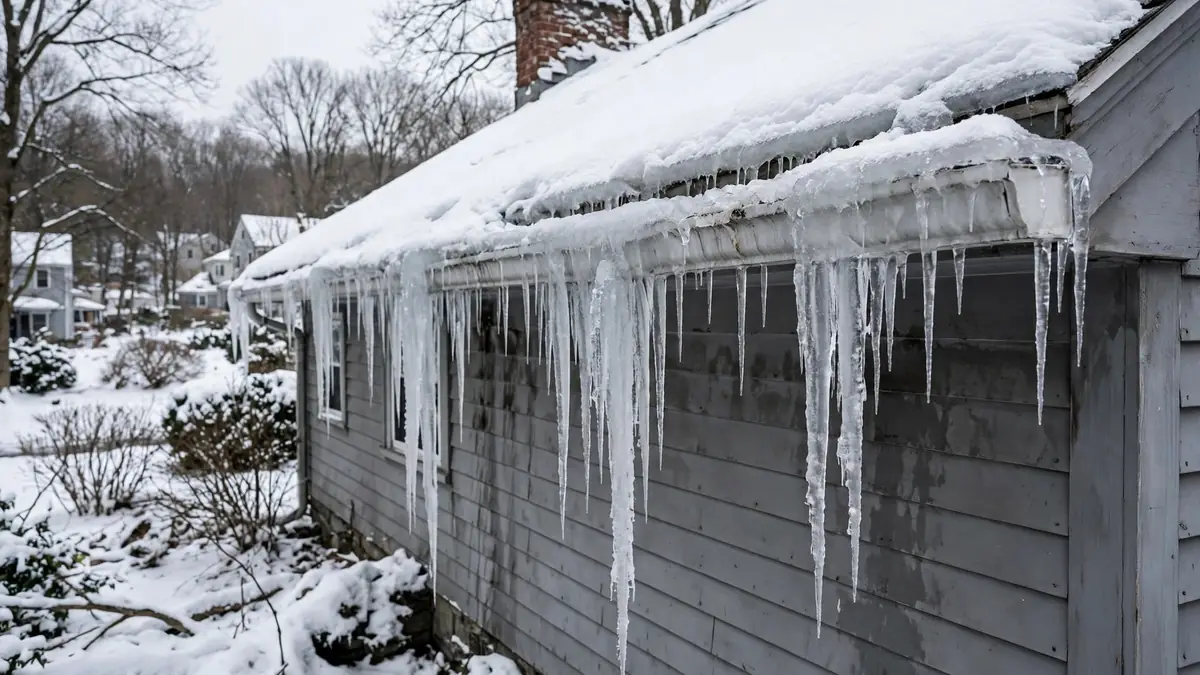
- An ice dam is a ridge of ice at the edge of a roof that prevents melting snow from draining [1].
- Ice dams form when heat escaping into the attic melts snow higher on the roof and the water refreezes at the colder eaves [1].
- Wet attic insulation and drywall should be dried or removed quickly to help prevent mold [2].
- Winter storm guidance warns against unsafe roof work and overexertion when clearing snow [3].
The short answer
How an ice dam causes a leak
Heat from the house leaks into the attic and warms the roof deck. Snow on the warm part of the roof melts and runs down toward the eaves, which hang out past the heated walls and stay cold. There the water refreezes into a ridge of ice. More meltwater pools behind the ridge and, because shingles are made to shed water rather than hold it, it seeps under them and into the house [1].
The leak usually shows up along the top of exterior walls, around windows below the eaves, and on ceilings near the outside walls.
Signs
Signs of an ice dam leak
Look for these after snow and cold.
Thick ice along the eaves
A ridge of ice and heavy icicles at the roof edge.
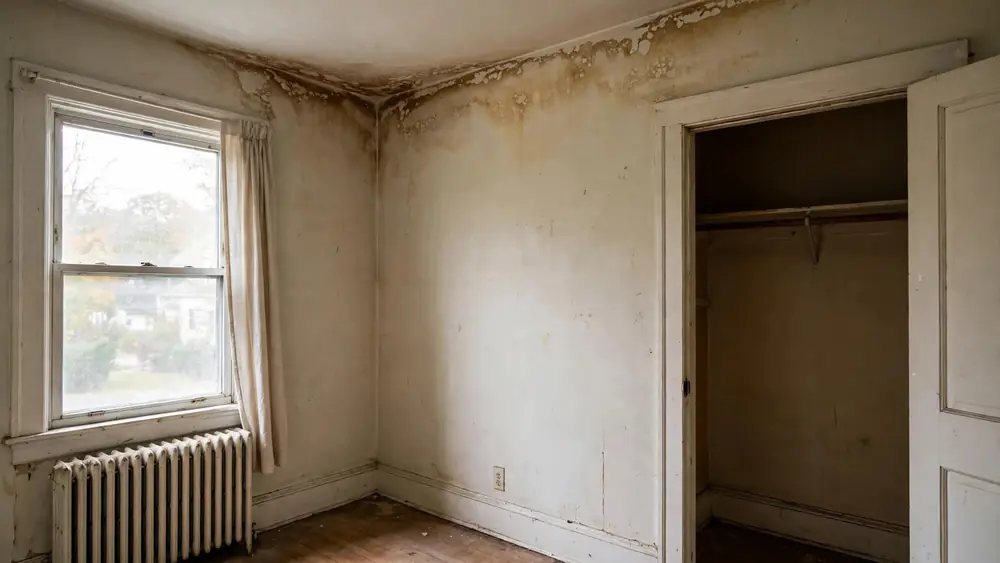
Stains at the top of exterior walls
Brown lines where the wall meets the ceiling.
Water around window frames
Drips or stains on the inside of windows below the eaves.
Peeling paint near the eaves
Moisture working out of the wall.
Wet or matted attic insulation
Visible from the attic near the roof edge.
Icicles on the inside
In severe cases, ice forms inside soffits or attics.
What to do
What to do when an ice dam is leaking
- 1
Catch the water
Buckets and towels under drips; move belongings away from the wall.
- 2
Check the attic if safe
Look for wet insulation and water on the roof deck near the eaves.
- 3
Do not climb an icy roof
Falls are a serious risk; leave roof work to professionals [3].
- 4
Clear snow from the edge safely
A roof rake from the ground can remove snow from the lower roof.
- 5
Do not chip ice with tools
It damages shingles and gutters.
- 6
Photograph the damage
Inside and out, for your records and claim.
- 7
Call a roofer and a restorer
The roofer deals with the ice and roof; the restorer dries the interior.
Inside the house
What restoration involves after an ice dam leak
Ice dam water usually soaks the attic insulation near the eaves first. Wet fiberglass or cellulose loses its insulating value, holds water against the ceiling drywall and the roof deck and can grow mold. It is generally removed and replaced once the area is dry.
Below, the restorer checks ceilings and the top of exterior walls with moisture meters. Wall cavities under the leak may need small openings or a cut so the insulation and framing can dry. Ceilings that sagged are replaced; firm ones can often be dried. See structural drying and wet drywall.
Connecticut winters
Why Connecticut homes get ice dams
Ice dams need snow on the roof, cold outside temperatures and heat leaking into the attic. Connecticut winters provide the first two in most years, especially inland around Waterbury, Danbury and Litchfield County. Older houses, including capes with finished upper floors under sloped ceilings, often have thin insulation and little ventilation where the roof meets the walls, which is exactly where ice dams form.
Recessed lights, attic hatches, bathroom fans and plumbing vents that leak warm air into the attic make things worse.
Prevention
Preventing ice dams
The lasting fix is keeping the roof deck cold: seal air leaks from the house into the attic, add insulation to the attic floor and improve ventilation so the roof stays near outdoor temperature [1]. In cape-style houses with sloped ceilings, this may mean work from the inside or when the roof is replaced.
When roofs are replaced, an ice and water barrier membrane along the eaves helps stop water that gets past the shingles. In the short term, raking snow off the lower few feet of the roof from the ground after big storms reduces ice dam formation.
Gutters
Do gutters cause ice dams?
Gutters are often blamed, but they are not the root cause. Ice dams form because of heat loss through the roof, and they can form on roofs with no gutters at all. Clogged gutters do make things worse, though: they fill with ice, add weight at the roof edge and give the ice ridge a head start. Cleaning gutters in late autumn helps, as does making sure downspouts are clear so meltwater can drain on milder days.
Heavy ice in gutters can also pull them away from the fascia, opening another path for water into the wall. If gutters have pulled loose after a hard winter, have them reattached before the next snow.
After the thaw
Checking the house after an ice dam season
Once the snow and ice are gone, look at the attic near the eaves for stained roof sheathing, damp or matted insulation and any musty smell. Check the tops of exterior walls and around windows inside for new stains or peeling paint. Damage from ice dams is often slow and spread over several thaws, and a spring check catches wet insulation before summer humidity turns it into a mold problem [2].
If you found leaks during the winter, spring is also the time to have a roofer and an insulation contractor look at why the dams formed, so the attic can be sealed, insulated and ventilated before the next snow arrives in late autumn. Fixing the cause once is far easier than drying the same ceiling every winter.
Avoid
Things not to do
- Do not use open flame or heat guns on iceFire risk and roof damage.
- Do not climb onto an icy roofHire a professional.
- Do not leave wet insulation in placeIt holds water and grows mold [2].
- Do not paint over stains right awayWait until the wall and ceiling are confirmed dry.
FAQ
Ice dam questions
Does homeowners insurance cover ice dam leaks?
Many policies cover sudden interior damage from ice dams, though the roof repair and ice removal may be treated differently. Check your policy.
Are heat cables a good idea?
Heat cables can keep drainage paths open in trouble spots, but they do not fix the heat loss that causes ice dams.
How soon should I dry a wet attic?
As soon as possible. Remove wet insulation and dry the deck and ceilings within a day or two to help prevent mold.
Who will come if I call?
An independent, licensed local restoration contractor. This site is a call-in referral service; any agreement is made directly between you and them.