
Key facts: Working with your adjuster
- An insurance adjuster investigates a claim to decide how much the insurer owes [1].
- A public adjuster is hired by the policyholder, not the insurer, to help with a claim [2].
- Standard homeowners policies generally exclude flood; flood insurance is separate, for example through the NFIP [3].
- The Connecticut Insurance Department offers consumer help with insurance questions and complaints [4].
The short answer
How a water damage claim usually goes
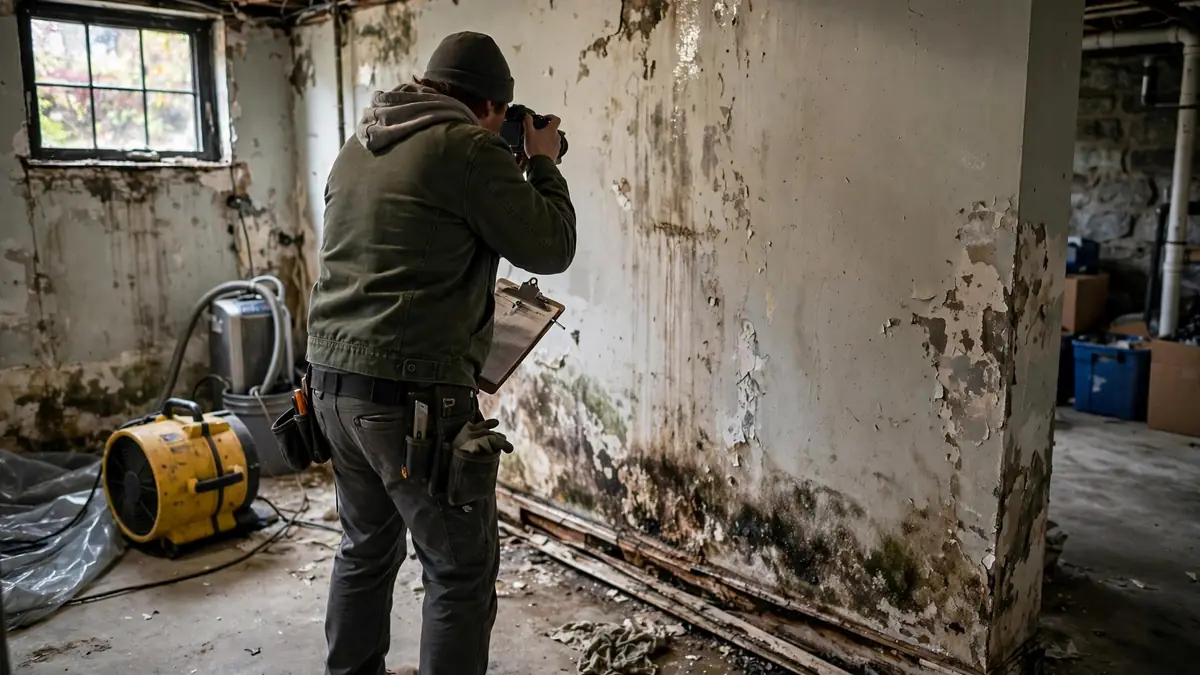
You report the loss, protect the house from further damage, document everything, and an adjuster reviews the damage and your policy. The insurer then decides what is covered. The restoration contractor's records, including photos, moisture readings and a drying log, are often central evidence.
An adjuster is the person who investigates a claim and works out what the insurer owes under the policy [1]. Most are employed by or contracted to the insurer.
Steps
The claim, step by step
- 1
Report promptly
Call your insurer or agent as soon as the immediate danger is handled. Get a claim number.
- 2
Prevent further damage
Stop the water and start drying. Policies generally expect reasonable steps to limit damage.
- 3
Document
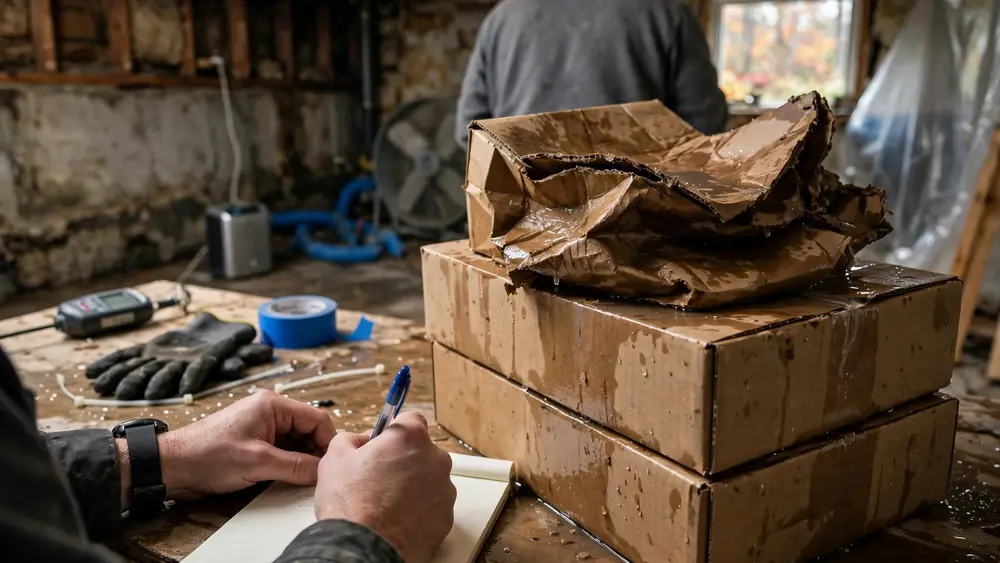
Photos and video of the source, the water, each room and damaged items before cleanup.
- 4
Keep damaged items
Until the adjuster has seen them or tells you they may be discarded; photograph anything that must go.
- 5
Keep receipts
Emergency repairs, equipment, temporary lodging and meals if displaced.
- 6
Meet the adjuster
Walk them through the damage; share the contractor's readings and photos.
- 7
Review the decision
Read the coverage letter and estimate carefully; ask questions about anything unclear.
Coverage
How the cause of water damage often affects coverage
General patterns; your policy controls.
| Cause | Often covered by | Notes |
|---|---|---|
| Sudden burst pipe | Homeowners policy | Damage from failing to heat a vacant house may be excluded |
| Appliance failure | Homeowners policy | The failed appliance itself may not be covered |
| Slow leak over time | Often excluded | Considered maintenance in many policies |
| River or coastal flood | Flood insurance | Separate policy, such as NFIP [3] |
| Sewer or drain backup | Endorsement | Water backup coverage is often an add-on [5] |
| Sump pump overflow | Endorsement | Often grouped with water backup |
Records
The records that matter most
Adjusters work from evidence. The most useful records are photos and video taken before cleanup, a written timeline, the plumber's note on the cause, the restoration contractor's moisture map, daily readings and final dry readings, and an itemized list of damaged belongings with approximate ages.
Ask the restoration contractor for copies of everything they record, including the daily log described in how long drying takes. If materials are removed, photos of the removed materials and of the exposed framing show why removal was needed.
Help
When you need help with a claim
If you disagree with a decision, ask the insurer to explain it in writing and point to the policy language. Provide any additional evidence you have. Many disagreements are resolved by sharing the drying records or a second opinion.
Some policyholders hire a public adjuster, who works for the policyholder rather than the insurer [2]. The Connecticut Insurance Department provides consumer assistance and handles complaints about insurers [4].
Tips
Practical tips for a smoother claim
- Keep one folderPaper or digital, with every photo, receipt and letter.
- Write down every callDate, name and what was said.
- Do not wait to start dryingDelays can make damage worse and complicate the claim.
- Read the estimate line by lineCheck that every room and material is included.
- Ask about additional living expensesIf your home is not livable during repairs.
The visit
What happens during the adjuster's visit
The adjuster usually walks through each affected room, looks at the source of the water, takes photos and measurements and asks questions about when and how the damage happened. They may look at the plumber's findings, the restorer's moisture map and any items you have set aside. Some claims are handled remotely with photos and video instead of a visit.
Be present if you can, and walk them through what you saw. Point out damage that is not obvious, such as wet insulation behind a wall that has already been opened, a cupped floor under a rug or a ceiling stain in a room below. Ask what happens next, when you can expect a decision and whether they need anything else.
Write down the adjuster's name and contact details and anything they tell you about timing or next steps.
Contents
Documenting damaged belongings
Contents claims are often the slowest part. Go room by room and list each damaged item with a short description, the brand if you know it, its approximate age and where you bought it. Attach photos of the item and, if possible, its label or serial number. Receipts, bank statements and older photos of the room help show what you owned. Do this as soon as you can, while the details are fresh.
Timing
Keeping the claim moving
Respond quickly to requests for information, keep copies of everything you send and follow up in writing if you have not heard back. If repairs are waiting on approval, ask the insurer what they need to approve them. Structural drying should never wait for approval; it protects the house and the claim alike.
If you need to move out during repairs, ask early whether your policy includes additional living expenses and what records the insurer wants, such as hotel and meal receipts. Keep these separate from repair receipts so they are easy to submit.
Mitigation
Why the drying work matters to the adjuster
Adjusters distinguish between mitigation, the emergency work that stops damage from getting worse, and repair, which restores the house. Extraction, removal of wet materials and drying are mitigation. They are usually expected to start right away, and the drying log shows they were done properly. A claim where drying started promptly and the records are complete is generally simpler to settle than one where water sat for days.
Renters and condos
If you rent or own a condo
Renters insurance usually covers belongings and sometimes temporary living expenses; the landlord's policy covers the building. Condo owners often have both an association master policy and their own unit policy; which pays for what depends on the bylaws and the policies. Report the loss to all relevant parties and keep documentation for each.
FAQ
Insurance adjuster questions
Should I start cleanup before the adjuster comes?
Yes, after documenting the damage. Policies generally expect you to prevent further damage, and drying cannot wait.
Can I throw out damaged items?
Photograph and list them first, and ask your insurer whether they want to see them before disposal.
What if my claim is denied?
Ask for the reason in writing, review your policy and provide more evidence if you have it. The Connecticut Insurance Department can help.
Does this site help with my claim?
No. This site connects your call with an independent restoration contractor. It does not handle insurance claims or give legal advice.