
Key facts: Hardwood Floor Drying
- Wood is hygroscopic: it absorbs and releases moisture and changes size as it does [1].
- Cupping happens when the bottom of a board is wetter than the top; crowning is the reverse.
- Professional water damage drying, including floors, is guided by the ANSI/IICRC S500 standard [2].
- A subfloor left wet under hardwood for more than a couple of days can start growing mold out of sight [3].
How it works
Why hardwood reacts so strongly to water
Wood takes on and gives off moisture with its surroundings and swells or shrinks as it does [1]. A hardwood floor is installed at a moisture level that matches the house. When a leak soaks it, the boards absorb water, mostly from the underside and the edges, and swell. Because the boards are tightly fitted, they have nowhere to go but up at the edges.
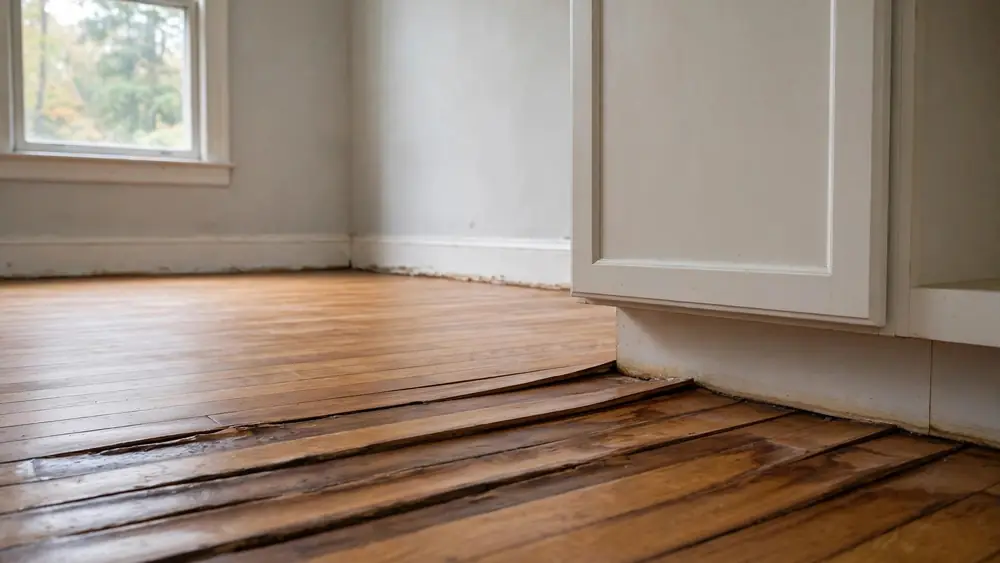
That is cupping: the edges of each board rise above the center because the bottom is wetter and wider than the top. If the floor is then dried too fast from the top, or sanded flat while still wet underneath, the opposite happens later. The top shrinks less than the bottom and the boards crown, rising in the middle. Both are moisture problems, and both are why drying a wood floor is about balance, not speed.
The subfloor matters as much as the boards. Plywood or plank subfloors under Connecticut floors hold water for a long time, and boards will not flatten while the subfloor below them is still wet.
Signs
Signs your hardwood floor has taken on water
Look for these after a leak, even if the floor looks dry on top.
Edges lifting
Cupping shows as raised board edges, often easiest to see with light across the floor.
Boards pressing together
Tight joints or boards pushing against walls mean they have swollen.
Dark staining at joints
Water held in the joints darkens the wood along the seams.
Squeaks or soft spots
A spongy feel or new squeaks can mean a wet subfloor.
Finish clouding
White haze in the finish means moisture is trapped beneath it.
Buckling
In severe cases, boards lift completely off the subfloor.
Equipment
How floor drying mats work
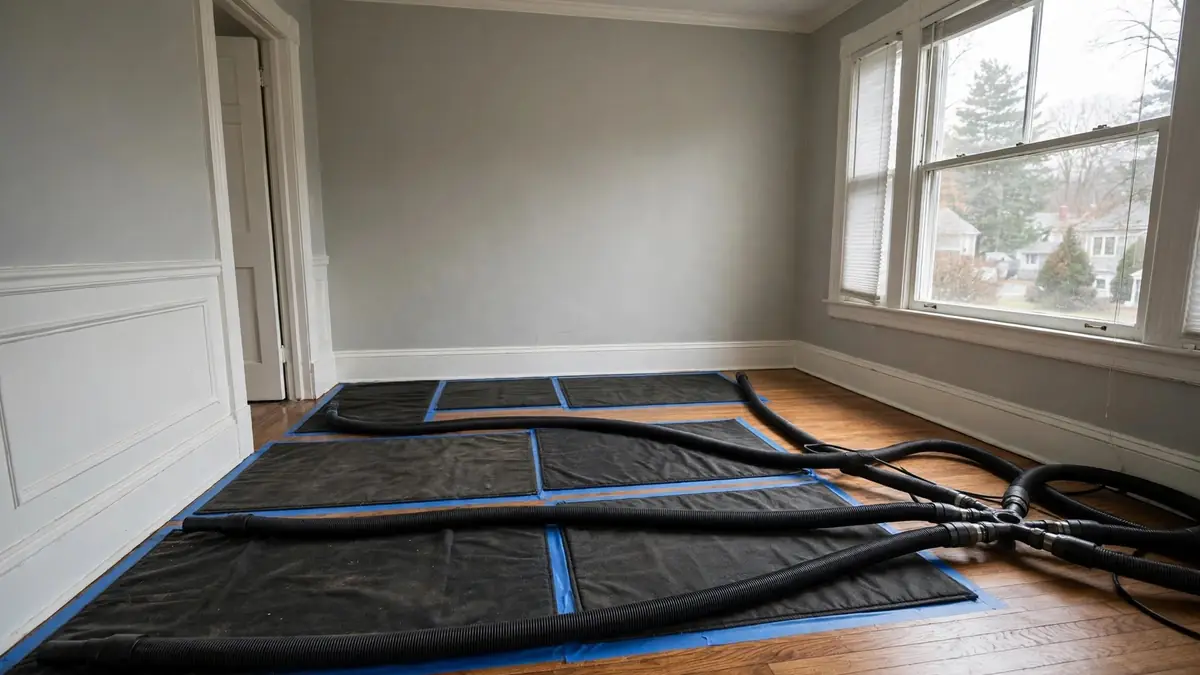
Floor drying mats, sometimes called panels, are flexible sheets laid over the wet floor and sealed at the edges with tape. Hoses connect them to a high-pressure blower or vacuum unit. In vacuum mode, the system pulls air up through the gaps between boards, drawing water out of the joints and the subfloor. In pressure mode, it pushes dry air down into the floor system.
The air coming out of the floor is wet, so dehumidifiers run in the room at the same time to capture that moisture. Air movers are used more carefully on wood floors than on carpet; blasting the top of the boards dries the surface faster than the bottom and can worsen the moisture difference.
Where the room below is an unfinished basement, the contractor may also dry the subfloor from underneath by directing air and dehumidification at the joist bays. Drying from both sides is often the fastest route to flat boards.
The job
How hardwood floor drying usually proceeds
Drying wood floors usually takes longer than drying drywall.
- 1
Stop and extract
Water is shut off and surface water extracted, including from joints with specialized floor tools.
- 2
Take readings
Moisture is measured in the wet boards, in unaffected boards and in the subfloor where possible.
- 3
Remove obstacles
Rugs, furniture and sometimes baseboards are removed so air reaches the floor edges.
- 4
Lay and seal mats
Drying mats are placed over the wettest areas and connected to the blower or vacuum.
- 5
Dehumidify
Dehumidifiers run in the room or a closed drying chamber.
- 6
Dry from below if possible
Basement ceilings under the floor may be opened or targeted with airflow.
- 7
Monitor daily
Readings track the boards and subfloor toward the dry goal.
- 8
Wait, then assess
Once dry, boards are left to settle. Many flatten; some need sanding and refinishing.
Floor types
How common Connecticut floor types handle water
General patterns only.
| Floor type | How it reacts | Drying outlook |
|---|---|---|
| Solid oak or maple strip | Cups, but wood can recover | Often dried successfully if caught early |
| Older wide-plank pine | Soft, cups and stains | Can often be dried; staining may remain |
| Engineered hardwood | Veneer can delaminate | Sometimes savable; depends on the core |
| Laminate | Core swells at seams | Usually replaced |
| Wood over radiant heat | Heat speeds drying but stresses wood | Needs careful control |
| Hardwood over concrete | Moisture trapped below | Harder to dry; often lifted |
Older floors
Wide-plank and older floors in Connecticut homes
Connecticut has many old houses with original wood floors: wide pine boards in colonials and capes, oak strip in early twentieth-century houses and narrow maple in some multi-family buildings. These floors have often been refinished many times and may be thinner than they look, which limits how much sanding they can take.
Older floors are frequently worth keeping for character alone, and they often respond well to patient drying. A contractor should check the thickness of the wear layer before recommending sanding, and should avoid aggressive heat that could split old boards.
In homes built before 1978, old finishes or paint near floors may contain lead. Sanding releases dust, so testing and lead-safe practices matter during refinishing [4].
Patience
Why the floor still looks cupped after it is dry
Cupping often lingers after the moisture readings say the boards are dry. Wood relaxes slowly, and boards that were compressed against each other while swollen may stay a little cupped. Many floors keep flattening for weeks after drying ends.
That is why sanding right away is a common mistake. Sanding a still-cupped floor flat removes wood from the raised edges; when the boards finish relaxing, they crown. Most flooring professionals recommend waiting, rechecking moisture and only then deciding whether sanding is needed.
Why it fails
Why some hardwood floors cannot be saved
Some floors do not recover. If water sat for days, boards may have swollen beyond what they can relax back from, or the subfloor may have delaminated. Contaminated water, such as sewage or floodwater, usually means the floor and subfloor are removed. Laminate and some engineered products fail at the core and do not recover.
Drying also fails when it is rushed. High heat and strong airflow across the top can crack boards and leave the bottom wet. Mats left in place too briefly, or a wet subfloor ignored, produce boards that look dry and cup again later.
DIY vs pro
What you can do for a wet wood floor
Small, quick steps help a lot.
- Wipe up surface water nowTowels and a wet vacuum on clean water help limit absorption.
- Remove rugsWet rugs hold water against the floor.
- Move furnitureHeavy pieces can dent swollen wood and block airflow.
- Do not use heat guns or space heaters on the floorFast surface drying causes cracking and crowning.
- Do not nail or sandWait until the floor is confirmed dry and has settled.
- Run a dehumidifierKeep the room closed and dehumidify while waiting for help.
Connecticut specifics
Hardwood floors in Connecticut's seasons
Connecticut's seasons already move wood floors. In humid summers, boards swell slightly and gaps close; in dry heated winters, boards shrink and small gaps appear. A floor that gets wet in August starts out more swollen than one that gets wet in January.
Winter burst pipes are a common cause of hardwood damage in the state, often in kitchens and bathrooms on outside walls. Drying in winter can be efficient because indoor heated air is dry, but the contractor needs to avoid over-drying the room and stressing the rest of the floor.
The visit
What a hardwood floor drying visit looks like
Expect moisture readings across the floor and comparisons with unaffected boards. The contractor should explain the type of floor, whether it is solid or engineered, how wet the subfloor is and whether drying in place is realistic. If they recommend drying, mats go down the same day and dehumidifiers run continuously.
Daily checks track progress. Once dry, they may suggest waiting several weeks before deciding on sanding or replacement. Ask for a copy of the readings for your insurer.
Safety
Safety while drying floors
Drying mats and hoses create trip hazards, and the blower units are loud. Keep children and pets away from the equipment. Do not walk on mats with shoes that could tear them. If the water came from a contaminated source, the floor is not dried in place; it is removed with protective gear [5].
Older floors may have lead in old finishes, so sanding should follow lead-safe practices [4].
Prevention
Protecting wood floors from future leaks
Put leak sensors under the dishwasher, refrigerator, sink and near the water heater. Replace old supply lines with braided ones. Keep indoor humidity in a moderate range year round so the floor is stable. Use mats at entry doors in winter to catch snowmelt. In kitchens and bathrooms, wipe up spills quickly and keep caulking in good shape.
Repair or replace
Refinish, patch or replace?
If the floor dries nearly flat, light sanding and refinishing may be all it needs. If a few boards are badly damaged or stained, they can be replaced and woven into the existing floor. If the damage is widespread, the subfloor delaminated or the water was contaminated, replacement is usually the answer.
The decision should come from moisture readings, the floor's thickness and how it settles after drying, not from how it looks on day one.
Subfloor
Checking the subfloor under the boards
The subfloor is the plywood, OSB or plank layer the hardwood is nailed to. It holds water for a long time and keeps the boards wet from below. OSB can swell and lose strength at the edges. Plank subfloors in older homes have gaps that let water through to the basement ceiling.
Restorers check the subfloor from below if there is an unfinished basement, or by drilling small holes in an inconspicuous spot. Drying stops only when the subfloor reaches its own dry goal.
Kitchens
Hardwood under kitchen cabinets and appliances
Many Connecticut kitchens have hardwood running under the cabinets and the dishwasher. A slow dishwasher or refrigerator leak can soak the floor out of sight for weeks. Water trapped under cabinets cannot evaporate, so the contractor may remove toe kicks, drill small holes or lift appliances to reach it. Cupping near the dishwasher is often the first visible clue.
Rugs
Area rugs and runners on wet hardwood
Area rugs make hardwood damage worse because they hold water against the boards and slow evaporation. Pull them up immediately after a leak, roll them with the wet side out and move them somewhere they can dry, or send valuable rugs to a specialist cleaner. Rug pads, especially rubber-backed ones, trap moisture and can also leave marks on the finish. Leave the floor uncovered until drying is confirmed and the finish has had time to breathe.
Stairs
Hardwood stairs and landings
When water runs down a staircase from an upstairs leak, treads and risers soak from the edges. Stair parts are thicker than floorboards and often glued, so they dry slowly. A contractor may remove a riser or work from underneath through a closet ceiling to dry the stair stringers. Treads that split or delaminate are usually replaced individually and matched to the rest.
Cupping or crowning
Reading the shape of your floor
The shape tells you where the moisture is.
| What you see | What it means | What to do |
|---|---|---|
| Edges higher than centers (cupping) | Bottom of boards wetter than top | Dry from below; do not sand yet |
| Centers higher than edges (crowning) | Top shrank more, often after early sanding | Let moisture stabilize; may need refinishing |
| Boards lifted off the subfloor (buckling) | Severe swelling with nowhere to go | Usually remove and replace affected area |
| Gaps between boards after drying | Boards shrank below their normal size | Wait for seasonal humidity to settle before filling |
| Finish cloudy or peeling | Moisture trapped under the finish | Refinish once dry |
Radiant heat
Hardwood over radiant floor heating
Some newer Connecticut homes and renovations have hydronic radiant heat under wood floors. Radiant heat can help drying, but it can also overstress boards if the system runs too hot while the wood is swollen. The contractor may ask to run the system at a low, steady setting, or to shut it off for a time, depending on the readings.
If the leak came from the radiant system itself, a heating contractor needs to find and repair it first. A slow leak in radiant tubing can soak a floor from underneath for a long time before anyone notices, so cupping in an area with no obvious water source is a reason to ask about the heating system.
Matching
Matching new boards to an old floor
When some boards must be replaced, the goal is a repair that blends in. Oak and maple strip flooring are still widely available in common widths, but older floors may use widths, species or grades that are harder to match. Wide-plank pine in older Connecticut houses is often salvaged from closets or other rooms to patch a visible area.
Even with matching wood, new boards look different until the whole area is sanded and refinished together. That is why a small repair often leads to refinishing a whole room or a continuous run of floor. Ask the contractor or flooring installer how they plan to blend the repair.
Basement ceiling
Drying the floor from the basement below
In many Connecticut homes, the first floor sits over an unfinished basement with open joists. That is an advantage: the contractor can reach the underside of the subfloor directly, measure it, and aim air and dehumidification at it. Drying from both sides at once balances the moisture in the boards and helps them flatten.
If the basement ceiling is finished with drywall, the contractor may remove a section under the wettest area. That adds a small repair but can shorten floor drying by days and reduce the chance of mold in the joist bays.
After drying
Caring for the floor in the months after drying
Once the equipment leaves, the floor keeps adjusting. Keep the room at a normal, steady temperature and humidity. Avoid putting heavy rugs or furniture back on the repaired area for a week or two so the boards can breathe. Watch for changes in the shape of the floor over the first month or two, and photograph it occasionally so you can compare.
If boards stay cupped after about a month at normal humidity, a flooring professional can assess sanding. If gaps open in winter, that is usually seasonal shrinkage rather than damage. Filling gaps too early can lead to cracking when the boards swell again next summer.
Keep the final moisture readings and before-and-after photos. If you sell the house, they show the floor was properly dried and assessed, which a buyer's inspector will want to see.
Questions to ask
Questions to ask the floor drying contractor
Useful on the first call or visit.
- Is this floor solid or engineered?It changes what drying can achieve.
- How wet is the subfloor?The boards will not flatten while the subfloor is wet.
- Can you dry from below?Access from the basement often shortens drying.
- What is the dry goal?Ask which reading you are aiming for and where it was taken.
- When should we decide on sanding?A good answer involves waiting after drying ends.
- How will you protect the rest of the floor?Drying one area should not over-dry and stress the boards in neighboring rooms.
- What happens if it does not flatten?Ask what the next step would be, from sanding to replacing a section, and how that decision will be made.
Insurance
Wood floors and the insurance claim
Insurers often prefer drying over replacement when drying is likely to work, and they may ask to see moisture readings before approving replacement. Keep the drying log and photos of the cupping on day one and after drying. If the floor runs continuously through several rooms, ask how matching is handled under your policy [6]. The Connecticut Insurance Department offers consumer help [7].
FAQ
Hardwood floor drying questions
Can a cupped hardwood floor go back to normal?
Often, yes, if the water was clean and drying began quickly. Many floors flatten as they dry, and some keep improving for weeks afterward.
How long does it take to dry hardwood floors?
Commonly several days to two weeks, depending on how long the floor was wet, the subfloor and the wood type.
Should I sand my cupped floor?
Not until it is confirmed dry and has settled. Sanding too early can lead to crowning later.
Can engineered hardwood be dried?
Sometimes. It depends on the core and how long it was wet. Laminate usually cannot.
Why are mats taped to my floor?
Drying mats seal against the floor so a vacuum can pull moisture up through the joints and from the subfloor.
Will the stains come out?
Light staining sometimes sands out. Dark staining from long exposure may need board replacement.
Who dries the floor?
A restoration contractor near you who works independently and dries wood floors as part of their service. This site only connects the call; any agreement is yours to make with them.
Sources and citations
- [1]Wikipedia — Wood flooring
- [2]IICRC — ANSI/IICRC S500 Standard for Professional Water Damage Restoration
- [3]U.S. EPA — A brief guide to mold, moisture and your home
- [4]U.S. EPA — Protect your family from sources of lead
- [5]U.S. EPA — Flooded homes: cleanup and safety
- [6]Wikipedia — Homeowner's insurance
- [7]Connecticut Insurance Department