
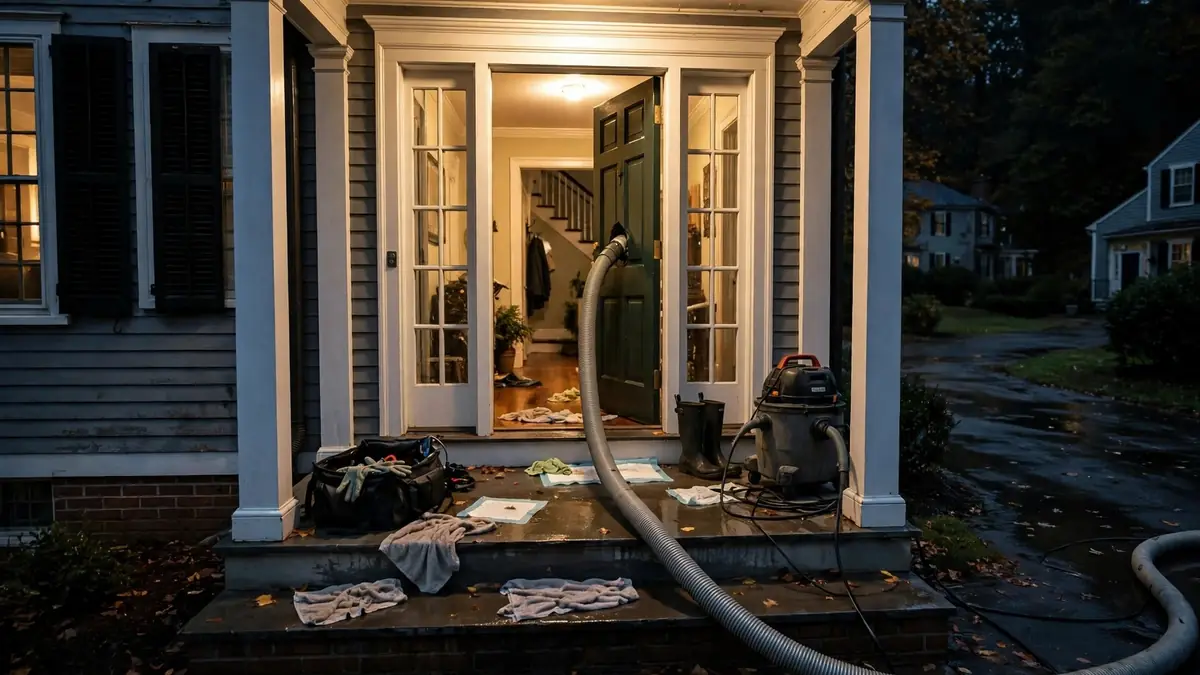
Key facts: Emergency Water Extraction
- Do not use a household vacuum or plug anything in near standing water until the circuit is known to be off.
- Depth, area and water color are the three details a contractor most needs to hear on the phone.
- If water is several feet deep, the EPA cautions that removing it too quickly may crack and collapse walls and floors.
- Calls are taken 24 hours a day, 7 days a week including holidays.
Read the water
A quick look that tells you if you can touch it
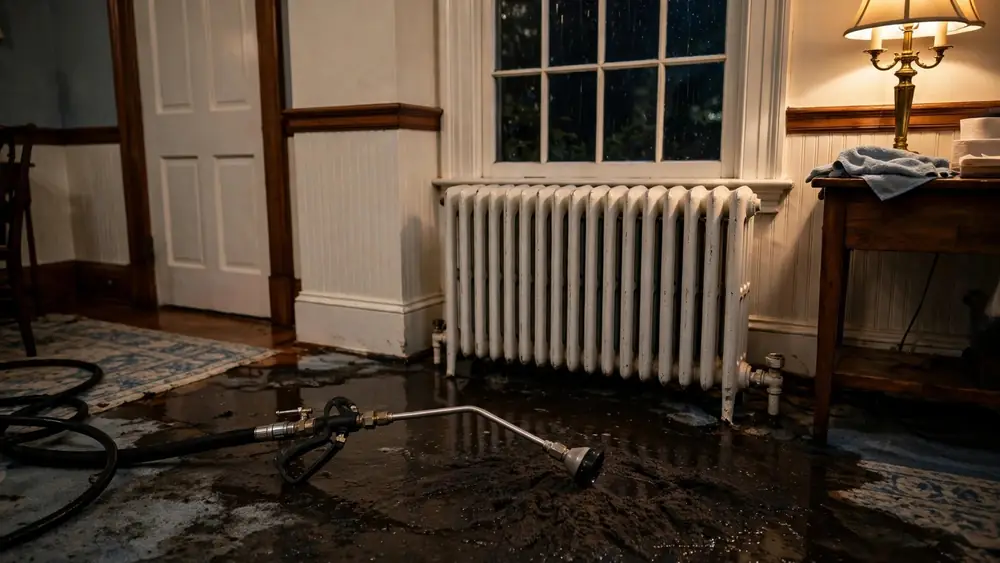
Stand somewhere dry and study what is on the floor. Clear water with no odor, from a supply line or an appliance hose, is the only kind you should even consider handling yourself. Brown or gray water, anything with a sewer smell, and anything that came in from the street, a river or the Sound should be treated as contaminated. Leave that for a contractor equipped to deal with it, and if it rose from a drain, move straight to the sewage backup emergency page. Should you need to step into a mess for a safety reason, the EPA recommends protective clothes such as rubber gloves, pants and sturdy shoes, because items touched by floodwater can contain bacteria and mold spores [3].
Then consider the electricity. The EPA warns that standing water can create a shock hazard if outlets are wet [3]. Where the water has reached outlet height, a power strip or a floor lamp, or where your panel is in the same flooded basement, the room stays closed until an electrician or your utility has made it safe. Nothing you could soak up tonight is worth that risk.
If it is clean and safe
Useful things to do with a mop and a shop vac
With clean water, the power in that room confirmed off and a little energy, you can reduce the damage while you wait. A wet vacuum rated for water is the right tool; an ordinary household vacuum is not, and it can be a shock risk as well as a ruined machine. Plug it into a dry outlet in an unaffected room using a heavy extension cord, and keep the connection off the floor. Empty the tank outdoors or into a working sink, rather than a floor drain that may already be struggling.
Towels and mops help on tile and vinyl, especially along baseboards where water hides. Carpet is another matter: you will move very little water out of a soaked pad with a shop vac, so concentrate your effort on hard floors and pull small items out of harm's way. Slide foil, plastic wrap or wood blocks under furniture legs to stop stains and swelling, and carry books, papers and anything with sentimental value to an upper floor. Leave heavy pieces where they are, because wet flooring is slippery and a strained back on a dark night helps nobody.
Hands off
Five jobs to leave alone tonight
- Pumping out a deep basement on your own
- Pulling up wall-to-wall carpet before it is photographed
- Opening walls or ceilings to look for water
- Restarting a furnace or water heater that sat in water
- Running a gas-powered pump or generator indoors
Deep water
Why a deep basement should not be emptied in a hurry
The instinct is to get every drop out right now. When water stands several feet deep, that instinct can do real harm, because the EPA warns that removing it too quickly may make walls and floors crack and collapse [2]. Saturated ground outside keeps pressing on the foundation, and the water inside has been pushing back. This matters in many older Connecticut homes, with their fieldstone, brick or block foundations. If you are looking down the stairs at water above knee height, stay on those stairs, say so on the call and let a professional decide how fast it can safely come down.
Fumes bring a second hazard. Ready.gov is clear that generators and their fuel belong outdoors, at least 20 feet from windows, doors and attached garages, because carbon monoxide is colorless, odorless and deadly [4]. The same reasoning applies to anything burning gasoline: a rented pump running in a basement, or beside an open cellar window, can poison a family without any warning. Working carbon monoxide detectors on every level are especially important on a night like this [4].
Sizing the job
How to describe the water in under a minute
- 1
Depth
Compare it to something familiar: a shoe sole, an ankle, the first stair, a knee.
- 2
Area
Name the rooms, and say whether it has spread through doorways or down to another level.
- 3
Surfaces
Say carpet, hardwood, tile, bare concrete or a finished basement floor.
- 4
Age
Tell them when you found it and your best guess at when it started.
- 5
Access
Mention narrow stairs, shared driveways, parking limits or a locked building door.
Your call
Getting straight answers from the contractor
The water extraction service page describes that equipment if you want detail later. Whoever answers works for an independent company, and calls are taken at any hour on every day of the year, holidays included. Timing is theirs to set and this site does not guarantee it, so ask plainly what can happen at your address tonight. It also helps to ask whether a portable or larger truck-mounted setup is likely to be needed, because that shapes what you should clear. Tell them about the parking on your street, particularly on tight lots in places like New Haven or Bridgeport, where hoses may have to travel some distance from a vehicle.
Ask, too, what you should stop doing. An experienced voice on the phone might tell you to leave a carpet alone, keep windows closed in humid weather or open them in dry air, depending on the season and what you describe. Record the company name, the person you spoke with and the time of the call. These notes take thirty seconds to make and become useful if your insurer later asks when you acted to limit the loss.
Timing
Is this a tonight job or a morning job?
Ask how much of the water can still go somewhere it will do harm. On a sealed tile floor in a kitchen with no basement below, a few careful hours with a mop may leave little to worry about, and a morning call is reasonable. On carpet, on a hardwood floor, against drywall or above a ceiling, the water keeps moving even though the surface seems still, and waiting lets it travel. The EPA's guidance to dry water-damaged areas and items within 24 to 48 hours [1] sets the outer limit, and it starts from when the water arrived, which may be well before you noticed it.
Season shapes this as well. A humid August night near Long Island Sound slows natural evaporation to a crawl, while a January night in a house with a failed furnace can leave wet materials cold and stubborn. If you returned from a trip to find the water already there, count it as old water and call now. Once extraction is done, the moisture left in framing and subfloors is a separate problem, handled under structural drying, so a dry-looking floor in the morning is not proof the job is over.
Upstairs and down
When your water is also the neighbor's water
New England's stacked two- and three-family houses, often called triple-deckers [5], turn one overflowing bathtub into a shared problem. If you live on an upper floor, tell the household below right away so they can move belongings and stay clear of any bulging ceiling. If you live on the lower floor and water is arriving from above, your first call is to the upstairs neighbor or the owner, since nothing you remove matters until the source stops. Every affected household should take its own photographs, as more than one insurer may eventually want to see them.
FAQ
Standing water questions, answered fast
How much water is too much for a shop vac?
If you are emptying the tank constantly and the level is not dropping, or if carpet is involved across a room, the job has outgrown it. Save your energy and call.
Is there anyone to call on a holiday night?
Yes. The referral line takes calls every hour of every day, holidays included, and connects you with an independent contractor.
Will fans dry this out if I just run them?
Not while water is pooled. Fans can also spread contamination if the water is not clean, and any cord near the floor is a hazard.
Should I open the windows?
In cool, dry air it can help. In muggy Connecticut summer weather it often adds moisture, so ask the contractor what suits the conditions tonight.