
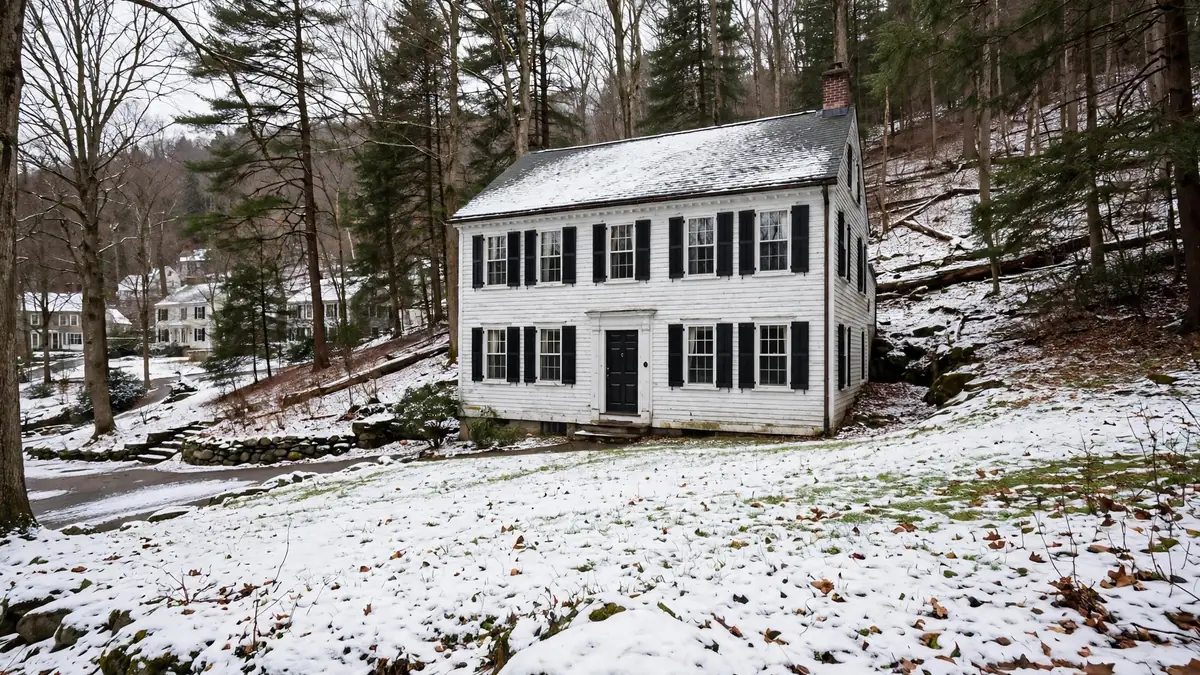
Key facts: Water Extraction in Danbury
Wells
Shutting off the well before extraction
Many homes in Danbury's outer neighborhoods and in towns like Ridgefield, Redding and Newtown rely on private wells. When a pipe bursts or a fitting fails, the well pump keeps pushing water into the house until its breaker is switched off. Close the main valve and turn off the well pump, then extraction can start without the water coming back.
If the pressure tank or treatment equipment in the basement is the source, a well contractor repairs it while the restorer handles the water.
Raised ranches
Lower levels in raised ranches and split-levels
Raised ranches and split-levels are common in the area. Their lower levels sit partly below grade and are often finished as family rooms or bedrooms with carpet over concrete. Water from a burst upstairs or groundwater from the hillside soaks that carpet quickly. Extraction pulls water from carpet and pad, and the pad usually comes out.
Still River
Low ground near the Still River
The Still River runs through downtown Danbury and overflowed its banks in August 1955 during Hurricane Diane, after heavy rain from Hurricane Connie days earlier [1]. Low properties near it and its tributaries can still take on outside water in extreme rain. That water is contaminated, so extraction is followed by removing soaked materials and cleaning [3].
Lake homes
Extraction in lake houses
Homes around Candlewood Lake range from seasonal cottages to large year-round houses. Seasonal homes are a burst pipe risk in winter; water found in spring may have been there for weeks, so extraction is followed by more removal and careful drying.
Downtown
Older buildings downtown
Older multi-family houses and mixed-use buildings near downtown see stacked leaks between apartments and damp shared basements. The crew works from the source unit downward.
First steps
Before the crew arrives
- Close the mainAnd switch off the well pump breaker.
- Cut power to wet areasOnly from a dry spot.
- Move belongingsOff wet carpet.
- PhotographBefore anything moves.
Calling
What to tell the contractor about a Danbury-area leak
Say where the water came from, whether it has stopped, whether you are on a well and whether the pump is off. Describe which levels got wet, whether the lower level is finished and whether there is a crawl space under an addition. Mention how close a truck can get and whether the driveway is icy. If the water came from outside, near the Still River or a brook, say so, since contaminated water changes the plan. With those details the crew brings the right pumps, extractors and protective gear and knows where to start.
Timing
Why the first day matters
Carpet pad, drywall and insulation in a finished lower level soak up water fast. Getting extraction started the same day keeps more of them savable and keeps the drying window short enough to avoid mold.
Downtown
Extraction in older downtown buildings
Near downtown Danbury, older multi-family houses and mixed-use buildings sit close to the Still River. In these, a leak in an upper apartment reaches the units below, and the basement is shared by every household. The crew starts at the source unit, works down and photographs and reads each space. Owners should tell every tenant what is happening, and tenants should report in writing and photograph their own belongings for renters insurance.
If water came up a basement floor drain during a storm, it is treated as sewage.
Records
Records for a Danbury claim
Photograph the water, the source and every affected room before extraction, and keep the plumber's or well contractor's note on the cause. Burst pipes and appliance leaks usually fall under homeowners policies, while outside flooding generally needs flood insurance.
Lake water
Water from outside at lake and brook properties
Homes near brooks, ponds and the edges of Candlewood Lake sometimes take on surface water in heavy storms. That water carries soil and whatever runs off roads and lawns, so it is treated as contaminated. Extraction is followed by removing soaked porous materials, cleaning and only then drying. Flood insurance, not a homeowners policy, usually covers it.
Carpet
Deciding about lower-level carpet
Carpet laid over a concrete slab in a lower level holds water against the floor. Clean-water carpet extracted promptly can sometimes be dried after the pad is pulled. Carpet soaked by groundwater, river water or a septic backup is normally discarded. Many owners replace it with vinyl plank or tile, which survives the next event far better and makes the space easier to dry.
Equipment
The equipment that comes to the house
Expect submersible pumps for deep water, a truck-mounted or portable extractor for carpet and floors and a moisture meter and thermal camera for mapping.
Nearby
Extraction in Bethel, Ridgefield, Redding, Newtown and New Milford
The covered towns around Danbury are largely residential, with village centers of older houses and outlying neighborhoods of colonials, capes and raised ranches on wooded lots. Many homes there are on private wells and septic systems, have finished lower levels and sit at the end of long driveways. Extraction in those houses usually means a truck-mounted unit parked near the garage, hoses run to the lower level and the well pump switched off before anything starts. Older village houses may have plaster walls and wide-plank floors that need gentler handling.
The crew's sequence does not change by town: stop the source, photograph, extract from the highest wet point down and map moisture before drying.
Driveways
Long and steep driveways in winter
Many houses around Danbury are reached by long, sloped driveways that ice up in January. Crews carry pumps, extractors and dehumidifiers from the truck, so a cleared and salted path to the door saves time and keeps everyone safe. If a truck cannot get close, tell the contractor on the call so they bring portable equipment and enough hose.
Belongings
Rescuing belongings during extraction
Move documents, photographs, electronics and anything irreplaceable to a dry floor while the crew works. Stand wet books upright with pages fanned and freeze important papers in sealed bags until they can be dried. Wash and dry damp clothing and linens within a day or two.
FAQ
Water extraction questions from Danbury
Why switch off the well pump?
A running well pump keeps refilling the pipes until it is stopped, adding water to the leak.
Can lower-level carpet be saved?
Clean-water carpet extracted quickly sometimes can; the pad usually goes. On a well, switch off the pump breaker as well.
Is Still River flood water safe to clean up?
Treat it as contaminated and wear protective gear. Raised ranch lower levels around Danbury are where this shows first.
How long does extraction take in the Danbury area?
Often a few hours for a lower level.