Key facts: Burst Pipe Water Damage
- Water expands as it freezes, which can split pipes, especially those in unheated or exterior spaces [1].
- Insulating exposed pipes and letting faucets drip in extreme cold can help prevent freezing [2].
- Burst pipe water starts clean (Category 1) but becomes contaminated the longer it sits [3].
- Drying within 24 to 48 hours helps prevent mold growth in wet building materials [4].
How it happens
Why pipes burst in Connecticut homes
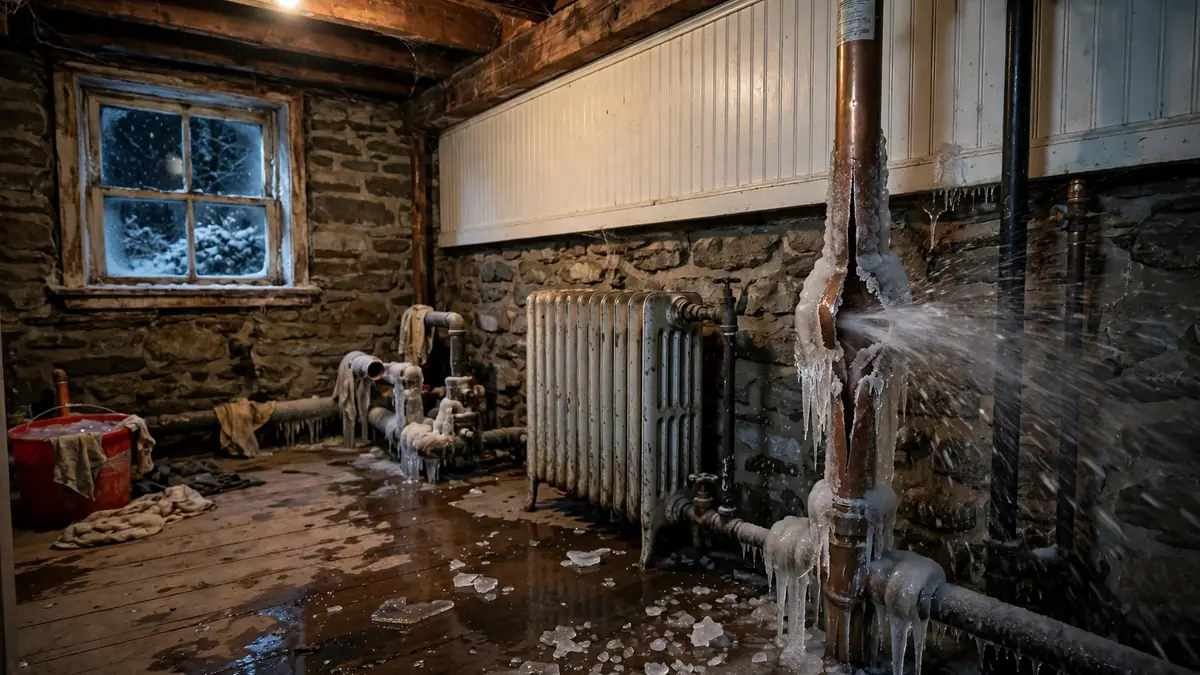
When water freezes, it expands. In a pipe, that expanding ice pushes against trapped water and builds pressure until the pipe splits, often at a spot away from the ice itself. The split stays quiet while the line is frozen. When temperatures rise or someone turns up the heat, the ice melts and water pours out at full pressure [1].
Connecticut's coldest nights bring the most calls. Pipes in exterior walls, under kitchen sinks on outside walls, in unheated garages, crawl spaces and attics, and in houses left cold while owners are away are most at risk. Older homes with plumbing added to former porches or additions without good insulation are especially vulnerable.
Not every burst is about cold. Supply lines to toilets, sinks, dishwashers and ice makers fail with age. Washing machine hoses rupture. Pipe fittings corrode. Water heaters leak. Each sends clean water under pressure into the house, and each can run for hours if nobody is home.
Signs
Signs a pipe has burst or is leaking inside a wall
Some leaks are obvious. Many are not.
No water, then sudden flow
If a faucet gave nothing on a cold morning and later sprays, the line froze and may have split.
Ceiling bulging or stained
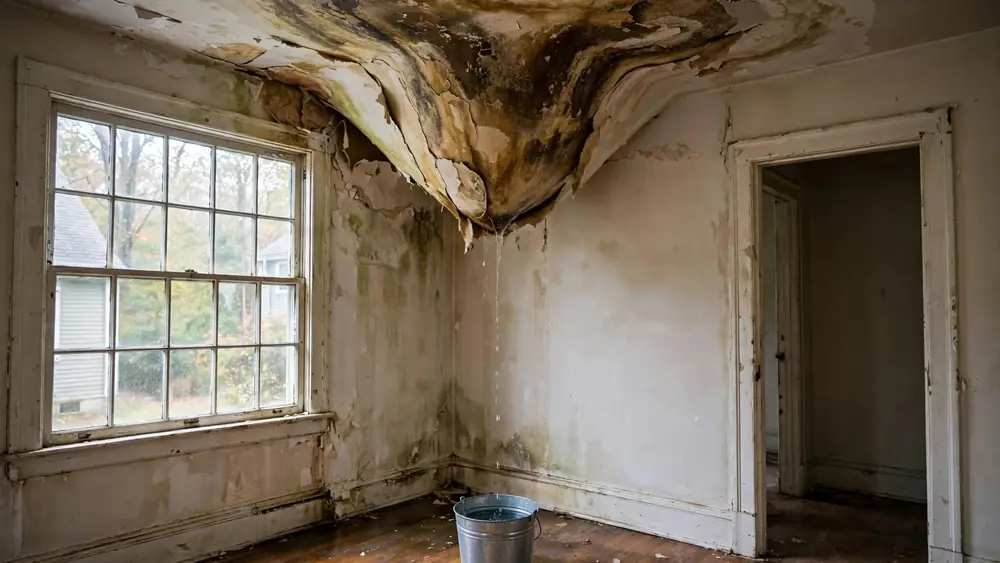
Water pooling above a ceiling causes a sag or a brown ring. Do not stand under it.
Sound of running water
Hissing or running water with every fixture off usually means a hidden leak.
Spinning water meter
With all water off, a moving meter dial points to a leak somewhere in the system.
Wet baseboards or floor
Water running down inside a wall shows up first at the floor line.
Frost on exposed pipes
Visible frost or bulging on a pipe means it is frozen and at risk.
First steps
What to do the moment you find a burst pipe
Speed matters more here than almost anywhere else.
- 1
Close the main shutoff
Find the main valve, usually where the water line enters the basement or near the meter, and turn it fully off.
- 2
Shut off the water heater
Turn gas to pilot or switch off power to an electric heater once the water supply is off.
- 3
Cut power to wet areas
Turn off breakers for wet rooms if the panel is in a dry, safe spot.
- 4
Open faucets
Open the lowest faucet to drain the lines and relieve pressure.
- 5
Stay out from under wet ceilings
A ceiling holding water can collapse. Keep people and pets out of that room.
- 6
Take photos
Record the break, the water and every affected room before cleanup.
- 7
Call a plumber and a restorer
The plumber fixes the pipe; the restorer handles the water damage. They often coordinate.
Ceilings
When water comes through the ceiling
A burst pipe upstairs or in an attic sends water down through the floor or insulation until it reaches a ceiling. Drywall ceilings hold water until the joints or the board itself give way. You may see a growing stain, a bulge, or water dripping from a light fixture.
Restorers usually release water from a sagging ceiling in a controlled way, poking a small hole at the low point with a bucket under it, before the board collapses on its own. Ceiling drywall that has sagged or been soaked for a long time is usually removed. Ceilings that got wet but stayed firm can often be dried, sometimes with small holes for ventilation.
Insulation above a wet ceiling, common in attics and between floors in cape-style houses, usually needs to come out. Wet fiberglass holds water against the drywall and framing and loses its insulating value.
Locations
Common burst pipe locations and what they damage
Where the break happens decides where the water goes.
| Pipe location | Why it fails | Typical damage path |
|---|---|---|
| Under a kitchen sink on an outside wall | Cold air in the cabinet freezes the line | Cabinet base, kitchen floor, basement ceiling below |
| In an exterior bathroom wall | Poor insulation in the wall cavity | Wall cavity, bathroom floor, ceiling below |
| Attic or unheated upper space | Little or no heat reaches the pipe | Insulation, ceiling drywall, rooms below |
| Garage or crawl space | Unheated space, exposed pipe | Garage floor, crawl space insulation, subfloor |
| Outdoor spigot line | Water left in the line freezes inside the wall | Basement wall, rim joist, finished basement |
| Appliance supply line | Age, kinks, worn hoses | Kitchen or laundry floor, cabinets, ceiling below |
Hidden water
Tracing water that you cannot see
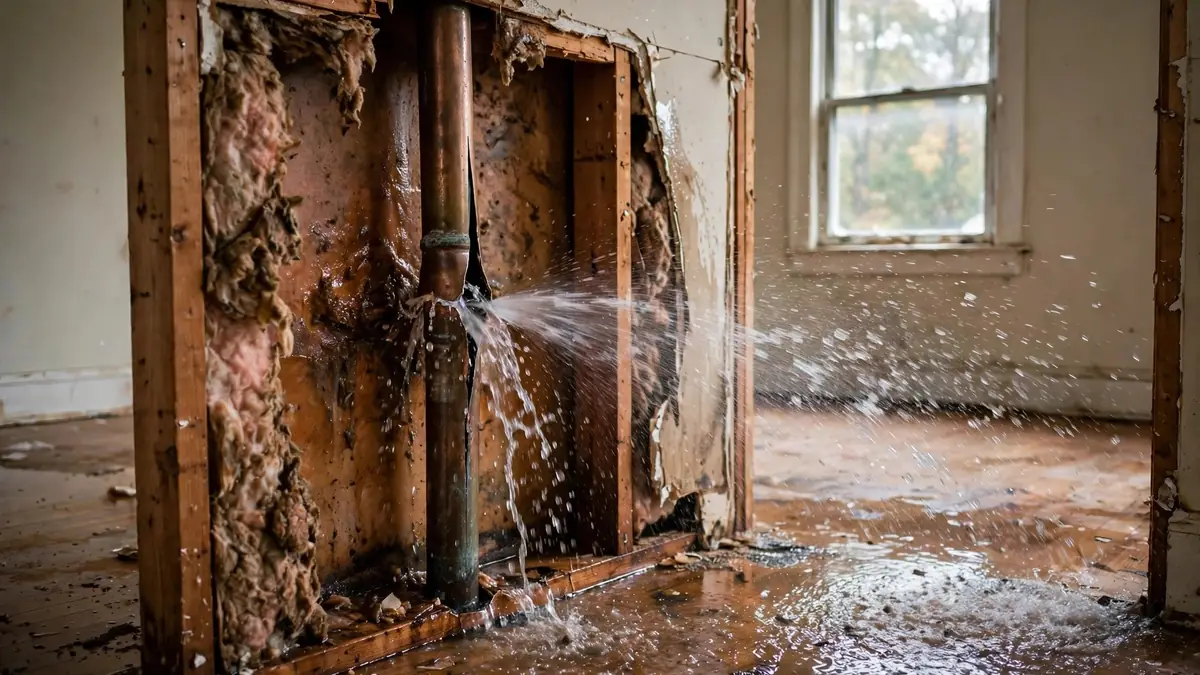
Water from a burst pipe follows framing, wiring and plumbing runs. It can travel along the top of a ceiling, down the inside of a wall and under flooring before surfacing far from the break. A visible stain in the dining room may come from a split pipe in an upstairs bathroom wall.
Restorers trace that path with moisture meters and thermal cameras, checking walls and ceilings above, below and beside the obvious damage. The resulting moisture map shows everything that needs drying. Skipping this step is the most common reason a burst pipe job ends in mold weeks later.
Away from home
When a pipe bursts while you are away
Winter trips and second homes along the shoreline or in the Litchfield Hills are classic burst pipe stories. Heat fails or is set too low, a pipe freezes, and when it thaws, water runs for hours or days before anyone finds it. By then the water has reached every floor and the house is cold and saturated.
These jobs are larger. Water that has sat for days is no longer treated as clean, ceilings and insulation are usually removed, and drying takes longer. If this happened to you, mention how long the house may have been wet when you call, so the contractor can plan for it.
Why it fails
Why burst pipe damage sometimes lingers
Most burst pipe water is clean, which makes it easier to save materials, but only if drying starts quickly. Problems come from three directions. Water hidden in walls or under cabinets is missed. Wet insulation is left in place above a ceiling. Or drying stops when surfaces feel dry while framing and subfloor are still damp.
In winter, a cold house slows drying. The furnace may need repair before heat returns, and the contractor may add temporary heat.
DIY vs pro
What you can do and what to leave to professionals
Do the urgent things; leave the risky ones.
- Do: close the main valveEveryone in the house should know where it is.
- Do: mop and move belongingsClean-water spills on hard floors are safe to mop if the power is off.
- Do: keep heat onHeat helps drying and prevents more pipes from freezing.
- Don't: thaw pipes with flameNever use a torch or open flame. A hair dryer or space heater kept at a safe distance is safer, if at all.
- Don't: stand under a sagging ceilingLet the contractor release the water in a controlled way.
- Don't: reconnect power to wet circuitsAn electrician should check wet fixtures and outlets.
Connecticut specifics
Winter in Connecticut and your plumbing
Connecticut winters bring repeated deep freezes, with the coldest stretches in the inland hills and valleys around Waterbury, Danbury and Litchfield County. Shoreline towns are a little milder but get strong, cold winds off the water that chill exterior walls. Older homes, including colonials, capes and Victorian houses with plumbing added over time, often have pipes running through poorly insulated walls.
Ready.gov and the American Red Cross suggest keeping the heat at a steady temperature day and night, letting faucets drip in extreme cold and opening cabinet doors under sinks so warm air reaches the pipes [2]. If you leave for the winter, many insurers expect you to keep the heat on or shut off and drain the water.
The visit
What happens when the restorer arrives after a pipe break
The contractor should first confirm the water is off and the plumber has repaired or capped the line. Then they map moisture across every affected room and floor, photograph the damage, and decide what to remove: usually sagging ceiling drywall, wet insulation and soaked carpet pad.
Extraction follows, then drying equipment. Clean water caught early gives the best chance of keeping drywall, flooring and cabinets. The contractor returns daily to take readings and adjust equipment until everything is dry. Repairs follow once drying is confirmed.
Safety
Burst pipe safety
The biggest risks are electrical and structural. Water running through a ceiling may reach light fixtures and wiring. Turn off power to affected areas if you can do it safely, and do not touch wet switches or fixtures. Ceilings holding water can fall suddenly, so keep everyone out from under them.
Never use open flame to thaw pipes [1]. Space heaters should be kept away from anything that can burn and never left running unattended. If the furnace has failed, do not use an oven or grill to heat the house; carbon monoxide is a real danger [5].
Pipe materials
Copper, PEX, galvanized and older pipe in Connecticut houses
The kind of pipe in your house affects how it fails. Copper, the most common supply pipe in Connecticut homes built through the late twentieth century, tends to split lengthwise when it freezes, and the split can be several inches long. Joints and fittings can also crack or pull apart. Copper that has corroded from the inside may develop small pinhole leaks that drip slowly inside a wall for weeks.
PEX, the flexible plastic tubing used in many newer homes and renovations, tolerates freezing better than copper because it can stretch a little, but its brass or plastic fittings can still crack. Galvanized steel, still found in some older houses, corrodes from the inside and fails at threaded joints. Older homes often have a mix of all three after decades of repairs.
This matters for the restorer because a slow pinhole leak behaves very differently from a sudden split. A slow leak may have soaked a wall cavity for a long time, and the water may already have grown mold or rotted the sill plate. A sudden split floods quickly but is usually caught soon. Tell the contractor what you know about when the leak may have started.
Thawing
Thawing a frozen pipe safely
If a faucet produces only a trickle on a very cold morning, a pipe somewhere along that line is probably frozen. Keep the faucet open: flowing water helps melt the ice and relieves pressure. Find the frozen section if you can, usually where the pipe runs along an outside wall, through an unheated space or under a sink.
Apply gentle heat: a hair dryer, an electric heating pad, or towels soaked in warm water wrapped around the pipe. Work from the faucet end back toward the frozen section. Never use a torch, kerosene or propane heater, or any open flame [1]. If you cannot find or reach the frozen section, or the pipe has already split, close the main valve and call a plumber.
Have a bucket and towels ready while thawing. A pipe that split while frozen will leak as soon as it thaws, and you want to catch it before it runs into the wall.
Multi-family
Burst pipes in apartments, condos and multi-family houses
In two- and three-family houses and condominium buildings, a burst pipe in one unit often damages others. Water from a top-floor bathroom can reach every ceiling below it. The owner, the condo association, the tenants and sometimes several insurers are all involved.
The first priority is still the same: shut off the water. In condos, the shutoff for a unit may be in a utility closet or a common basement, and the building manager may need to close a riser. After that, the restorer maps moisture in every affected unit. Unit owners should report the loss to their own insurer as well as the association. Documenting damage in each unit with photos and readings helps sort out responsibility later.
Timeline
How burst pipe damage grows with time
General patterns; every house differs.
| Time since the break | What is usually happening | What it means for the job |
|---|---|---|
| First hour | Water spreads across the floor and into the ceiling below | Extraction and drying can save most materials |
| First day | Drywall wicks water upward, pad is saturated, wood starts swelling | Most drywall and floors still savable with prompt drying |
| Two to three days | Musty smell, swelling cabinets, possible early mold | More removal; mold prevention steps added |
| A week or more | Mold growth likely, wood may warp permanently | Significant tear-out; remediation may be needed |
Water heaters
When the leak is the water heater
A water heater tank that rusts through or a relief valve that discharges can release dozens of gallons into a basement or utility closet. Shut off the cold water supply valve on top of the heater and turn the gas control to off or switch off the breaker for an electric unit. If the heater is in a finished space or on an upper floor, the water often reaches the ceiling below.
The restorer handles the water and drying; a plumber handles the heater. If the tank failed because of age, it is usually replaced rather than repaired.
A drain pan under the heater with a line to a floor drain, and a leak sensor beside it, catch many of these failures early. Both are worth adding when a new heater goes in, especially when the heater sits above finished space.
Prevention
Preventing frozen and burst pipes
Insulate pipes in exterior walls, crawl spaces, garages and attics with foam sleeves or heat cable approved for the purpose. Seal gaps where cold air reaches pipes, such as around sill plates and where pipes go through exterior walls. Disconnect garden hoses in autumn and shut off and drain outdoor faucets from inside.
During cold snaps, keep the heat steady, open sink cabinet doors and let a faucet drip on vulnerable lines [2]. When traveling, keep the heat on and ask someone to check the house, or install a smart leak detector and a low-temperature alarm. Replace rubber washing machine hoses and old supply lines with braided ones.
Repair or replace
Keeping or replacing materials after a pipe burst
Because burst pipe water is usually clean, more can be saved than after a flood. Drywall that stayed firm and was dried quickly can often stay. Plaster walls are usually dried in place. Solid hardwood floors may flatten as they dry. Carpet can sometimes be dried; pad usually goes.
Ceilings that sagged, insulation that was soaked and particleboard cabinet bases that swelled are generally replaced. If the house sat wet for days, more material comes out. Our guide on wet drywall covers the decision in more detail.
Insurance
Burst pipes and your homeowners policy
Sudden, accidental water damage from a burst pipe is commonly covered by homeowners insurance, while gradual leaks and damage caused by failing to maintain heat may not be [6]. Policies vary, so read the water damage and freezing sections of yours.
Report the loss promptly, keep receipts for the plumber and emergency work, and save the broken pipe section if possible. The Connecticut Insurance Department offers consumer assistance [7], and our insurance adjuster guide covers what to prepare.
FAQ
Burst pipe questions from Connecticut homeowners
A pipe just burst. What comes first?
Close the main water shutoff, turn off the water heater, cut power to wet areas if you can safely reach the panel, and keep away from sagging ceilings. Then call a plumber and a restorer.
How do I know if a pipe is frozen?
Little or no water from a faucet in cold weather, frost on an exposed pipe or a bulge in the pipe are common signs. Keep the faucet open while thawing gently with a safe heat source.
Will a soaked ceiling need replacing?
If it stayed firm and dries quickly, often yes. If it sagged, collapsed or stayed wet for a long time, it is usually replaced.
Does insurance cover burst pipes?
Sudden pipe bursts are often covered, but damage tied to not heating the house or to slow leaks may not be. Check your policy and report the loss quickly.
How long does drying take after a burst pipe?
Typically three to five days after extraction. Multi-floor leaks, plaster, hardwood and cold weather can extend it.
Will my hardwood floor recover?
Often, if drying starts early. Cupping can flatten as the floor dries. Severe or long-standing water may require replacement.
Should I stay in the house?
Often you can, if the water is off, the electricity is safe and the heat works. Drying equipment is loud, so some families stay elsewhere for a few nights.
Who handles the water damage after a pipe burst?
An independent, licensed restoration contractor who deals with burst pipe damage in your area. This site passes your call to them and plays no part in the agreement you make.