Key facts: Sewage Backup Cleanup
- Sewage is classed as Category 3 (black) water, the most contaminated category [1].
- Floodwater and sewage can carry harmful bacteria; wear protective gear and keep children and pets away [2].
- A backwater valve allows sewage to leave a building but closes to stop it flowing back in [3].
- Combined sewers carry both sewage and storm water, so heavy rain can overwhelm them [4].
How it happens
Why sewage backs up into houses
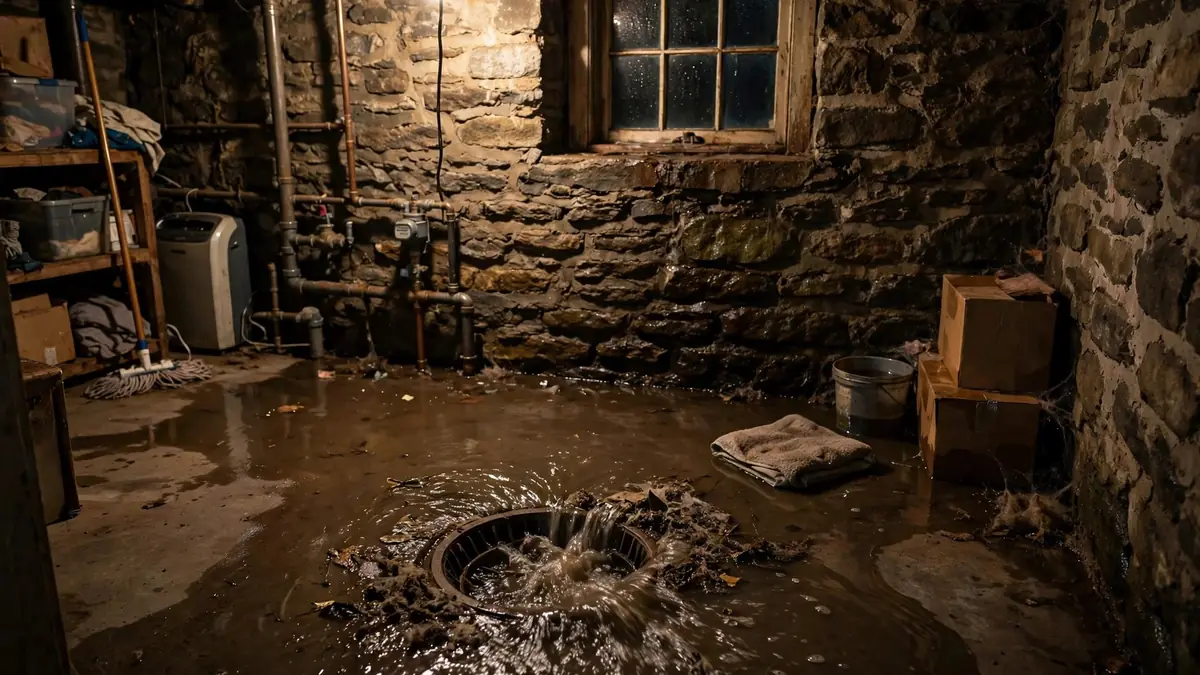
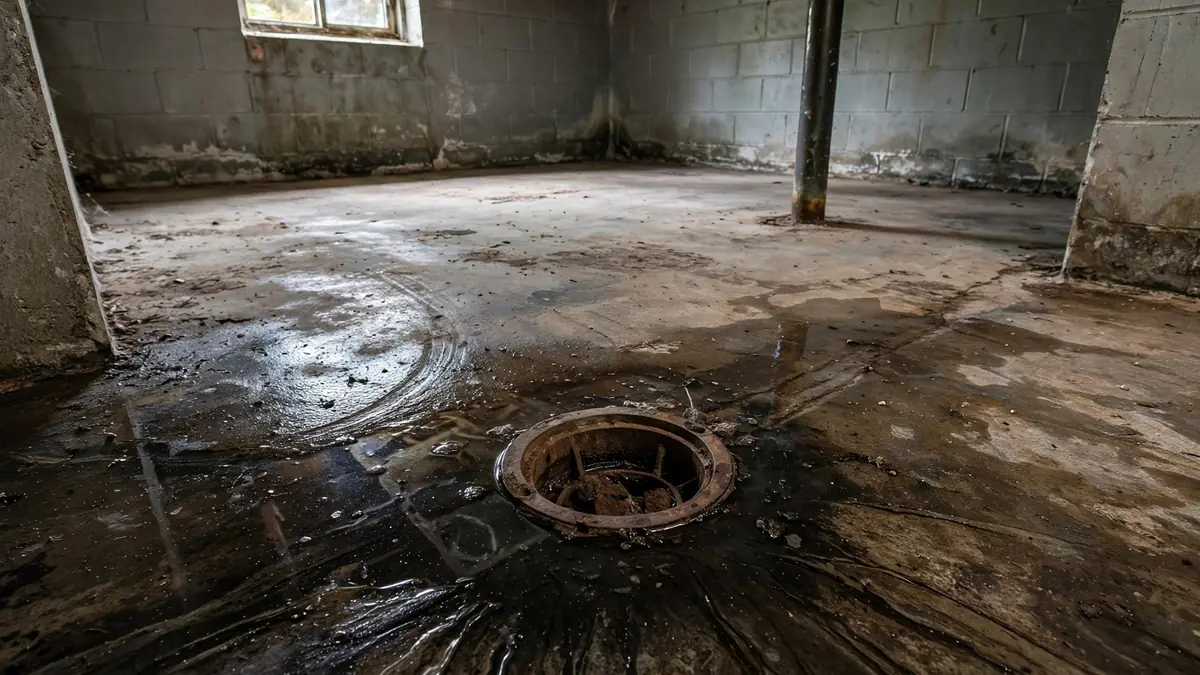
Every drain in a house leads to one main line that runs out under the yard to the municipal sewer or a septic system. When that path is blocked or the sewer itself is full, wastewater has nowhere to go but back up. It comes out at the lowest opening first, which is usually a basement floor drain, a basement toilet or shower, or a laundry standpipe.
Inside the house, the main line can be blocked by tree roots, grease, wipes and other items that should not be flushed, or by a collapsed or sagging pipe. Older Connecticut homes often have clay or cast iron sewer laterals that crack and let roots in over decades.
Outside, the municipal system can surcharge. Some older city systems, including parts of systems in older Connecticut cities, are combined sewers that carry both sewage and storm water in the same pipes [4]. In very heavy rain, the pipes fill and can push water back into connected basements. Even separate sewer systems can be overwhelmed when groundwater leaks into them during storms.
Signs
Signs of a sewer backup in your home
Act quickly if you notice any of these.
Water rising from a floor drain
Dark or smelly water coming up through a basement drain is the classic sign.
Several drains slow at once
When sinks, tubs and toilets all drain slowly, the main line is likely blocked.
Gurgling toilets
Air pushed back through the system makes toilets bubble when other fixtures drain.
Sewage smell
A strong sewer odor in the basement often comes before visible water.
Tub fills when the toilet is flushed
Water appearing in another fixture means it cannot get past a blockage.
Backup during heavy rain
If it only happens in storms, the municipal sewer may be surcharging.
Health
Why sewage is handled differently
Sewage contains human waste and everything else that goes down household drains. It can carry bacteria, viruses and parasites that cause illness. Restoration standards place it in the highest contamination category, sometimes called black water [1]. Guidance on flood cleanup applies the same caution: treat everything it touched as contaminated, wear protective gear and keep children, pregnant people, older adults and anyone with a weakened immune system away from the area [2].
That is why sewage cleanup is not a mop-and-bleach job. The aim is to remove the contamination, not spread it around. Porous materials soaked by sewage, including carpet, pad, drywall, insulation, upholstered furniture, mattresses and cardboard, are removed and bagged. Hard surfaces are cleaned and then disinfected. Only then does drying begin.
The job
How a sewage backup cleanup is done
Cleaning comes before drying, never the other way round.
- 1
Stop the flow
Water use in the house stops. A plumber or sewer contractor clears the blockage or the municipal surcharge recedes.
- 2
Protect people
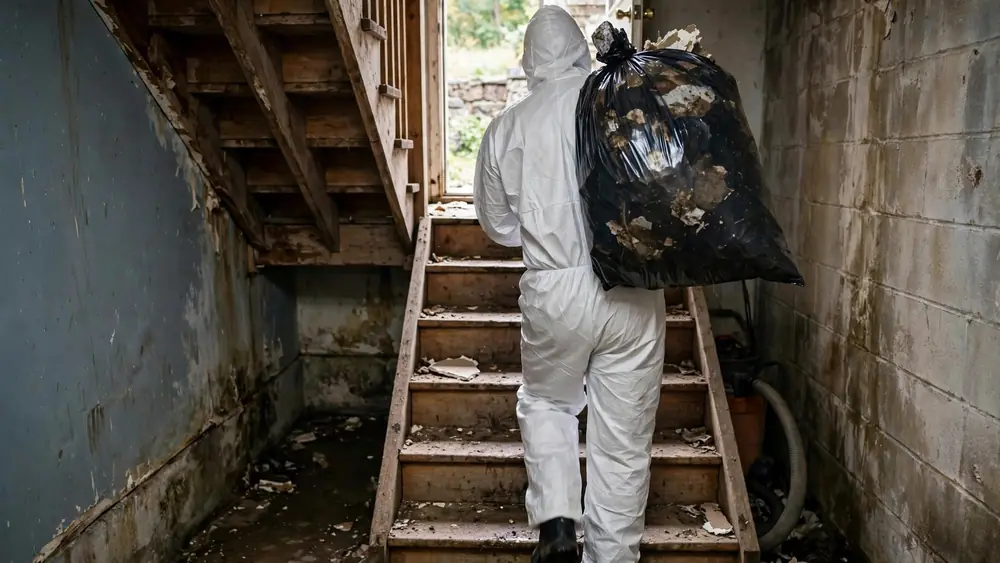
Occupants stay out of the area. Workers wear suits, gloves, boots, eye protection and respirators.
- 3
Contain the area
Plastic sheeting and negative air machines can keep contamination from spreading to clean rooms.
- 4
Document
Photos record the depth, the source and affected materials before removal.
- 5
Extract
Liquid sewage and solids are removed with pumps and extractors dedicated to contaminated water.
- 6
Remove porous materials
Carpet, pad, the lower part of drywall, insulation and soaked contents are cut out, bagged and removed.
- 7
Clean and disinfect
Hard surfaces, framing and concrete are cleaned with detergent, rinsed and treated with a disinfectant.
- 8
Dry and verify
Air movers and dehumidifiers dry the cleaned structure. Moisture readings confirm it is dry before rebuild.
What stays
What can be saved after a sewage backup
General guidance; the contractor decides item by item.
| Material or item | Usual outcome | Why |
|---|---|---|
| Carpet and pad | Discarded | Cannot be reliably decontaminated |
| Drywall and insulation below the water line | Cut out and discarded | Absorbs contamination into its core |
| Concrete floors and block walls | Cleaned and disinfected | Non-porous enough to clean thoroughly |
| Wood framing | Cleaned, disinfected, dried | Structural; usually savable unless long soaked |
| Upholstered furniture and mattresses | Discarded | Contamination soaks deep into padding |
| Solid wood, metal, glass, hard plastic | Cleaned and disinfected | Surfaces can be cleaned |
| Clothing and washable textiles | Sometimes saved | Hot water laundering or professional cleaning |
| Paper, books, cardboard | Usually discarded | Absorb contamination; irreplaceable papers may be specialist-treated |
Septic systems
Backups in homes on septic systems
Many Connecticut homes outside the cities, especially in Litchfield County and the quieter parts of Fairfield, New Haven and New London counties, use private septic systems. A backup in a septic home usually means a full tank, a clogged outlet baffle, a failing leach field or a blockage between the house and the tank. Heavy rain that saturates the leach field can also stop the system from draining.
The cleanup inside is the same as for a municipal sewer backup, but the fix outside is different. A septic contractor needs to pump and inspect the tank and check the field. Until then, limit water use. Tell the restorer whether you are on septic or city sewer, since it changes who else needs to be called.
Storm surcharges
Sewage backups during Connecticut storms
Heavy rain is the most common trigger for backups that hit many homes at once. When storm water floods into sewer lines, through combined sewers or through cracks and leaky manholes, the pipes run full and push water back up through the lowest drains [4]. Coastal storms and high tides can make this worse for low-lying areas near the Sound.
If backups only happen in storms, the fix may involve the municipal sewer as well as your own plumbing. A backwater valve on your main line closes when water flows the wrong way and can protect your basement from future surcharges [3]. Your plumber can tell you whether one suits your house and whether your town requires a permit to install it.
Why it fails
Why sewage cleanups sometimes leave problems
Sewage cleanups go wrong when contaminated materials are dried instead of removed, when surfaces are disinfected without being cleaned first, or when contamination is tracked into clean rooms. Disinfectants work poorly on dirty surfaces; physical cleaning comes first.
Another failure is fixing the symptom but not the cause. If the main line is full of roots or the lateral has collapsed, the next backup is only a matter of time. A camera inspection of the sewer line after the cleanup tells you what you are dealing with.
DIY vs pro
What you should and should not do yourself
Sewage is not a safe DIY job beyond the basics.
- Do: stop using waterEvery flush or shower adds more water to the backup.
- Do: keep people and pets outClose the door to the basement and keep children away.
- Do: turn off power if safeOnly if the panel is in a dry area you can reach without touching the water.
- Do: call a plumber or sewer contractorThe blockage has to be cleared before cleanup can finish.
- Don't: wade in without protectionSkin contact and splashes can spread illness.
- Don't: use household fansThey can spread contamination and odors through the house.
- Don't: mix cleaning chemicalsBleach mixed with ammonia or acids produces toxic gas.
Connecticut specifics
Older sewers and older houses in Connecticut
Connecticut's older cities built their sewer systems long ago, and parts of some systems still combine sewage and storm water [4]. Many older homes in Bridgeport, New Haven, Waterbury and Norwalk have original clay or cast iron sewer laterals that are now near the end of their life. Tree roots from mature street trees are a common cause of blockages.
Basements in these homes are often used for laundry and storage, and some have been finished with a bathroom. A basement toilet or shower is the lowest fixture in the house and the first to overflow. Homes built at low elevations near rivers and the shoreline are more exposed to surcharge during heavy storms.
The visit
What happens when the restorer arrives for a sewage backup
Expect the contractor to ask whether the blockage has been cleared, whether you are on sewer or septic, how deep the water is and how long it has been there. They will suit up before entering the area and usually set up containment to protect the rest of the house.
Work often moves quickly: extraction, removal of contaminated materials, bagging and hauling, then cleaning and disinfection. Drying equipment goes in last. The contractor should explain what is being removed and why, and photograph it for your insurance claim.
Safety
Staying safe around sewage
Avoid skin contact with sewage. If you touch it, wash with soap and clean water right away. Do not eat, drink or smoke in the affected area. Keep cuts and scrapes covered, and seek medical advice if you develop symptoms after exposure [2].
Electrical and gas hazards still apply: do not touch electrical equipment while standing in water, and leave any appliance that sat in sewage off until it has been inspected. Ventilation helps with odor but should not blow contaminated air into clean rooms.
Prevention
Preventing the next sewage backup
Do not flush wipes, even those labeled flushable, or pour grease down drains. If you have large trees near the sewer line, a periodic camera inspection can catch root intrusion early. Repair cracked or sagging laterals before they fail completely.
A backwater valve can protect basements in areas prone to surcharge [3]. Keep basement floor drain covers in place and consider a drain plug or check valve for drains that are rarely used. For septic homes, regular pumping and inspection keep the system working.
Repair or replace
Rebuilding after sewage cleanup
After cleaning, disinfection and drying, the basement can be rebuilt. Most finished materials below the water line will be new: drywall, insulation, flooring and trim. This is a good time to choose materials that tolerate water, such as tile or vinyl floors and moisture-resistant wall panels, especially if the basement has backed up before.
Anything electrical that was submerged, including outlets, appliances and furnace controls, should be inspected and often replaced.
Insurance
Sewage backup and insurance coverage
Many standard homeowners policies do not cover sewer or drain backup unless you added a specific endorsement, often called water backup coverage [5]. Backups caused by outside flooding may fall under flood insurance instead [6]. Check your declarations page and ask your agent.
Take photos before cleanup, keep a list of discarded items and save receipts. The Connecticut Insurance Department can answer questions about coverage and claims [7].
Sewer or septic
City sewer and septic backups compared
Who to call depends on where the wastewater goes.
| Question | City sewer home | Septic home |
|---|---|---|
| Usual inside cause | Roots, grease or wipes in the house lateral | Full tank, clogged baffle or blocked inlet pipe |
| Usual outside cause | Municipal line surcharging in heavy rain | Saturated or failing leach field |
| Who clears it | Plumber or sewer contractor; the town if the public main is blocked | Septic contractor to pump and inspect |
| Prevention | Backwater valve, camera inspection, careful flushing | Regular pumping, protecting the leach field, careful flushing |
| While waiting | Stop all water use | Stop all water use |
Sewer inspection
Finding out why the sewer line failed
Once the backup is cleared, a camera inspection of the main line is the best way to understand what happened. A plumber or sewer contractor feeds a small waterproof camera through a cleanout and records the inside of the pipe all the way to the street connection. The video shows roots, cracks, sags where water collects, offset joints and pipe that has partly collapsed.
With that information, the fix becomes clear. Roots can be cut and the line cleaned, but they usually return. Cracked or collapsed sections can be dug up and replaced or, in many cases, lined from inside. A sagging section that holds waste will keep causing slow drains. Knowing whether the problem was in your lateral or in the public main also matters, because towns typically maintain the main and owners maintain the lateral. Ask your town's public works or sewer department where the line of responsibility sits.
Keep a copy of the inspection video and any written report. They are useful for the insurance claim and for future buyers or contractors.
Contents
Handling belongings touched by sewage
Belongings are often the hardest part emotionally. The rule of thumb is that porous items soaked by sewage cannot be made reliably safe and are discarded, while hard, non-porous items can be cleaned and disinfected [2]. Clothing and washable textiles that were splashed rather than soaked can sometimes be saved by laundering in hot water with detergent, or by professional cleaning.
For items of real sentimental or monetary value, such as photographs, heirloom textiles, artwork or documents, ask the contractor about specialist cleaning services before anything is thrown out. Some items can be frozen to stop further damage while you decide. Photograph and list every item you discard, with a rough description and age, for the insurance inventory.
Claim records
What to record during a sewage backup
Good records make the claim smoother.
- When it startedThe date and time you first noticed the backup, and whether it was raining.
- Photos and videoThe water at its highest, the drain or fixture it came from, and every affected room.
- The causeThe plumber's or septic contractor's written finding, including any camera inspection.
- Discarded itemsA list with photos of everything thrown out.
- ReceiptsPlumber, septic, restoration, temporary lodging and replacement essentials.
- ConversationsNames, dates and notes from calls with your insurer, landlord or town.
Odor
Clearing sewage odor after cleanup
A lingering sewer smell after cleanup usually means something contaminated was missed, a material is still damp or a drain trap has dried out. Odor control products only mask the problem. The fix is to find and remove the source: bagging any remaining porous material, re-cleaning surfaces and confirming dryness. Floor drains that are rarely used should have water poured into them so the trap seal stays full and blocks sewer gas.
Fixtures
Basement toilets, showers and laundry drains
Fixtures below the level of the street sewer are the first place a backup appears. A basement bathroom added during a renovation, a laundry sink, a shower or an ejector pit for a below-grade toilet all sit lower than the rest of the plumbing. When the main line slows, wastewater from upstairs fixtures rises out of these first.
Ejector pumps, which lift waste from a basement bathroom up to the main line, can fail just like sump pumps. A failed ejector pump overflows its sealed pit and floods the basement with sewage. If your basement bathroom has one, tell the restorer and have a plumber check the pump and its alarm as part of the fix. Adding a high-level alarm to an ejector pit is a small step that can prevent a large cleanup.
Laundry is another common trigger. A washing machine draining a full load into a partly blocked main line can push wastewater out of the basement floor drain within minutes, which is why stopping all water use is the first instruction.
Tenants
Sewage backups in rentals and multi-family buildings
In rental properties, the landlord is usually responsible for the building's plumbing and for arranging cleanup of the structure, while tenants are responsible for their own belongings and renters insurance. Report a backup to your landlord in writing right away. In two- and three-family houses, a blockage in the shared main line can back up into the lowest unit even though the cause is upstairs, so every household should stop using water until it is cleared.
FAQ
Sewage backup questions from Connecticut homeowners
Is sewage backup dangerous?
Yes. Sewage can carry bacteria, viruses and parasites. Avoid contact, keep children and pets away and leave cleanup to people with protective gear.
Can I clean up a small sewage backup myself?
A very small backup on a hard floor can be cleaned with gloves, boots and eye protection, followed by disinfection. Anything involving carpet, drywall or more than a small area should be handled by professionals.
Will my carpet have to be thrown away?
Yes, carpet and pad soaked by sewage are almost always discarded because they cannot be reliably decontaminated.
Does homeowners insurance cover sewer backup?
Often only with a water backup endorsement. Check your policy or ask your agent.
How do I stop sewage from backing up again?
Clear and inspect the main line, repair damaged pipe, avoid flushing wipes and grease, and consider a backwater valve if your area surcharges in storms.
Why did my basement drain back up during a storm?
Heavy rain can fill municipal sewers, especially combined systems, and push water back into connected basements.
How many days does a sewage cleanup run?
Removal and cleaning often take one to two days. Drying afterwards usually adds several more days.
Who performs the sewage cleanup?
A local contractor equipped for sewage cleanup, working independently. Your call is routed to them; terms, timing and the scope of work are agreed between you and that contractor.