
Key facts: Water Extraction in Bridgeport
Access
Getting extraction equipment into Bridgeport buildings
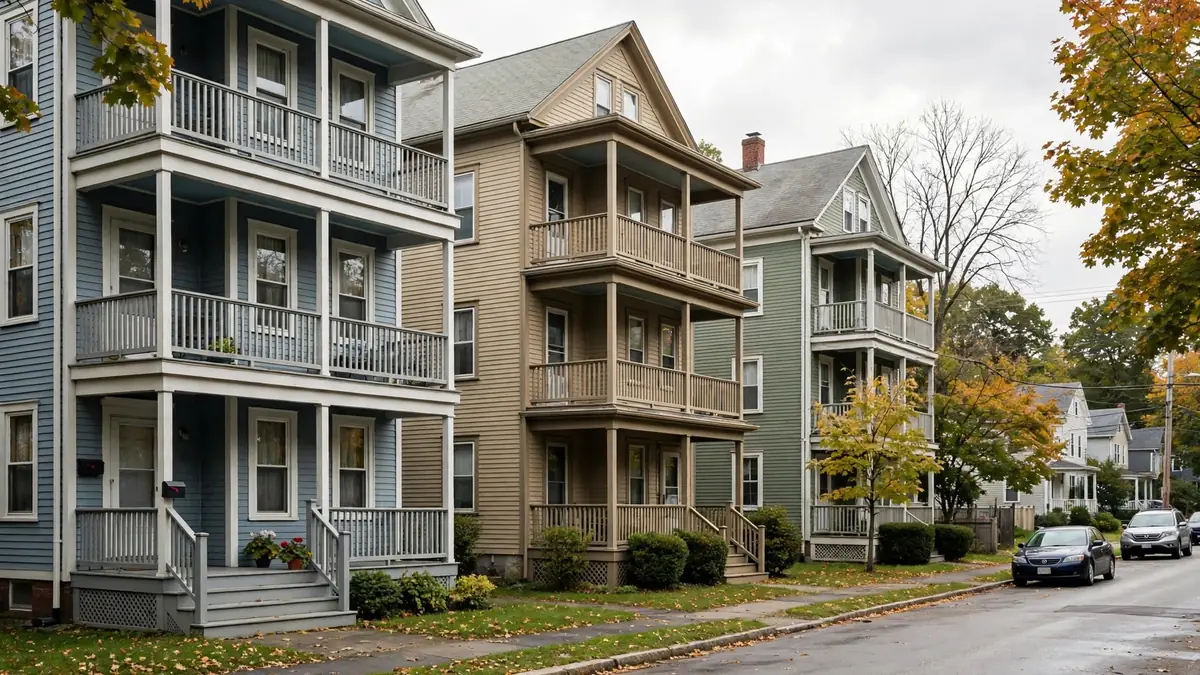
Truck-mounted extractors work best when the van can park close. On many East Side and East End blocks, triple-deckers sit a few feet apart with shared driveways, so the crew may run long hoses up a side path or switch to portable extractors carried up interior stairs. Telling the contractor on the call how close a vehicle can get saves time when they arrive.
Upper-floor apartments add another wrinkle. Portable units and wet vacuums are carried up, and water pulled out of a third-floor kitchen is often drained to a tub or toilet rather than hosed outside.
Stacked units
Extracting water that has dropped through several floors
Water from a burst line on the top floor of a three-decker [4] rarely stays there. It soaks the ceiling below, pools on the second floor and keeps falling. Extraction starts at the top so the source area stops feeding the units below, then works down, apartment by apartment, until the basement is reached.
Each unit is photographed and read with a moisture meter before water is removed. That record matters to the owner's insurer and to tenants' renters policies, which usually cover different things.
Shoreline
Extraction after coastal water along the harbor
Low streets near the harbor and the Sound can take on storm water during big coastal events; Hurricane Sandy prompted evacuations across Connecticut in 2012 [5]. Water that came in from outside is treated as contaminated, so extraction is followed by removal of soaked porous materials and cleaning [3].
Do not go back into a flooded lower level until officials say it is safe and the power to it is confirmed off.
River area
Low ground near the Pequonnock
The Pequonnock River runs into Bridgeport Harbor and has a long habit of flooding, particularly in spring [6]. Homes on low lots near the river and its brooks are the ones most likely to need a pump-out after heavy rain on saturated ground. Clearing window wells and moving stored boxes off the basement floor before a big storm limits what needs extracting afterwards.
First hour
Before the Bridgeport crew arrives
Small steps that make extraction faster.
- Shut off the right valveUse the unit shutoff, or the building main in the basement if the leak is in a shared line.
- Knock on the doors belowDownstairs neighbors may not know water is coming.
- Clear a pathMove cars and bins so hoses can reach the door.
- Lift rugs and furnitureGet them off wet carpet so extraction can reach the pad.
- Photograph each apartmentBefore anything is moved, in every affected unit.
Neighbors
Water that crosses into the house next door
On streets where houses stand a driveway's width apart, a flooded basement can share groundwater with the one next door, and a burst line in a top-floor apartment can drip onto a neighbor's porch roof. Extraction stops at your property line, but it helps to tell the neighbors what happened so they can check their own basements and walls.
If the water came from a shared feature, such as a common drain or a party wall in a row of attached houses, owners may need to coordinate who calls whom. A restorer can document both sides if both owners agree.
Materials
What extraction pulls out of a Bridgeport apartment
Typical finishes in older units are carpet over plank or strip floors, sheet vinyl in kitchens and plaster walls. Carpet and pad hold the most water and are extracted first, with pad usually removed. Vinyl traps water beneath it, so a corner may be lifted to let the extractor reach the subfloor. Plaster is not extracted but is read with a meter so drying can target it.
In basements, the crew also clears water from around the boiler base, under laundry machines and out of any low spot by the floor drain.
Where water sits
Where extraction focuses in a Bridgeport three-decker
A typical sequence from top to bottom.
| Location | What is usually found | Extraction approach |
|---|---|---|
| Source unit (top floor) | Standing water on kitchen or bath floor | Wet vacuum and portable extractor |
| Middle unit | Wet ceiling, damp carpet below the source | Release ceiling water, extract carpet |
| First floor | Dripping ceiling, wet floor near the chase | Extract floor, check walls |
| Basement | Puddles by the chase and around mechanicals | Pump or wet vacuum, clear drains |
Timing
Why the first hours matter in an older building
Plank subfloors and old strip floors soak up water quickly, and plaster ceilings get heavier by the hour. Getting extraction started the same day keeps a ceiling from sagging and limits how much floor has to be dried. Mold guidance points to drying within a day or two, which only works if the standing water is out first.
If you cannot reach the owner quickly, document everything and keep trying; tenants can still move belongings and protect their own things while they wait.
Coordination
Coordinating extraction with a Bridgeport landlord
Tenants who find water often cannot authorize work on the building. Call or text the owner first; if the owner is unreachable and water is spreading, protect your own things, keep records and keep trying. Owners who manage from out of town should give tenants a local contact and the location of the building main, because extraction that starts an hour earlier can save a ceiling.
FAQ
Water extraction questions from Bridgeport residents
Can extraction be done in an occupied apartment?
Yes. Portable extractors and wet vacuums work fine in occupied units. Tenants may want to move valuables and pets to another room while the crew works.
Who arranges extraction in a rented three-decker?
Usually the building owner, since the structure and plumbing are theirs. Tenants should report the water in writing and keep photos of their belongings.
My basement has a floor drain. Why is water coming up instead of going down?
The sewer line may be blocked or surcharged by heavy rain. Treat that water as sewage and stay out of it.
How long does extraction take in a three-unit building?
Often a few hours per unit, longer if the basement is flooded. Drying afterwards takes several more days.
Does carpet in a Bridgeport rental have to go?
Clean-water carpet extracted quickly can often stay. Pad is usually replaced, and carpet soaked by sewage or storm water is discarded.