Key facts: Flooded Basement Cleanup
- Floodwater can contain sewage and chemicals, so flooded items are treated as contaminated [1].
- Standard homeowners policies generally exclude flood damage; flood insurance is sold separately, for example through the NFIP [2].
- Basement carpet, drywall and boxes that stay wet beyond a day or two are prime places for mold to start [3].
- The 1955 floods were among the most destructive in Connecticut history, hitting river valleys across the state [4].
How it happens
How water gets into Connecticut basements
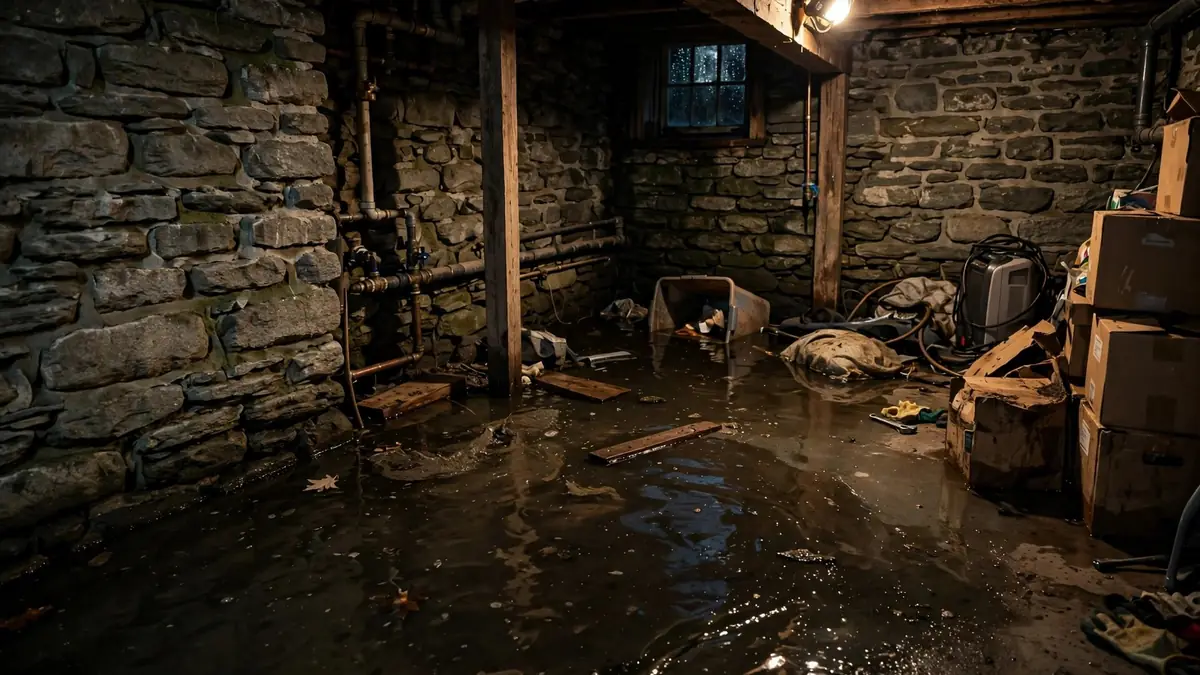
A basement sits below the ground around it, so gravity is always working against it. Water reaches it in a handful of ways. Groundwater rises after long rain or snowmelt and pushes through the floor and the joint where the floor meets the wall. Surface water from clogged gutters, short downspouts or a yard that slopes toward the house soaks the soil next to the foundation and seeps through cracks. Storm water overwhelms window wells and exterior stairwells and pours in.
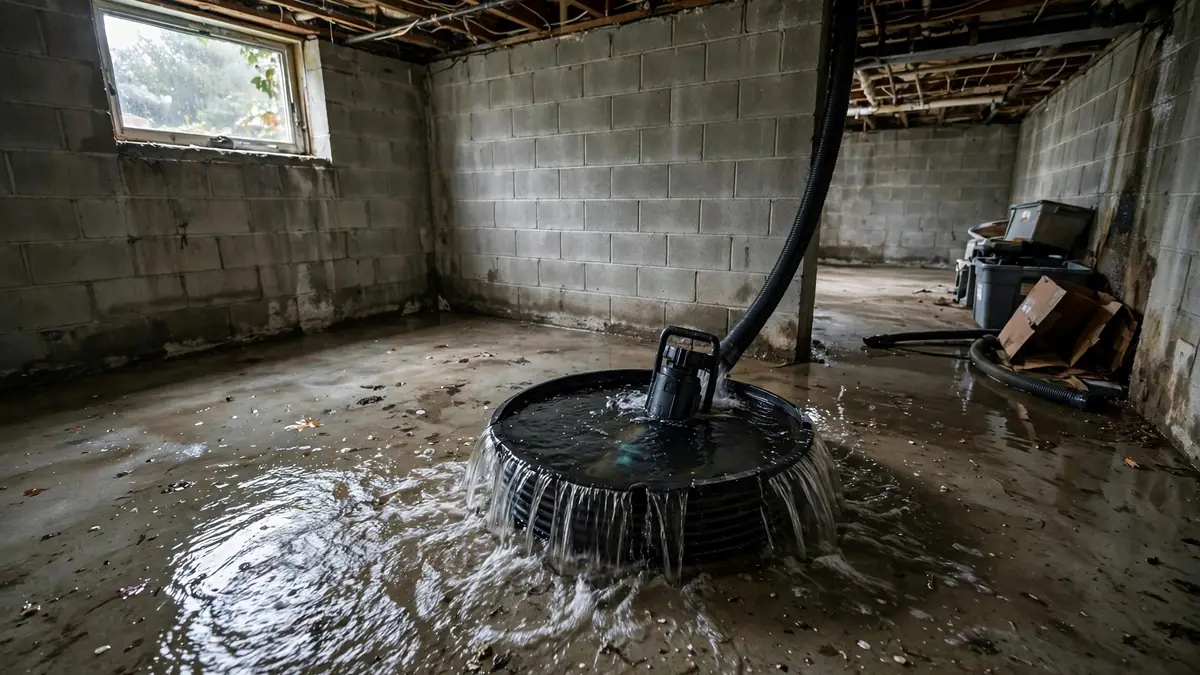
Mechanical failures add to the list. A sump pump that loses power during a storm, wears out or jams lets the pit overflow. A water heater tank fails and empties its contents. A washing machine hose bursts. Drains back up when the municipal sewer surcharges in heavy rain. And in river towns and along the shoreline, actual flooding can push water in through doors and windows.
Knowing which one happened matters for the cleanup, the repair and the insurance claim. Clean water from a burst supply line is handled very differently from groundwater mixed with soil, and both are different again from a sewer backup.
Signs
Signs your basement flooding needs professional cleanup
Small amounts of clean water can be mopped. These cannot.
Water over the slab
More than a thin film across the floor means pumping and extraction, not towels.
Finished walls wet at the bottom
Drywall and insulation wick water upward. A wet tide line usually means the wall is wet higher inside.
Carpet or padding soaked
Basement carpet over concrete holds water against the slab and grows mold quickly.
Water came from a drain
Water rising from a floor drain or toilet is likely sewage and needs protective gear.
Furnace, boiler or water heater in water
Equipment that sat in water should be checked by a qualified technician before use.
Musty smell in a day or two
That smell means microbes are already growing in damp materials.
Water type
Clean, groundwater, floodwater or sewage
Restorers classify water by contamination. A burst supply pipe starts as clean water. Groundwater seeping through the foundation is usually treated as at least gray water, because it has passed through soil and picks up whatever is in it. Outside floodwater from a river, a street or the Sound and any backflow from a sewer are treated as black water, the highest category [5].
The category decides the cleanup. With black water, porous materials that were soaked, including carpet, pad, drywall, insulation, upholstered furniture and cardboard boxes, are generally discarded because they cannot be reliably cleaned [1]. Hard surfaces are cleaned and disinfected. With clean water, much more can be dried and kept if the work starts quickly.
Time changes the category too. Clean water that has sat in a warm basement for several days grows bacteria and is treated as contaminated.
The job
How a flooded basement cleanup usually unfolds
The order is the same whether the water came from inside or outside.
- 1
Stop the water
If the source is a failed pump, a temporary pump goes in. If it is a burst pipe, the main is shut off. If it is outside flooding, work waits until levels fall.
- 2
Make it safe
Power to the basement is shut off at the panel by someone who can reach it safely, gas appliances are left off and the water is categorized.
- 3
Document
Photos and readings record the water level, the source and damaged items before anything is moved.
- 4
Pump and extract
Submersible pumps take out deep water, then extractors pick up what is left from the slab and carpet.
- 5
Remove contents and debris
Belongings are sorted into keep, clean and discard. Wet cardboard, paper and soft goods are moved out quickly.
- 6
Tear out what will not dry
Carpet, pad, the lower part of drywall and wet insulation are removed, especially with contaminated water.
- 7
Clean and disinfect
Concrete, framing and remaining surfaces are cleaned. Sanitizers are used where contaminated water was present.
- 8
Dry the structure
Dehumidifiers and air movers run until framing, the slab and block walls reach their dry readings.
Sources
Basement water sources and what each one usually means
Match what you see to the likely source before calling.
| What you see | Likely source | Water category | First step |
|---|---|---|---|
| Water along the floor-wall joint after rain | Groundwater pressure or surface water | Usually gray | Check gutters and downspouts; call for pumping if deep |
| Water rising from the sump pit | Failed or overwhelmed sump pump | Usually gray | Restore power or bring in a temporary pump |
| Water rising from a floor drain | Sewer backup or storm surcharge | Black | Stop using water in the house; stay out |
| Water around the water heater | Failed tank or relief valve | Clean at first | Shut off the cold supply and power or gas |
| Water at the laundry area | Washing machine hose or drain | Gray | Shut off the machine's supply valves |
| Muddy water through windows or doors | Outside flooding | Black | Wait for water to recede; avoid entry |
Finished basements
When the flooded basement was finished living space
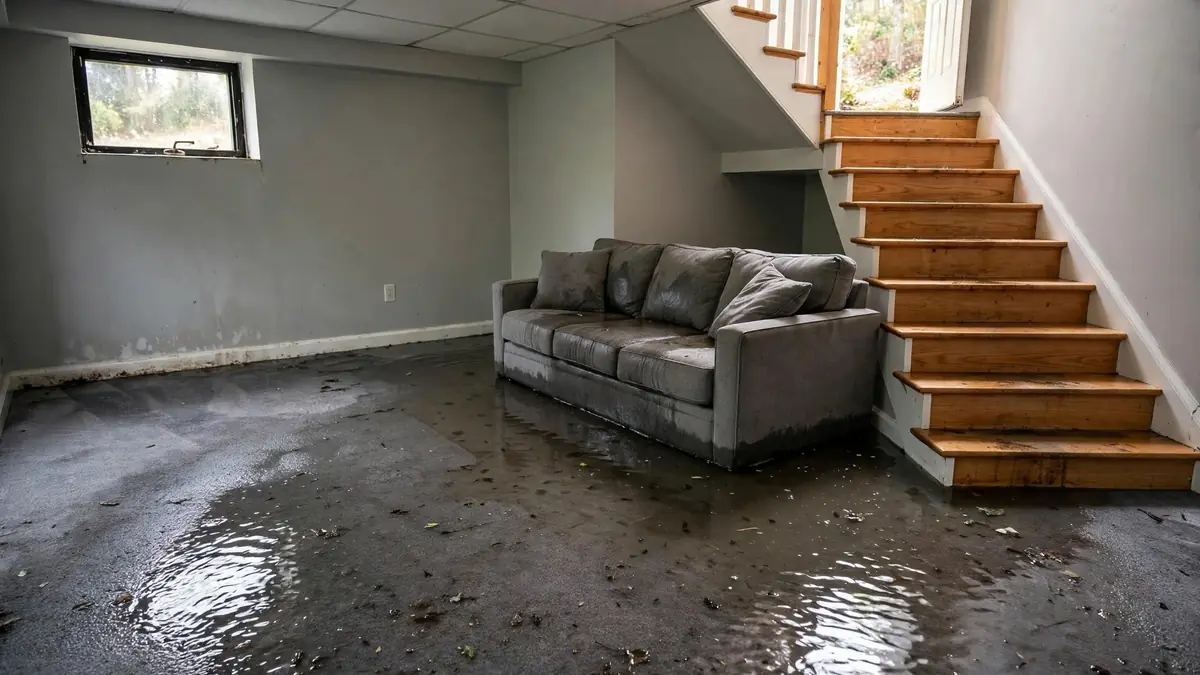
Many Connecticut families have turned basements into family rooms, offices and guest rooms. Finished spaces hold far more water than bare concrete, and the damage hides behind the finishes. Drywall and fiberglass insulation run down to the slab, carpet sits directly on concrete, and furniture sits on the carpet.
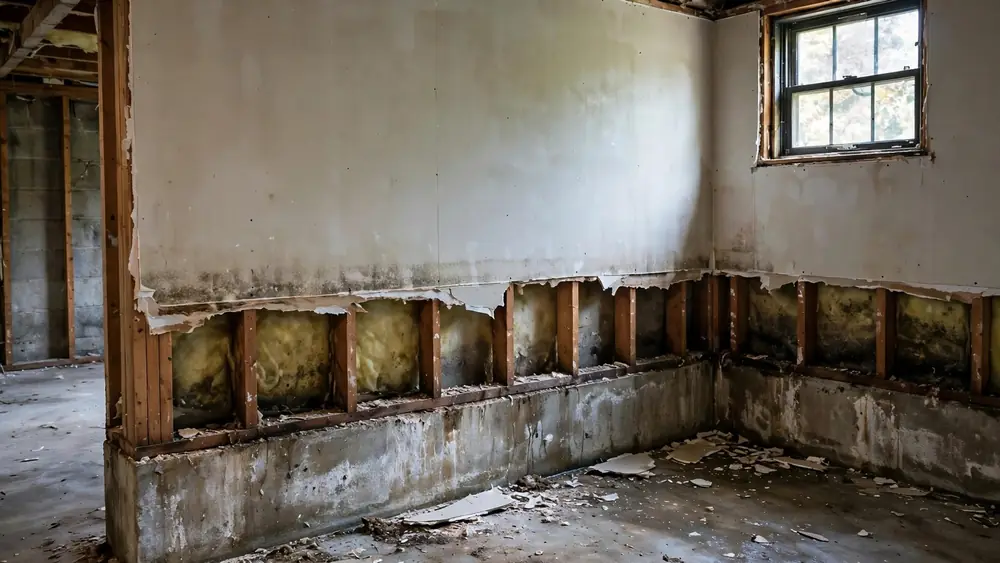
With clean water caught early, some of this can be dried. With groundwater, floodwater or sewage, the usual approach is to remove carpet and pad, cut the drywall above the water line (often two feet or so up the wall), pull wet insulation and dry the framing and foundation behind it. That flood cut makes the eventual rebuild simpler and lets the contractor see whether the foundation itself is leaking.
Rebuilding is a chance to make the space more forgiving next time: closed-cell foam or rigid insulation that does not hold water, moisture-resistant wall materials, and flooring that can survive getting wet. Your contractor can talk through options once drying is complete.
Storms and rivers
Basement flooding during Connecticut storms
Connecticut has a long record of serious floods. In August 1955, rain from Hurricanes Connie and Diane caused rivers in the Naugatuck, Farmington and other valleys to flood, damaging towns across the state [4]. Coastal storms add surge: Hurricane Sandy in 2012 led to evacuations along the Connecticut coast [6], and Tropical Storm Irene in 2011 caused widespread damage across the Northeast [7].
Most basement water in Connecticut is less dramatic, but the same principles apply. Watch National Weather Service warnings, move valuables off the basement floor before a big storm and never walk or drive through floodwater [8].
Why it fails
Why basements flood again after cleanup
A cleanup that only removes water leaves the cause in place. If gutters are still overflowing, the downspouts still dump water against the foundation and the sump pump is still the same tired unit, the next big storm brings the same result. A good contractor talks through the likely source, even if fixing it is someone else's job.
Cleanups also fail when drying stops too early. Concrete and block hold a lot of water, and finishing over damp walls traps it. Rebuilding over still-wet framing is a common cause of a musty basement a few months later.
DIY vs pro
What you can safely do in a flooded basement
Only if the power is off and the water is clean.
- Turn off power safelyIf the panel is upstairs or reachable from dry ground, switch off the basement circuits. Otherwise wait for help.
- Do not run gas appliancesFurnaces, boilers and water heaters that got wet need inspection before use.
- Photograph everythingWater level, the source, damaged items and any water line on the walls.
- Move items upLift boxes, electronics and anything valuable to a dry floor.
- Check the sump pumpIf it lost power, restoring power may solve it. If it runs but water keeps rising, it may be overwhelmed or broken.
- Stay out of black waterIf the water came from a drain or outside, wait for someone with protective gear.
- Ventilate carefullyOpen windows only on dry days; on humid days they add moisture.
Connecticut specifics
Connecticut basements and what makes them different
Connecticut's older homes, especially in cities like Waterbury, New Haven and Bridgeport, often sit on fieldstone, brick or block foundations that were never meant to be fully waterproof. Many have dirt or thin concrete floors that were improved over the decades. These basements tend to be damp and to take on water in wet seasons.
The state's glacial soils and high groundwater in many valleys add to the problem. Snowmelt in March and April, followed by spring rain, is a common peak time for basement water. Coastal homes from Greenwich to Stonington face another risk: storm surge pushing water through low openings [9].
In older homes, basement materials may include pipe insulation, floor tile or other products that contain asbestos. The EPA advises leaving such materials undisturbed and having them tested before removal [10]. A contractor should ask about the age of the home before tearing anything out.
The visit
What happens when the restorer arrives at your basement
Expect questions first: where the water came from, when it started, what is stored in the basement and whether the sump pump, water heater or furnace were affected. The contractor will look at the water, check the power situation and categorize the water before anyone wades in.
Then the work typically moves quickly: pumps, extraction, removing contents, tear-out where needed, cleaning and drying setup. On a big job, the basement may be sorted into keep, clean and discard piles with photos taken of each item for the insurance inventory. The contractor should explain each step and leave a drying plan.
Safety
Basement flooding safety
Electricity is the first danger. Never step into water if you do not know whether the power is off. Gas is the second; if you smell gas, leave and call your gas utility and 911 from outside. Carbon monoxide is the third: never run a gas-powered pump or generator inside or near windows [11].
Contamination is the fourth. Wear rubber boots, gloves and eye protection around floodwater, and wash hands often [1]. Keep children and pets out. Finally, wet stairs are slick, and saturated boxes and furniture are much heavier than they look.
Mechanicals
Furnaces, boilers, water heaters and oil tanks after a flood
Basements hold the equipment that heats the house and its water. When water reaches a furnace burner, a boiler's controls or the bottom of a gas water heater, the controls, gas valve and electrical parts may be damaged even after they dry. Safety guidance is consistent: do not restart gas or electric appliances that have been underwater until a qualified technician has inspected them [1].
Many Connecticut homes still heat with oil, and the tank is often in the basement. A floating or shifted tank, a damaged fill line or a strong fuel smell after a flood is a serious problem. Keep everyone out, do not create sparks and call your fuel supplier and the fire department. Oil mixed into floodwater makes cleanup far more involved, and the contractor needs to know about it from the start.
Electrical panels and outlets that were submerged also need an electrician's check before power is restored to the basement.
Contents
Sorting stored belongings after the water goes down
Basements are storage. Holiday decorations, keepsakes, tools, old paperwork and children's artwork tend to live in cardboard boxes on the floor, which is exactly where the water reaches first. Sorting is easier with a plan: photograph each pile, then sort into items to discard, items to clean and items to dry.
Cardboard, paper goods, stuffed toys, mattresses and upholstered items that sat in floodwater are usually discarded [1]. Metal, glass, hard plastic and sealed items can usually be washed and disinfected. Photographs and documents that matter can be rinsed gently and frozen in zip bags until a conservator or document drying service can help. Keep a written list of everything you discard, with photos, for the claim.
Crawl spaces
Flooded crawl spaces under part of the house
Many Connecticut homes, especially additions and older capes, sit partly over a crawl space instead of a full basement. Crawl spaces flood the same way basements do, but they are harder to reach and slower to dry. Water sits on dirt or a thin slab, wets the insulation between the floor joists and keeps the floor above damp.
Cleanup usually means pumping, removing wet insulation and any torn vapor barrier, then drying with dehumidifiers and air movers placed inside the crawl space. Restorers often recommend a new vapor barrier afterwards. If the floor above feels soft or smells musty, mention it on the call; it usually means the crawl space has been wet for a while.
Prevention
Keeping water out of your basement
Simple outside work prevents much basement water. Clean gutters every fall and spring. Extend downspouts several feet from the foundation. Regrade soil so it slopes away from the house. Cover window wells. Inside, test the sump pump each season by pouring water into the pit, consider a battery backup or water-powered backup pump, and add a high-water alarm.
A backwater valve on the main sewer line can stop sewage from flowing back into the basement during a surcharge [12]. Raising the furnace, water heater and washer onto blocks, and storing belongings in plastic bins on shelves, limits the damage when water does get in. If your home is in a mapped flood zone, flood insurance is worth discussing with your agent [2].
Repair or replace
What to keep and what to throw out
With clean water caught within a day, much can be kept: concrete, framing, many hard furnishings, and sometimes drywall and carpet. With groundwater or floodwater, most porous items that were soaked are discarded, including carpet, pad, drywall, insulation, mattresses, upholstered furniture, and paper. Solid wood furniture, metal and plastic items can often be cleaned and disinfected.
Important papers and photographs can sometimes be saved by freezing them and having them professionally dried later. Mechanical equipment should be inspected; a furnace or water heater that was underwater may need repair or replacement for safety.
Related problems
Problems connected to basement flooding
If your basement flooded because the pump failed, see sump pump failure cleanup. If water came up through a drain, see sewage backup cleanup. The removal stage is covered under water extraction, and keeping mold away afterwards is covered under mold prevention after water damage. For the categories of water and why they matter, our water damage categories guide explains them in plain terms.
Insurance
Basement flooding and insurance
Insurance for basement water depends on the cause. Many homeowners policies cover sudden water from a burst pipe or failed appliance. Damage from outside flooding is generally excluded and needs separate flood insurance [2]. Sump pump overflow and sewer backup are often covered only through an added endorsement. Check your policy, and ask your agent if unsure.
Report the loss promptly, take photos before cleanup and keep damaged items until the adjuster has seen them or you are told you may discard them. The Connecticut Insurance Department can help with questions about claims [13].
FAQ
Flooded basement questions from Connecticut homeowners
Is it safe to go into my flooded basement?
Only if you are sure the power to the basement is off and there is no gas smell. If the panel is in the basement, do not wade in to reach it; wait for a professional or the utility.
How fast does mold grow in a wet basement?
The EPA advises drying materials within 24 to 48 hours to help prevent mold. [3] Basements are cool and damp, and growth can start within that window on carpet, drywall and cardboard.
Do I have to remove the drywall?
Not always. Clean-water drywall caught early can sometimes be dried. With groundwater, floodwater or sewage, the bottom portion is usually cut out and replaced.
Will homeowners insurance cover my flooded basement?
It depends on the cause. Burst pipes are often covered; outside flooding usually needs flood insurance; sump pump and sewer backup often need a specific endorsement.
Why does water show up in my basement each spring?
Snowmelt and spring rain raise groundwater and saturate soil next to the foundation. Gutters, downspouts, grading and a working sump pump usually help most.
Can I use bleach to clean my basement?
For hard surfaces after floodwater, cleaning with detergent comes first. Never mix bleach with ammonia or other cleaners. The contractor will choose disinfectants suited to the contamination.
How long does basement cleanup take?
Pumping and tear-out often take a day. Drying the slab, walls and framing usually takes several more days, and concrete can take longer in cold months.
Who comes out to clean the basement?
A Connecticut restorer who handles basement water and works for themselves, not for this site. The call connects you to them, and you decide together whether they take the job.
Should I run a dehumidifier afterwards?
In most Connecticut basements, yes. Keeping humidity below 60 percent during humid months helps prevent mold and musty odors.
Sources and citations
- [1]U.S. EPA — Flooded homes: cleanup and safety
- [2]Wikipedia — National Flood Insurance Program
- [3]U.S. EPA — A brief guide to mold, moisture and your home
- [4]Wikipedia — Flood of 1955 (Connecticut)
- [5]Wikipedia — Water damage
- [6]Wikipedia — Hurricane Sandy
- [7]Wikipedia — Hurricane Irene
- [8]National Weather Service — Flood safety
- [9]Wikipedia — Storm surge
- [10]U.S. EPA — Protect your family from exposures to asbestos
- [11]Ready.gov — Power outages
- [12]Wikipedia — Backwater valve
- [13]Connecticut Insurance Department