
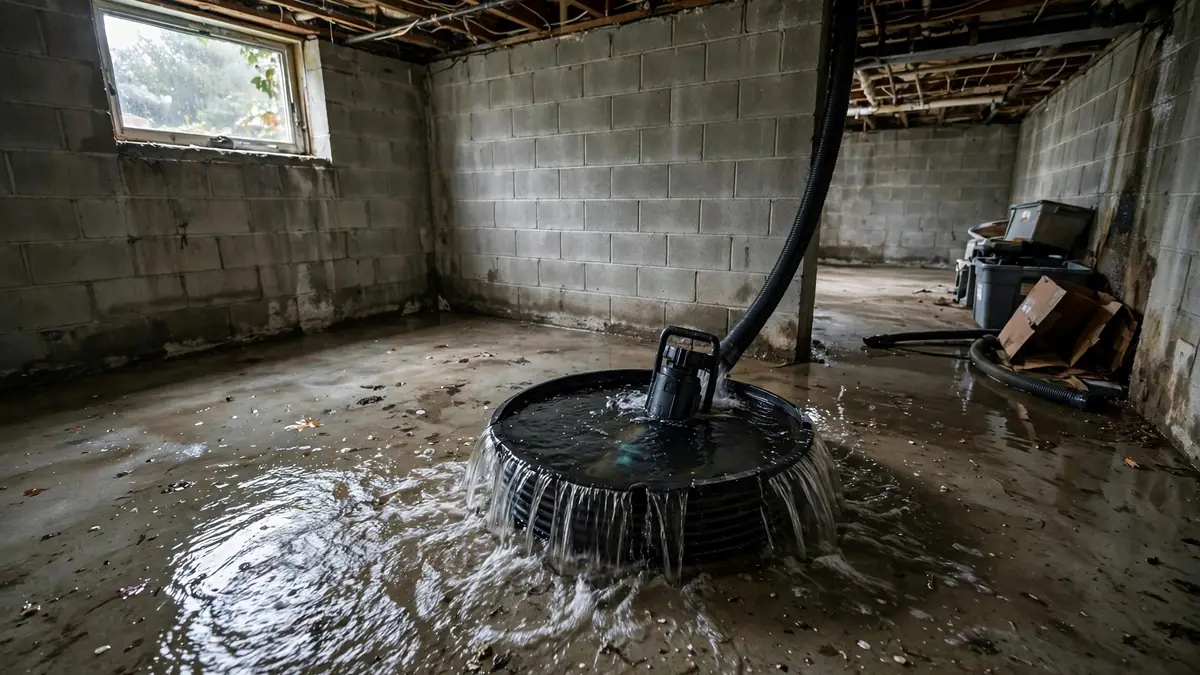
Key facts: Sump Pump Failure Cleanup
- A sump pump removes water that collects in a pit, usually groundwater from drains around the foundation [1].
- Power outages during storms are a common time for sump pumps to stop working [2].
- Basement water from a failed sump pump is generally treated as at least gray water because it has passed through soil [3].
- Many homeowners policies cover sump overflow only through an added endorsement [4].
How it works
What a sump pump actually does
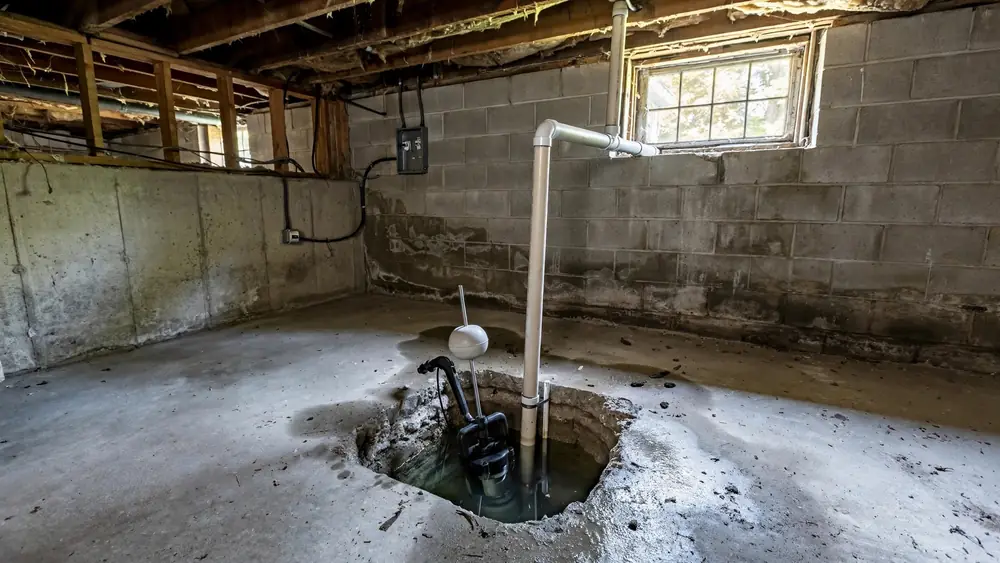
A sump pump sits in a pit, the sump, set into the basement floor. Perimeter drains or gravel around the foundation lead groundwater to that pit. When the water rises to a set level, a float switch turns the pump on, and the pump pushes the water up through a discharge pipe and out of the house, ideally well away from the foundation [1].
In many Connecticut homes, especially those on high groundwater or near rivers and wetlands, the pump runs often during spring snowmelt and after heavy rain. In a dry August it may not run at all. That uneven duty is part of why failures are a surprise: a pump that sat idle for months has to start instantly when the first big storm arrives.
Why it failed
The common reasons sump pumps fail
Most failures fall into one of these.
Power outage
Storms that bring heavy rain also bring outages. No power means no pumping unless there is a backup [2].
Stuck float switch
The float can catch on the pit wall or the pump cord and never trigger.
Worn-out motor
Pumps wear out. An old pump may run but move too little water.
Overwhelmed pump
In extreme storms, water enters faster than one pump can remove it.
Frozen or blocked discharge
Ice in an outdoor discharge line or a clogged pipe sends water back into the pit.
Failed check valve
Water in the discharge pipe flows back into the pit each cycle, burning out the motor.
First steps
What to do when the sump pump fails
The pump problem and the water damage are fixed together.
- 1
Check the power
Look for a tripped breaker, an unplugged cord or a GFCI outlet that has tripped. Only touch electrical items if you are standing on a dry surface.
- 2
Free the float
If it is safe and power is off, see whether the float is stuck against the pit wall or cord.
- 3
Bring in a temporary pump
A portable submersible pump on a dry, grounded circuit can hold the water level while a replacement is arranged.
- 4
Never run a generator indoors
Generators must be outdoors, away from windows and doors, because of carbon monoxide [2].
- 5
Raise stored things
Lift boxes and valuables off the floor.
- 6
Photograph the pit and floor
Record the water level, the pit and the damage before cleanup.
- 7
Call a plumber and a restorer
The plumber replaces or repairs the pump; the restorer handles water removal and drying.
Water type
Is sump overflow water clean?
Water from a sump pit has filtered through soil around the foundation, so it is not treated as clean water. Restorers usually treat it as gray water at minimum [3]. If the overflow mixed with a floor drain backup or outside floodwater, it moves into the black water category and porous materials are handled more cautiously [5].
That classification decides what can be dried in place. In an unfinished basement with clean concrete, most of the work is extraction and drying. In a finished basement with carpet and drywall, the carpet pad and the lower drywall usually come out.
Scenarios
Sump pump failure scenarios and the usual cleanup
The basement's finish level drives the scope.
| Basement | Typical damage | Usual cleanup |
|---|---|---|
| Unfinished concrete | Water on slab, wet boxes, damp walls | Pump, extract, discard soaked cardboard, dehumidify |
| Partly finished (laundry, storage) | Wet appliances, wet shelving, damp walls | Extract, clean, check appliances, dry |
| Fully finished with carpet | Saturated carpet and pad, wet drywall bottoms | Remove pad, often carpet; flood cut drywall; dry framing |
| Finished with laminate or vinyl | Water trapped under flooring | Lift flooring, dry slab, replace damaged flooring |
| Mechanical room affected | Wet furnace, boiler or water heater base | Inspect equipment before restarting |
Finished basements
When the sump pump failure flooded finished space
A sump pit in a finished basement is often hidden in a closet or utility room, and when it overflows, the water quickly reaches carpet and drywall. Carpet pad soaks it up, and drywall wicks it upward. Within a day, the bottom foot or more of the walls can be wet behind the baseboards.
Restorers usually remove the pad and baseboards, check how high the walls are wet, and cut the drywall above that line if needed. Insulation behind it is removed if wet. Carpet may be saved if the water was not contaminated and extraction was quick, but many contractors recommend replacing it in a basement that has flooded.
Storms and outages
Connecticut storms and sump pump failures
The storms that raise groundwater are often the same storms that knock out power. Tropical Storm Irene in 2011 and Hurricane Sandy in 2012 left large parts of Connecticut without electricity for days [6] [7]. Homes that depended on a single electric sump pump were especially exposed.
Backup options include battery backup pumps, water-powered backup pumps (where water pressure allows) and a safely installed generator connection. A high-water alarm in the pit gives warning before water reaches the floor.
Cleanup
Cleaning up after the overflow
Once a working pump holds the water level, extraction begins. Pumps remove deep water and extractors clear carpet and the slab. Wet cardboard and paper are moved out first, then soft goods. Hard surfaces are cleaned with detergent and water. Where water was contaminated, disinfection follows.
Drying then starts: dehumidifiers and air movers set to dry the framing, the slab and the block walls. The contractor monitors readings daily until everything reaches its dry goal.
Why it fails
Why basements flood again after a pump is replaced
A new pump fixes the immediate problem but not necessarily the cause. If the old pump failed during a power outage, the new one will too without a backup. If the pit fills faster than the pump can empty it, a larger pump or a second pump may be needed. If the discharge dumps water next to the foundation, the same water keeps cycling back into the pit.
A plumber can look at the pump size, the discharge location and backup options. Ask the restorer for their observations too; they see where the water went.
DIY vs pro
What you can do yourself
Safely, and only with dry footing.
- Test the pump each seasonTip a bucket of water into the pit and check that the pump switches on, empties it and shuts off.
- Keep the pit cleanRemove debris that can jam the float or clog the intake.
- Check the dischargeMake sure the outlet is clear and directs water well away from the house.
- Add a high-water alarmA simple alarm warns you before water reaches the floor.
- Do not unplug the pump to run other toolsKeep its outlet dedicated.
- Leave wet electrical work to professionalsIf the pump outlet or panel got wet, call an electrician.
Connecticut specifics
High groundwater and sump pumps in Connecticut
Many Connecticut neighborhoods sit on soils that hold water or near rivers, wetlands and the shoreline, where groundwater rises quickly after rain. Spring snowmelt combined with April rain is the classic peak. Homes in river valleys like the Naugatuck and Housatonic, and low-lying coastal neighborhoods, often depend on sump pumps much of the year.
Winter adds a specific risk: discharge lines that run outside can freeze, blocking the pump even though it is running. Insulating or burying the discharge and sloping it so it drains helps.
The visit
What happens when the restorer arrives
Expect the contractor to confirm the pit is under control first. If no working pump is in place, they may set a temporary one. Then they map moisture, photograph damage, extract water and decide what to remove. They should explain the water category and why it matters for carpet and drywall.
After setup, they return daily to check readings. They may also share observations about the pump, the pit and the discharge that you can pass to a plumber.
Safety
Sump pump and basement water safety
Water and electricity are the main risk. The sump pump is plugged into an outlet just above a pit of water, and the basement floor may be wet. Do not touch the pump, cord or outlet while standing in water. Use a GFCI-protected outlet for any temporary pump.
Never run gas-powered pumps or generators inside the house or garage; carbon monoxide can build up quickly [2]. Wear gloves and boots in basement water, which may contain contaminants [5].
Prevention
Preventing the next sump pump failure
Replace aging pumps before they fail; many homeowners plan on a new pump every several years, sooner for pumps that run often. Add a battery backup or water-powered backup pump. Install a high-water alarm, ideally one that also alerts your phone. Keep a spare pump on hand if your basement depends on one.
Outside, clean gutters, extend downspouts and grade soil away from the house so less water reaches the pit in the first place. Make sure the discharge ends well away from the foundation and does not drain toward a neighbor.
Repair or replace
Repair the pump or replace it?
Sump pumps are usually replaced rather than repaired, especially if the motor failed. A stuck float can sometimes be freed, and a failed check valve replaced. If the pump is old, upgrading to a sturdier pump with a vertical or tethered float, a backup system and an alarm is often recommended.
For the basement itself, the repair-or-replace decisions are the same as any basement flood: dry what can be dried, remove what absorbed contaminated water and rebuild with water-tolerant materials where possible.
Groundwater
Where the water in the pit comes from
Most sump pits are connected to drain tile, a perforated pipe in gravel laid around the foundation footing, sometimes inside the basement and sometimes outside. Groundwater collects in that pipe and flows to the pit. In older Connecticut homes, a sump may have been added decades after construction, sometimes as a simple hole in the floor without full drain tile.
If water enters the basement along the walls or through cracks while the pump is working, the drainage system may be incomplete or clogged. A waterproofing contractor can evaluate it after the cleanup.
Pump types
Pedestal and submersible pumps
Pedestal pumps have the motor on a post above the pit and are easy to service but louder. Submersible pumps sit in the water inside the pit, are quieter and usually move more water. Both fail eventually. Backup systems include battery pumps that sit beside the primary pump, and water-powered pumps that use municipal water pressure to push water out without electricity, which do not work on private wells.
Choosing a replacement is a plumbing decision, but the restorer's view of how high the water rose and how fast it came in is useful input.
Contents
Belongings after a sump pump overflow
Sort belongings into keep, clean and discard, photographing each group. Soaked cardboard, paper, mattresses and upholstered items are usually discarded. Plastic bins, metal shelving and tools can be cleaned and dried. Important papers can be frozen until they can be dried properly. Store replacements in plastic bins on shelves to limit future damage. Keep anything irreplaceable upstairs rather than in a basement that depends on a pump, however reliable that pump has been so far.
Alarms
Water alarms and smart sensors for the sump
A high-water alarm is the simplest protection a basement can have. A simple battery alarm sits in or beside the pit and sounds when water rises above the normal level, giving you time to act before the floor floods. Newer smart sensors send an alert to a phone, which matters when you are at work or traveling.
Some backup pump systems include alarms that also report a weak battery or a pump that is running continuously. A pump that runs non-stop during dry weather can mean a stuck float, a failed check valve or a plumbing leak feeding the pit, all worth investigating before they turn into a failure.
Neighbors
When the discharge causes problems
Where the pump sends water matters. A discharge that ends a few feet from the foundation lets water soak back into the soil and return to the pit, keeping the pump running constantly. One that drains toward a neighbor's property or onto a sidewalk in winter can create ice and disputes. Many towns also have rules about connecting sump discharges to the sanitary sewer, which is generally not allowed because it overloads treatment systems. Ask your plumber what is appropriate for your street.
Records
Keeping records after a sump pump failure
Keep the failed pump if you can, or at least photograph its label and condition. Note the date and time the alarm sounded or the water was found, and whether the power was out. Save receipts for the replacement pump, any temporary pump rental, the plumber and the restoration work. These details help the insurer understand the cause and decide which part of the policy applies.
Warning signs
Signs a sump pump is about to fail
Catching these early prevents most overflows.
| Sign | What it may mean | What to do |
|---|---|---|
| Pump runs constantly in dry weather | Stuck float, failed check valve or a leak feeding the pit | Have a plumber inspect it |
| Pump cycles on and off rapidly | Float set too low or check valve failing | Adjust or replace parts |
| Grinding, rattling or banging noises | Bearings wearing out, or debris caught in the impeller | Clean or replace the pump |
| Pump hums but no water moves | Jammed impeller or blocked discharge | Clear the blockage or replace |
| Rust or corrosion on the pump | Age and wear | Plan a replacement |
| Water level high in the pit | Pump not keeping up | Check pump capacity and drainage |
Testing
How to test your sump pump each season
A quick test before spring and before hurricane season catches most problems. Make sure the pump is plugged into a working outlet, then slowly pour a bucket of water into the pit. The float should rise, the pump should start, the water level should drop quickly and the pump should shut off on its own. Go outside and confirm water is coming out of the discharge.
If you have a battery backup, unplug the primary pump and repeat the test so the backup runs. Check the battery's age and charge. Look at the check valve on the discharge pipe; if you hear water rushing back into the pit after the pump stops, it may be failing. Remove any gravel, silt or debris from the pit while the pump is unplugged.
Multiple homes
Sump pumps in condos and multi-family buildings
In condominium complexes and multi-family buildings, a shared sump system may protect several units' basements or a common storage area. When it fails, several households are affected at once, and responsibility for the pump usually falls on the association or the building owner. Report the failure to the manager right away, document the damage in your own space and notify your own insurer. The restorer may need access to several units to map and dry the full area. Agreeing early on who coordinates the work saves days of back-and-forth while the basement stays wet.
Insurance
Sump pump overflow and insurance
Many standard homeowners policies exclude water that backs up or overflows from a sump, unless you added a water backup endorsement [4]. If outside flooding caused the overflow, flood insurance may apply instead [8]. Check your policy and report the loss promptly. The Connecticut Insurance Department can answer coverage questions [9].
FAQ
Sump pump failure questions from Connecticut homeowners
What should I do if my sump pump stops working during a storm?
Check for a tripped breaker or GFCI if you can do so safely from dry ground, free a stuck float, and get a temporary pump running on a safe power source. Move belongings up and call for help.
Is the water from a sump pit dirty?
Sump pit water has passed through soil, so it is treated as gray water at minimum. If it mixed with sewage or floodwater, it is treated as black water.
How long do sump pumps last?
Sump pump life varies with use. Pumps that run often wear out sooner. Test yours each season and replace it at the first sign of trouble.
Do I need a battery backup sump pump?
If your basement depends on a sump pump and power outages happen during storms, a backup is strongly recommended.
Does insurance cover sump pump failure?
Usually only if your policy carries a water backup endorsement. Read the declarations page or ask your agent, and report the loss promptly either way.
Can I run a generator for my sump pump?
Yes, if it is outdoors, away from windows and doors, and connected safely. Never run one in the house or garage.
Who cleans up after the pump fails?
An independent restorer who cleans up after sump overflows in your area. The call is connected through this site, and everything after that is between you and the contractor.
Sources and citations
- [1]Wikipedia — Sump pump
- [2]Ready.gov — Power outages
- [3]Wikipedia — Water damage
- [4]Wikipedia — Homeowner's insurance
- [5]U.S. EPA — Flooded homes: cleanup and safety
- [6]Wikipedia — Hurricane Irene
- [7]Wikipedia — Hurricane Sandy
- [8]Wikipedia — National Flood Insurance Program
- [9]Connecticut Insurance Department