
Key facts: Burst Pipe Water Damage in Bridgeport
Why here
Where pipes freeze in Bridgeport buildings
In older Bridgeport buildings, supply lines often run up exterior walls with little insulation, through enclosed back porches or along cold stairwells. When a cold snap comes off the Sound with strong wind, those lines are first to freeze [1]. The split shows itself when the weather warms or the heat comes back on.
Vacant apartments are the biggest risk. If the heat is turned down while a unit sits empty, the pipes in it can freeze and flood the occupied units below without anyone noticing for hours.
Shutoffs
Finding the right shutoff in a multi-family house
Some Bridgeport apartments have their own shutoff under the kitchen sink or in a closet; many do not, and the only valve is the building main in the basement near where the service enters. Every tenant should know where that is. Close it first, then open the lowest faucet in the building to drain the lines.
Damage path
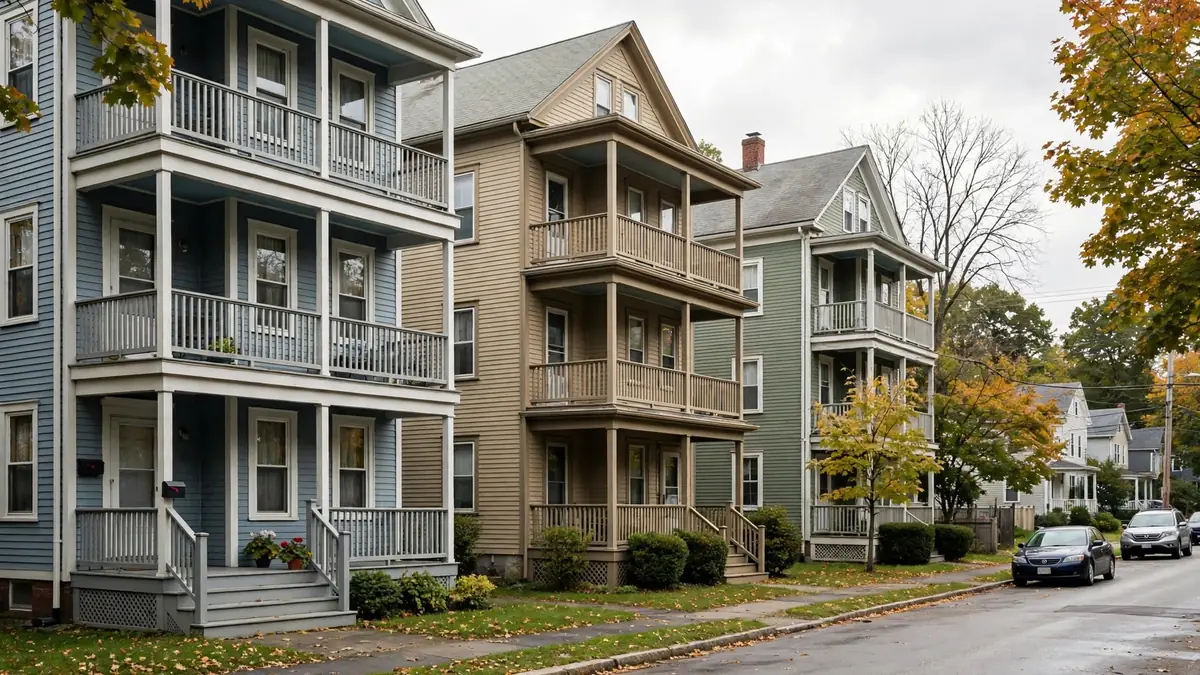
How burst pipe water moves through a three-decker
Because kitchens and bathrooms are usually stacked [3], water follows the plumbing chase straight down. Expect a bulging ceiling in the unit below, wet plaster on the shared wall and a puddle in the basement. The restorer maps moisture on every floor before deciding what to open or remove.
Heat
Keeping the building warm while it dries
A cold building dries slowly and invites more freezes. If the boiler is working, keep the heat at a normal setting. If the leak damaged the boiler controls or the water heater, get a heating contractor in alongside the restorer.
Owners
Preventing the next burst in a Bridgeport rental
Owners can do a lot: insulate pipes in exterior walls and porches, seal drafts around basement windows, keep vacant units heated, and ask tenants to open sink cabinets and drip a tap on the coldest nights [2]. A low-temperature alarm in an empty unit is a small expense against a three-floor water loss.
Right now
If a pipe just burst in your Bridgeport building
- Close the mainUsually in the basement where the water line enters.
- Warn the units belowTell them to stay out from under bulging ceilings.
- Text the owner photosWith the time you found it.
- Keep heat onTo stop more lines freezing.
Porches
Enclosed back porches and pipes
Some Bridgeport three-deckers have enclosed rear porches that were later turned into laundry rooms or extra kitchen space, with plumbing running out to them. Those rooms are often barely insulated and sit on the cold side of the building, so their pipes are among the first to freeze. Keep heat reaching them or drain those lines for the winter if the space is not used.
Plaster ceilings
When the plaster ceiling below starts to bulge
Water from a burst pipe pools on top of a plaster ceiling and makes it heavy. If you see a bulge, get people out of the room. A restorer will usually release the water in a controlled way and judge whether the plaster has separated from the lath. Firm plaster can often be dried; loose sections come down.
Timeline
Burst pipe damage in a Bridgeport building over time
How quickly things change.
| Time | What is happening | What it means |
|---|---|---|
| First hour | Water reaches the unit below | Shut off and extract immediately |
| First day | Plaster and plank floors absorb water | Most materials still savable |
| Two to three days | Musty smell, cupping floors | More removal, mold risk rising |
| A week | Likely mold in cavities | Opening walls and remediation |
Records
Paperwork for owners after a burst
Keep the plumber's invoice describing where the pipe split and why, photos of each unit, the restorer's moisture map and drying log, and notes on when the heat was on. If the burst happened in a vacant unit, notes about heating and checks of that unit will matter to the insurer. Tenants should keep their own photos and a list of damaged belongings.
Radiator lines
Heating pipes that freeze
In buildings with hot-water heat, the heating pipes themselves can freeze if the boiler fails during a cold snap, especially runs that pass through porches or along exterior walls. A split heating pipe releases water that has been sitting in the system, often dark and smelly. A heating contractor drains and repairs the system; the restorer handles the floors and ceilings it soaked.
Ceiling repairs
Repairing ceilings once they are dry
After a burst, ceilings in the units below often need patching or replacing. Firm plaster that dried well can be patched; damaged sections are often replaced with drywall. Painting waits until readings confirm the area is dry, or stains will bleed back through. A stain-blocking primer helps once it is dry.
Insurance
Sorting out claims between owner and tenants
The owner's policy usually covers the building and its plumbing. Each tenant's renters policy, if they have one, covers their own belongings. Tenants without renters insurance should still photograph damaged property and keep receipts; it helps if any question of responsibility comes up later.
Prevention checklist
Cold-night habits for Bridgeport tenants
On the coldest nights, tenants can help protect the building: keep the thermostat steady rather than turning it down at night, open the cabinet under the kitchen sink if it is on an outside wall and let a cold tap drip slowly. If a faucet produces only a trickle on a frigid morning, tell the owner right away; a frozen line found before it splits is a much smaller problem.
Owners can share these tips before winter and make sure every household knows where the building main is.
Calling
What to say when you call about a Bridgeport burst
Tell the contractor which floor the pipe broke on, how many units the water reached, whether the main is now off and whether the heat is working. Mention plaster ceilings and any that are bulging. If the break was in a vacant unit, say roughly how long it may have been running. With that, the crew can plan extraction from the top down and bring enough drying equipment for every floor that got wet.
FAQ
Burst pipe questions from Bridgeport
The apartment upstairs is empty and water is coming through my ceiling. What do I do?
Call the owner and, if you can reach it, close the building main in the basement. Stay out from under the wet ceiling.
Does insurance cover a pipe that froze in a vacant unit?
It depends on the policy. Some exclude freezing damage if the building was not kept heated. Owners should check the vacancy terms.
How long until my apartment is dry?
Usually several days after extraction. Plaster and multiple floors can stretch that.
Who fixes the pipe and who fixes the damage?
A plumber repairs the pipe; a restoration contractor handles extraction and drying.