
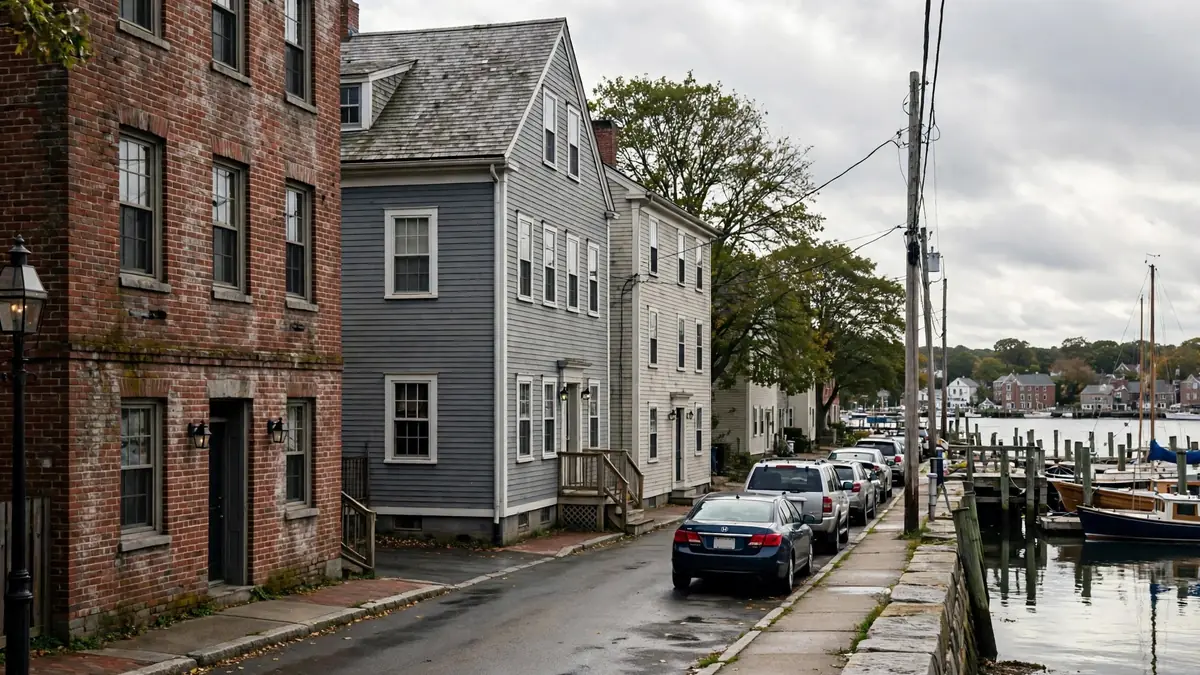
Key facts: Burst Pipe Water Damage in New London and Groton
Crawl spaces
Pipes in crawl spaces
Cold air through crawl space vents freezes pipes under older houses and cottages [1]. Insulate them and close the vents for winter.
Seasonal
Seasonal shore cottages
Cottages left with low heat can freeze and leak for weeks. Winterize them or use alarms and regular checks; water found in spring usually means more removal [3].
Right now
If a pipe just burst
- Close the mainUsually in the basement or crawl space.
- Turn off the water heaterGas or power.
- Stay out from under wet ceilingsThey can fall.
Damage path
How burst pipe water moves through older houses
Water from an upstairs burst runs down inside walls and along joists, often appearing first in a ceiling below and then in the basement or crawl space. In older houses with balloon framing, it can travel inside tall wall cavities from one floor to another. The restorer traces it with meters and thermal imaging and checks every level. Wet ceiling insulation and sagging plaster or drywall come out; firm walls are vented and dried.
Tell the contractor how long water may have run, especially in a seasonal house.
Water heaters
When the water heater is the leak
An old water heater can rust through and empty into a basement or crawl space. Close the cold supply valve, shut off its gas or power and call a plumber. A drain pan and leak sensor catch many failures early.
Calling
What to tell the contractor
Say where the pipe broke, whether the main is off, which floors got wet, whether the heat works and whether a crawl space is involved.
Away
Coming home to a burst
Holiday trips and shore houses left for the winter are the classic setup. The thermostat is turned down or the heat fails, a cold snap arrives and a pipe freezes while nobody is there. When it thaws, water can run for days. Close the main first, then check every floor, the basement and any crawl space. Tell the contractor how long the house may have been wet, because longer exposure means more removal and a closer look for mold. Low-temperature alarms and leak sensors that text your phone give early warning next time.
Many insurers expect a house to be heated or properly drained over winter, so keep records.
Drying
Drying after a burst
Clean water caught early gives the best chance of keeping plaster, drywall and wood floors. Expect three to five days of equipment for most quick-catch bursts, longer in old houses or if the house was cold.
Prevention
Preventing the next freeze
Insulate pipes in crawl spaces and exterior walls, close crawl space vents for winter, keep the heat steady and drip faucets on the coldest nights.
Galvanized
Pipes that fail without freezing
Older houses may still have galvanized steel lines that corrode from inside and fail at threaded joints, or copper with pinhole leaks. These can drip inside a wall for weeks before a stain appears, soaking the bottom plate and growing mold out of sight. A musty smell or a soft spot near a plumbing wall is worth checking. When a slow leak is found, the wall is opened, the framing is dried and checked for growth and the pipe section is replaced.
Replacing old galvanized lines during repairs can prevent the next leak.
Belongings
Belongings after a burst
Wash and dry wet clothing and linens within a day or two, stand books upright with pages fanned and keep electronics off until checked. Photograph everything damaged for the claim.
Records
Records for the claim
Keep the plumber's invoice, photos of every room, the drying log and a note of the thermostat setting, especially for a seasonal house.
Timeline
How burst pipe damage grows over time
In the first hour, water spreads across floors and into the ceiling below. By the end of the first day, drywall and plaster have absorbed a lot of it and wood is swelling, though most materials can still be dried. After two or three days, musty smells and cupping appear and more has to come out. After a week, mold in wall cavities is likely. In a seasonal shore house found weeks later, expect significant removal.
Closing the main and calling quickly matters more than anything else.
Heat
Keeping the house warm while it dries
Keep the heat at a normal setting; a cold house dries slowly and invites more freezes.
Insurance
Burst pipe claims
Sudden bursts are commonly covered, but damage tied to not heating a house may not be. Keep records of heating and checks for seasonal homes.
Neighbors
When the burst is in someone else's unit
In apartments and condos, if water is coming from above and nobody answers, call the owner or building management and close the main if you can reach it safely. Do not force entry. Move your things, stay out from under the wet ceiling and take timestamped photos. Those photos help sort out responsibility later.
Calling2
Details that speed up the visit
Mention whether the house is a seasonal home, whether the heat has been on and whether the crawl space got wet. Note any plaster ceilings and wide-plank floors that the owner wants to keep, so the crew can plan drying around them rather than removal.
Historic
Old plumbing in historic houses
New London, Groton and Mystic have many houses from the eighteenth and nineteenth centuries, plumbed and replumbed over generations. Pipes may run through exterior walls, unheated back rooms and crawl spaces under later additions. Some older galvanized lines corrode and fail at joints without any freeze. When a pipe bursts in an old house, water often finds plaster ceilings and wide-plank floors, both worth keeping with careful drying rather than quick demolition. Paint in older houses may contain lead, so any cutting needs care.
Know where your main valve is; in old houses it is not always obvious.
Thawing
Thawing a frozen line safely
If a tap only trickles on a frigid morning, keep it open and warm the suspected section with a hair dryer or warm towels. Never use a torch. Have a bucket ready; a split pipe leaks as soon as it thaws. If it has already split, close the main.
Ceilings
Wet ceilings and lights
A bulging ceiling is holding water and can fall. Keep people out from under it, turn off power to dripping lights and let the crew release the water safely.
FAQ
Burst pipe questions from New London and Groton
Why do crawl space pipes freeze?
Cold air reaches them through vents and gaps.
We found water in our cottage in spring. What now?
Close the main, photograph and call; expect more removal.
Does insurance cover it?
Often, if the house was heated; check the vacancy terms.