
Key facts: Emergency Burst Pipe Service
- Close the main water valve before anything else; it is commonly near where the supply line enters the house.
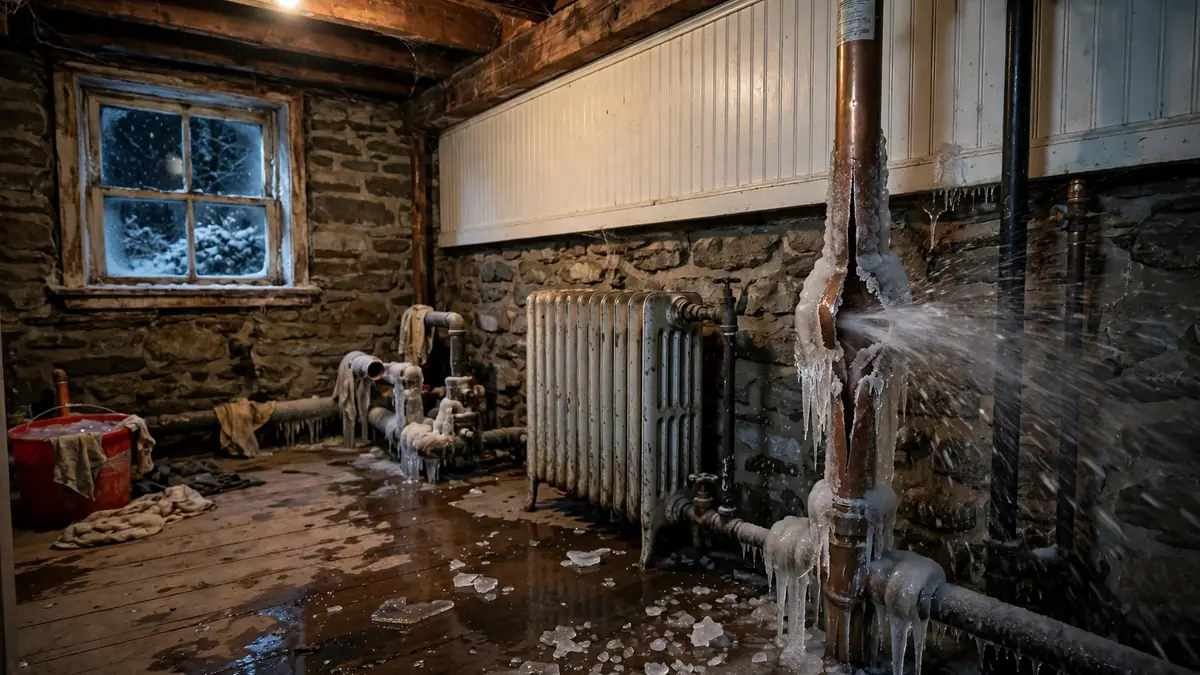
- A frozen pipe may not leak until the ice melts, so stay alert as the house warms up.
- Never use an open flame to thaw a pipe.
- A plumber repairs the line; a restoration contractor handles the water left behind.
Finding it
Where a Connecticut main valve tends to hide
If you have never touched it, start where the water service comes through the foundation. In most homes with a basement that is a wall facing the street, frequently close to the water meter or a pressure tank. Capes and colonials often hide it behind a stored shelf or a finished wall panel, and houses on a slab or crawl space may have it near the water heater or in a utility closet. Homes on private wells, common away from the cities, have a valve near the pressure tank; cutting the breaker to the well pump also stops the flow, provided you can reach a dry panel. Gate valves turn clockwise several rotations, while lever valves need a quarter turn so that the handle sits across the pipe.
Condo owners and tenants in shared buildings may find that their unit has a shutoff in a utility closet, or none at all. In that case the superintendent, manager or owner may have to close a riser, so ring them right away. Should the valve be seized or the leak sit before it, call your water utility; their number is on your water bill or on the town's website, and they may be able to close the service at the street. Do not force a stuck valve so hard that it snaps, since that can make matters considerably worse.
Once it is off
Taking the pressure out of the system
Closing the valve stops new water, but the pipes still hold what is already in them. Open a faucet at the lowest point in the house, plus another high up, and flush the toilets once to let that water go down the drain rather than through the break. If hot water is involved, the heater should not be left running without a supply: set a gas unit's control to its off or pilot setting, or switch off the breaker for an electric one. When the panel is dry and you can reach it without crossing water, turn off the circuits that feed the wet rooms too.
Boilers are worth a quick word if your house has one. A break in a heating line can keep leaking as the boiler's automatic feed tops it up, so mention radiators or baseboard loops to the plumber. Your own job is to note where the water is coming from, not to diagnose the system.
Under a wet ceiling
Warning signs to keep the room closed
- A sag, belly or bubble in the paint
- Cracks that are lengthening as you watch
- Water dripping from a light fixture or smoke alarm
- Plaster that sounds hollow or has begun to shed chunks
- A switch or outlet that buzzes, sparks or feels warm
Overhead
Do not stand beneath it to save the sofa
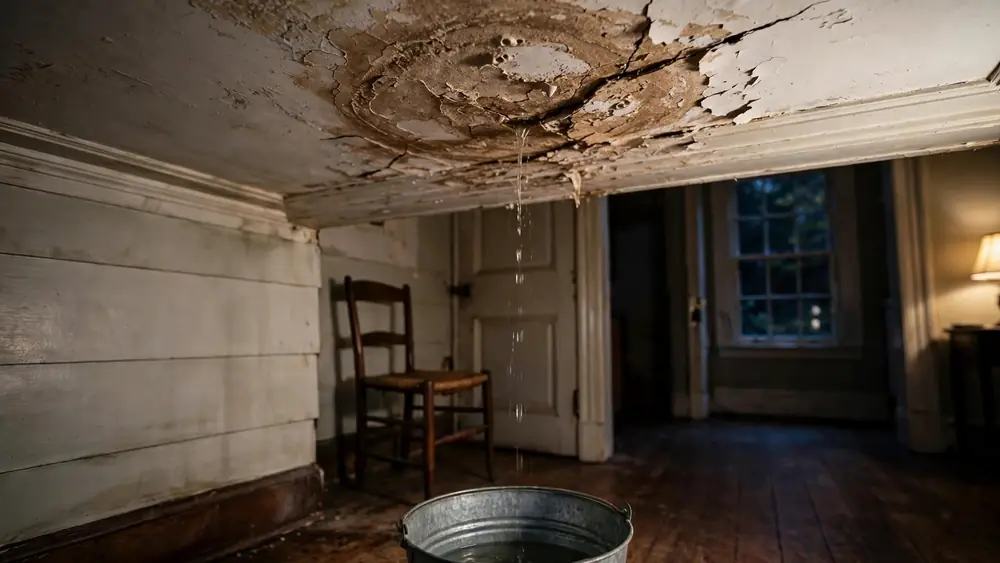
A wet ceiling gives little notice before it comes down, and a load of soaked plaster and insulation is heavy enough to seriously injure someone. Many older Connecticut homes still have plaster on wood lath, which can hold together until it suddenly lets go. Shut the door, and leave what is in the room unless you can drag it out from the side without passing beneath the wet part. Popping a bulge with a screwdriver is something you may see recommended; it means standing directly under the load, so leave it to the contractor unless they have talked you through it. Keep light switches in that room off, and let an electrician look at any fixture that has had water through it.
Frozen lines add another trap. Since the split often stays sealed until the ice melts [1], a second leak can appear hours after the first, particularly when the heat comes back. Walk the house with a flashlight once an hour through the night, checking under sinks on outside walls, the areas below bathrooms and anywhere a line runs through a garage or crawl space.
Still frozen
If other lines have stopped running
A faucet that only trickles after a bitter night may be holding a frozen section behind it. With the main closed you are not at immediate risk from that line, so deal with the known break first. When the plumber allows the water back on, warm the suspect section gently using a hair dryer or warm towels, never a torch or other open flame [1]. If the furnace has quit, keep the house as warm as you safely can. Ready.gov is emphatic that a gas stove or oven must not be used for heat because of carbon monoxide [3], so use another room, a neighbor's house or a warming place if it gets too cold.
Who to ring
The order of calls on a burst pipe night
- 1
Plumber
Needed to repair or cap the line before water can be restored.
- 2
Restoration contractor
Use this line for the water already in floors, walls and ceilings.
- 3
Electrician
Call if fixtures, outlets or the panel got wet.
- 4
Landlord or manager
Notify them immediately if you rent or share a building.
- 5
Insurer
Report the loss as soon as you reasonably can, using the claims line if open.
On the phone
What the contractor needs to hear about the break
Open by telling them the water is off, or that you could not get it off, because that changes the conversation at once. Add the town and ZIP code, which floor the pipe broke on, how long it ran and whether water has come through a ceiling. If the house was empty when it happened, a second home on the shoreline or a place you left for the holidays, say how long it might have been running. Long-running water changes what can be kept, as the burst pipe water damage page explains. Mention too if the heat is off, since a cold house dries slowly.
The line takes calls around the clock on every day of the year, but it connects you to an independent business, so timing is something to ask rather than assume. Ask how they would like you to leave the rooms, and whether they can coordinate with your plumber. And since the two trades are separate, do not expect a single call to cover both unless the company on the phone tells you it can.
Tonight or tomorrow
A line capped at midnight can still wait for some things
Water in carpet, walls or ceilings is a tonight conversation, because the EPA says water-damaged areas and items should be dried within 24 to 48 hours to prevent mold [2], and burst pipe water spreads along framing well beyond what you can see. A leak caught in seconds under a kitchen sink, wiped up with everything in the cabinet still dry, can reasonably wait until morning. If walls got wet, the wet drywall guide is useful reading for the days ahead. Permanent plumbing repairs, replacing a wet cabinet and working out how to prevent another freeze all belong to another day.
For the insurance side, a sudden break is commonly treated differently from a gradual leak, and damage linked to failing to maintain heat may not be covered [4], so note the thermostat setting and the outside temperature now. Keep the plumber's invoice and, if they can give it to you, the broken section of pipe. The Connecticut Insurance Department can help with consumer questions about a claim [5].
FAQ
Burst pipe answers for right now
I cannot find the shutoff anywhere. What should I do?
Follow the line from the water meter or the well pressure tank. Failing that, call your water utility and ask about closing the service at the street.
Does a restoration contractor fix the pipe?
Usually not. Plumbers repair pipes, and restoration contractors deal with the water. Ask on the call in case the company offers both.
Can I use the toilet with the water off?
A toilet can flush once from what is in the tank. If the drains are working, you can refill it by pouring a bucket of clean water into the bowl.
It is New Year's Eve. Will anyone pick up?
Calls are answered on holidays as on any other day. You will speak with an independent contractor, and you can ask them about timing.