
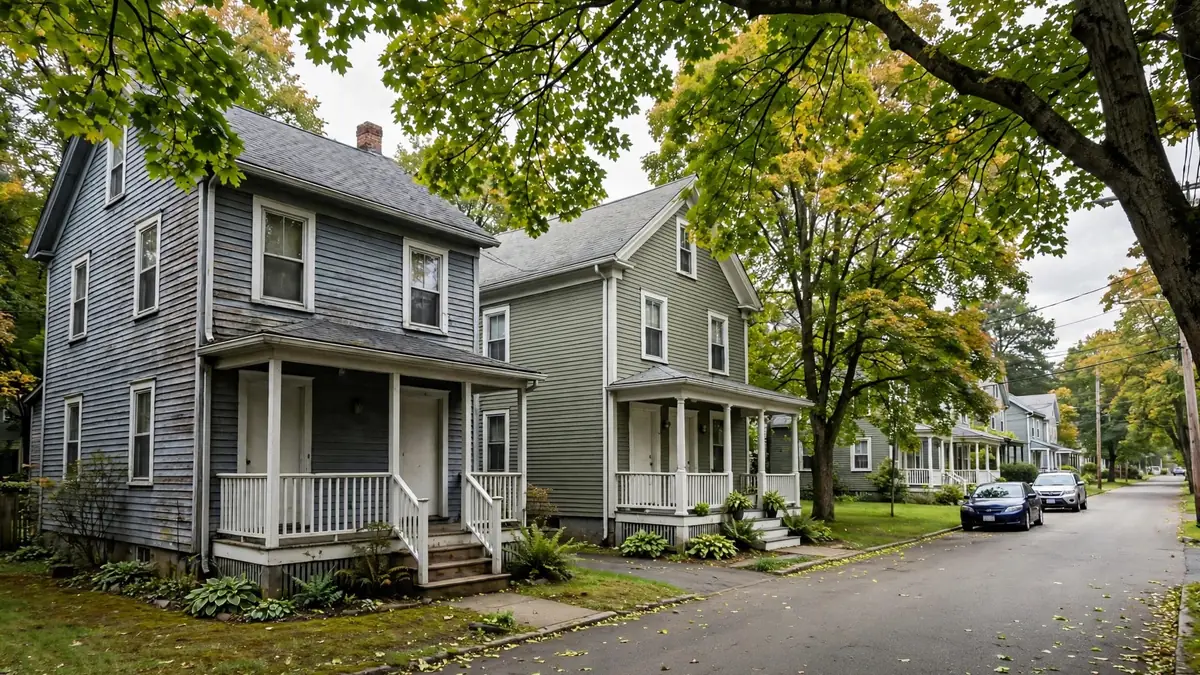
Key facts: Burst Pipe Water Damage in New Haven
Breaks
Winter break and empty apartments
Many New Haven apartments sit partly or completely empty over winter break. If the heat is turned down to save on bills, pipes in exterior walls, under sinks on outside walls and in unheated hallways can freeze [1]. The damage is often found days later, when tenants return or a neighbor below notices water coming through the ceiling.
Landlords and tenants can prevent most of this by agreeing on a minimum heat setting before break and asking someone to check the apartment.
Where
Where pipes freeze in New Haven buildings
Old buildings often have supply lines running up exterior walls with little insulation, through enclosed back porches converted to kitchens or laundries, and along drafty stairwells. Basements with broken or poorly sealed windows let cold air reach the main lines too.
Shutoff
Finding the shutoff in an old building
Some apartments have their own valve under the sink or in a closet; many do not. The building main is usually in the basement near where the line comes in. Close it, then open the lowest faucet to drain the lines. Every tenant should know where it is before winter.
Damage path
How water moves through stacked apartments
Water from a burst follows plumbing chases and old framing downward, soaking plaster ceilings and walls in the units below and pooling in the basement. In balloon-framed houses, it can travel inside wall cavities. The restorer maps moisture on every level before deciding what to open.
Plaster
Plaster ceilings after a burst
Water pooling on a plaster ceiling makes it heavy. If it bulges, leave the room. The crew releases the water safely and judges whether the plaster is still attached. Firm plaster is usually dried in place; loose sections come down.
Heat
Keeping the building warm while it dries
A cold building dries slowly and invites more freezes. Keep the boiler running at a normal setting. If the burst damaged heating pipes or the water heater, bring in a heating contractor alongside the restorer.
Thawing
Thawing a frozen line safely
If a tap gives only a trickle on a frigid morning, keep it open and warm the suspected section with a hair dryer or warm towels. Never use a torch or open flame. If the pipe has already split, close the main before it thaws further [1].
Drying
Drying after a New Haven burst
Clean water caught early gives the best chance of keeping plaster and floors. Wet insulation and sagging ceilings are removed; walls are vented and dried. Expect several days of equipment in each affected unit, longer where plaster and old floors are involved. Fast drying keeps mold away [2].
Owners
Owner steps before winter
Insulate pipes in exterior walls and porches, seal basement windows, keep vacant units heated and remind tenants before every break about heat settings and dripping taps. A low-temperature alarm in an empty unit is a small step that can prevent a large loss.
Claims
Sorting out claims after a burst
The owner's policy usually covers the building; tenants' renters policies cover their belongings. Some policies limit freezing coverage if a building was not kept heated, so owners should check vacancy terms and keep records of heat settings.
Right now
If a pipe just burst in your New Haven building
- Close the mainUsually in the basement.
- Warn the unit belowStay out from under wet ceilings.
- Tell the landlord in writingWith photos.
- Keep heat onTo stop more freezes.
Nearby
Burst pipes in Hamden, Milford and the shoreline towns
In covered towns around New Haven, bursts often happen in rooms over garages, in crawl spaces under additions and in seasonal cottages along the shoreline in Branford, Guilford and Madison that are left with the heat low. Second homes are a particular risk because water can run for days before anyone visits. Winterizing the plumbing or installing a low-temperature alarm and leak sensors is worth the effort for any house left empty in winter.
In single-family homes, water from a burst typically runs into a finished basement, which then needs its own drying.
Porches
Pipes in converted back porches
Many New Haven two- and three-families have rear porches that were enclosed and turned into laundries or extra kitchen space, with pipes running out to them. Those rooms are lightly insulated and sit on the cold side of the house, so their lines freeze first. Keep heat reaching them in winter or have the lines drained if the space is not used.
Calling
What to tell the contractor about a New Haven burst
Say where the pipe broke, how many units the water reached, whether the main is off, whether the heat is working and how long the water may have run. Mention plaster ceilings and any that bulge. That lets the crew plan from the top floor down.
Belongings
Tenants' belongings after a burst
Clothing, bedding and books soaked by a burst should be dealt with quickly: wash and dry textiles within a day or two, stand books upright with pages fanned in a dry room and keep electronics off until they have been checked. Photograph everything damaged and keep a list with rough ages for renters insurance. Upholstered furniture soaked by water through a plaster ceiling often carries dust and debris as well, and may not be worth keeping.
Neighbors
When the burst is in someone else's unit
If water is coming from an apartment above and nobody answers the door, call the landlord and, if you can reach it safely, close the building main in the basement. Do not force entry into another unit, even in an emergency. Move your things, stay out from under the wet ceiling and take photos with timestamps. Those photos help sort out responsibility later, especially if the upstairs unit was empty or the tenant was away for a break. Keep a note of when you called the landlord and what you were told, and write down exactly when the water finally stopped running.
FAQ
Burst pipe questions from New Haven
We came back from break to water everywhere. What first?
Close the main, tell the landlord with photos and keep away from wet ceilings. Expect more drying because the water ran for a while.
Who pays if pipes froze while we were away?
It depends on the lease and policies. The owner usually handles the building; tenants' belongings fall under renters insurance.
Can plaster ceilings be saved after a burst?
Often, if they stay firmly attached. Sagging plaster is removed.
How long will drying take?
Usually several days per unit, longer with plaster and old floors.