
Key facts: Emergency Flooded Basement Service
- Do not step into basement water unless you are sure the electricity is off; wet outlets can create a shock hazard.
- Where the water enters tells you who to call: walls and floor seams, a sump pit, a floor drain or a broken pipe.
- If water is several feet deep, pumping it out too quickly may crack and collapse walls and floors, according to the EPA.
- Outside flooding is generally excluded from standard homeowners policies and handled through separate flood insurance.
Why the stairs
The danger you cannot see from up there
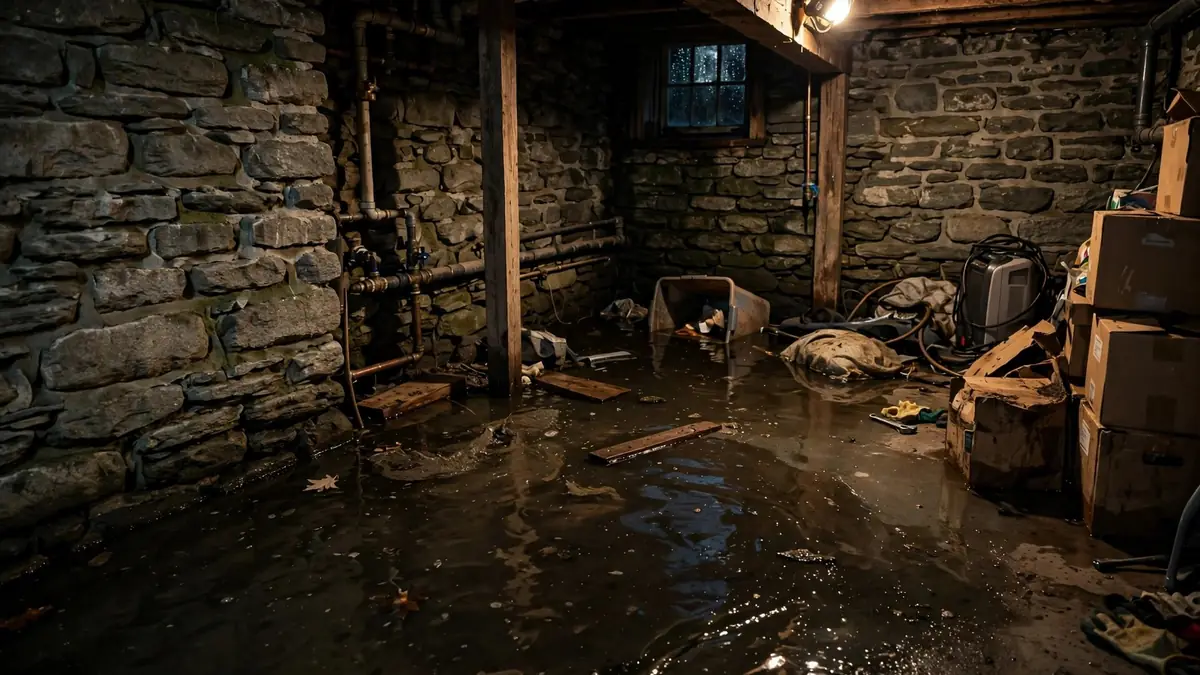
Basement water hides what is underneath it. A freezer cord, a power strip behind the washer or a low outlet may be live, and the EPA says not to enter a home until you are sure the electricity is off, since wet outlets can create a shock hazard [1]. Ready.gov puts it just as directly: do not touch electrical equipment if it is wet or if you are standing in water [3]. Should your panel be on the far side of that water, as it is in so many Connecticut houses, do not wade across to it. Call your electric utility or an electrician and tell the contractor the panel cannot be reached.
Fuel is the next concern. Plenty of homes around the state still keep a heating oil tank in the basement, and a tank that has lifted off its legs or a sheen on the water with a heavy fuel odor means everyone should leave, avoid creating sparks and bring in the fire department and your fuel supplier. A gas smell means the same thing: go outside first, then call 911 and the gas utility. Furnaces, boilers and water heaters that have sat in water should stay off until a qualified technician has examined them.
Source
Work out where the water is getting in
From your spot on the stairs, try to answer one question, because it decides what you do next. Water weeping through walls and along the seam where wall meets floor is usually groundwater, which is common in the fieldstone and block foundations of older Waterbury, New Haven and Bridgeport homes during heavy rain or snowmelt. It will not stop until the ground around the house gives up some of its water, and shutting a valve will not help.
Water welling up around a sump pit points to a pump that has failed, lost power or simply been overwhelmed; the sump pump failure page has more on that specific problem. Water with an unmistakable sewer odor rising from a floor drain is a backup, and the sewage backup emergency page replaces this one. Water spraying or running from overhead means a line has failed, so close the main valve if you can reach it from a dry spot and see the burst pipe emergency page. During a storm, water coming down the bulkhead steps or through a window well is surface runoff, and it is the kind most likely to have picked up contaminants on its way in.
From outside the basement
Small moves that help while it is still raining
- Check that downspouts are not emptying against the foundation, if it is safe outdoors
- Limit household water use, so drains are not adding to the problem
- Move items from the first floor if water could reach it
- Charge phones and find flashlights in case the power goes
- Keep children and pets out, and block off the basement door
Pumping
Think twice before renting a pump tonight
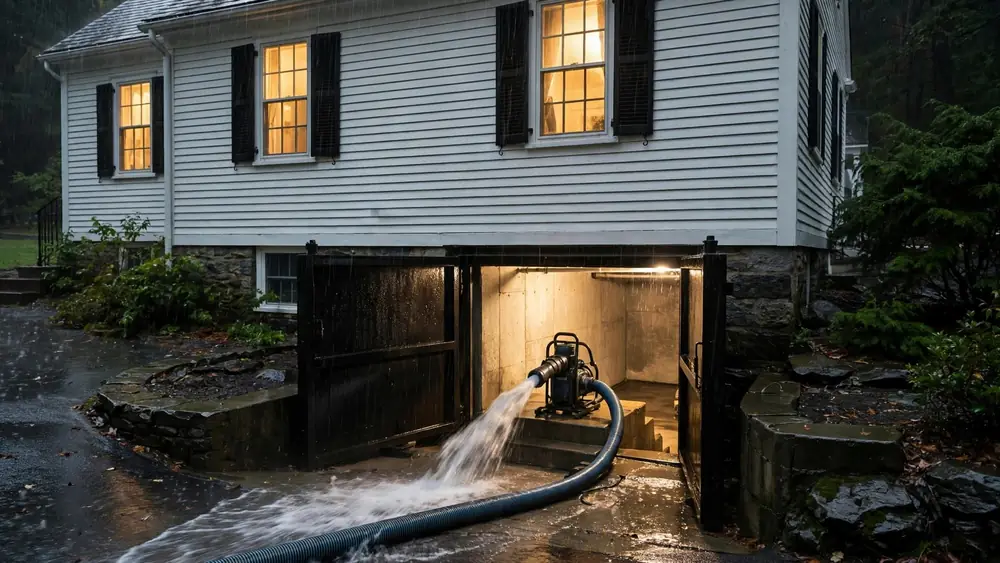
The hardware store option looks attractive at midnight, but three things can go badly wrong. Dropping the level too fast is the first: when water is several feet deep, the EPA warns that quick removal may make walls and floors crack and collapse [2]. This is a real concern on a night when the soil outside is saturated and pressing on old masonry. The second is the fumes from a gasoline engine. Ready.gov says fuel-burning generators must stay outdoors and at least 20 feet from windows and doors, because carbon monoxide can kill without warning [8], and a gas pump deserves the same distance.
The third is futility. With groundwater still high, a basement pumped dry at 2 a.m. can refill by breakfast, leaving you back where you began, only more tired. If the water is shallow, clean and steady, with no electrical hazard and a working drain, a small electric utility pump can be reasonable. Anything else belongs in the conversation with the contractor, who can talk through what level of water and what weather make pumping sensible for your foundation.
The call
A basement script you can read aloud
- 1
Where you are
Open with your town and ZIP code, then say plainly that the basement is flooding.
- 2
How deep
Count the stairs under water, and say whether the level is rising or steady.
- 3
What it looks like
Describe it as clear or muddy, and report any smell of sewage or oil.
- 4
What is down there
Say whether the space is finished or bare, and where the panel, furnace and any oil tank sit.
- 5
What you have done
State whether the power is off, on or unknown, and confirm that nobody has gone down.
Tonight or tomorrow
Sorting the urgent from the merely miserable
Call tonight when the level is rising, when the basement is finished, when anything foul or fuel-related is in the water, or when equipment you depend on for heat is at risk. Finished rooms soak up water fast, and because the EPA says drying should happen within 24 to 48 hours to prevent mold growth [4], a family room left sitting through a long weekend will be a very different job by Tuesday. A bare concrete cellar with an inch of clean seepage and nothing stored on the floor is a fair candidate for a morning call, provided the level has stopped climbing.
When the whole region is flooding, you may be one of many callers, and any contractor's timing will reflect that. Connecticut has a long memory of this kind of event: rain from Hurricanes Connie and Diane in August 1955 sent the Naugatuck and other river valleys over their banks and damaged towns across the state [6]. If a river near you is rising, or local officials are telling people to move, the basement stops being the priority. Ready.gov's warning that just six inches of moving water can knock you down [3] is the reason to leave early and not linger for belongings.
Older homes
Leave the old materials undisturbed for now
It is tempting to start ripping out soggy tile or pipe wrap the moment the water drops. Please resist it. Older Connecticut basements can contain pipe insulation and floor tile that include asbestos, and EPA guidance is to leave such material undisturbed unless it has been tested [7]. The flooded basement cleanup page covers how those materials are dealt with later. Mention the approximate age of the house on the call, along with any old wrapped pipes or square floor tiles you recall seeing. Protective clothing matters too: when you do eventually go down, the EPA recommends rubber gloves, pants and sturdy shoes, with a mask and goggles for mold cleanup [1].
Claim notes
Keep the cause in your notes
Insurers ask how the water arrived, so write it down tonight while you can still see it. Note the rain, the state of the sump pump, the water line on the wall and any drain activity, and take a short video from the stairs. Outside flooding is generally excluded from standard homeowners policies and handled through separate flood insurance such as the National Flood Insurance Program [5], so it helps to know which policies you hold before you phone. Sump overflow and drain backup can depend on an endorsement, and your agent can confirm that in the morning.
FAQ
Flooded basement questions at the worst hour
Can I go down just to rescue a few boxes?
Not until the power there is confirmed off and the water has been judged safe. Boxes can be replaced or restored far more easily than a person can recover from a shock.
My sump pump is humming but the water keeps rising. What now?
It may be jammed or overwhelmed. Do not reach into the pit or stand in the water. Tell the contractor what you hear, and have a plumber check it once it is safe.
Is a contractor available during a big storm?
The phones stay open through storms and holidays. Availability on the ground depends on each independent contractor, so ask them about timing.
Is it safe to sleep at home tonight?
Usually yes if the power and gas are safe and the heat works. Leave if you smell fuel, officials advise it or the house becomes dangerously cold.
Sources and citations
- [1]U.S. EPA — Flooded homes: coming home
- [2]U.S. EPA — Flooded homes: doing it yourself
- [3]Ready.gov — Floods
- [4]U.S. EPA — A brief guide to mold, moisture and your home
- [5]Wikipedia — National Flood Insurance Program
- [6]Wikipedia — Flood of 1955 (Connecticut)
- [7]U.S. EPA — Protect your family from exposures to asbestos
- [8]Ready.gov — Power outages