
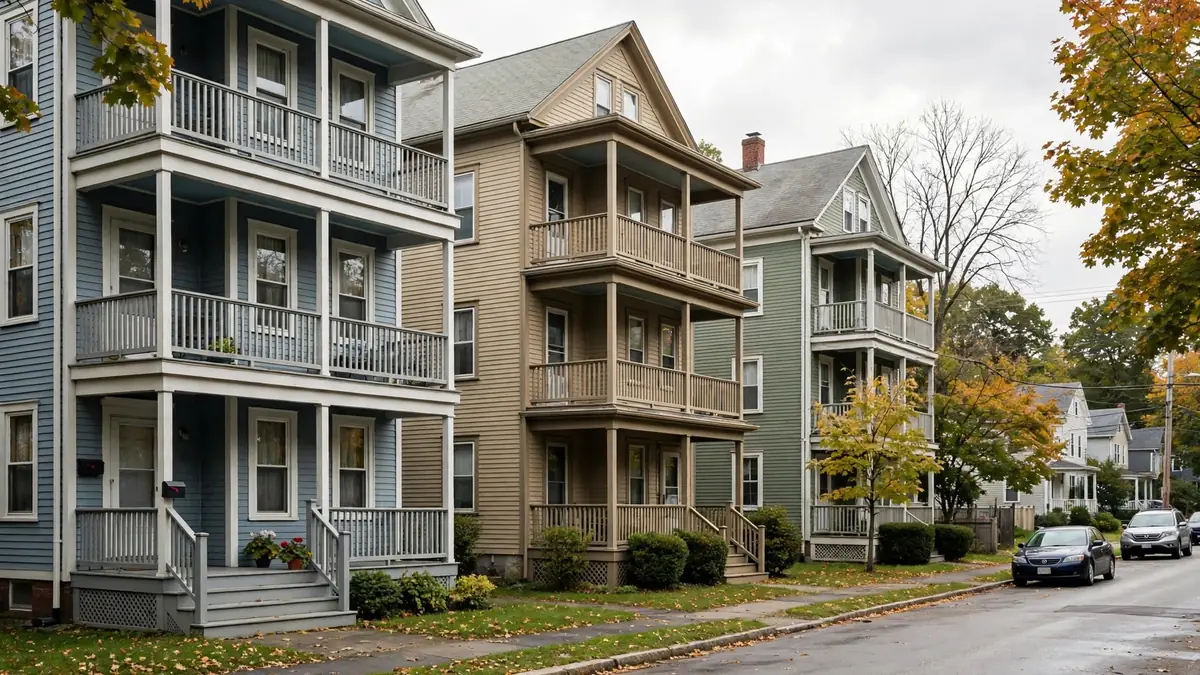
Key facts: Flooded Basement Cleanup in Bridgeport
- The Pequonnock River, which reaches the Sound at Bridgeport Harbor, tends to flood in spring [1].
- Groundwater and floodwater are treated as contaminated, so soaked porous items are usually discarded [2].
- Some older city sewer systems carry storm water and sewage together, so heavy rain can push water back up basement drains [3].
Causes
Why Bridgeport basements take on water
Most of the city's older basements were built for coal and utilities, with porous stone or brick walls. Long rain and spring thaw push groundwater through them. Short downspouts dumping against the foundation make it worse. Where there is a sump pump, a power cut during a storm stops it just when it is needed.
The other common cause is the floor drain. When the sewer is overloaded in a downpour, water can come up instead of going down, and that water is sewage [3].
Shared storage
Sorting several households' belongings
Before pumping is finished, the crew starts moving stored items. In a multi-family basement each tenant may have a corner of boxes, bikes and furniture. A good approach is to photograph each household's area, then sort into discard, clean and dry. Cardboard and paper that sat in groundwater are usually thrown out [2].
Owners should tell every tenant what is happening and give them a chance to check their own things. Tenants' renters insurance, not the owner's policy, usually covers their belongings.
Mechanicals
Boilers, water heaters and washers in the water
Gas boilers and water heaters that sat in water should stay off until a qualified technician has checked them. In winter that leaves the whole building without heat, so tell the restorer and the heating contractor right away. Washers and dryers on the slab need an electrician's or appliance technician's check before use.
River and rain
Spring flooding near the Pequonnock
The Pequonnock River has a long record of flooding, especially in spring [1]. Basements on low streets near the river and its feeder brooks see water most often. Clearing gutters, extending downspouts and keeping boxes off the floor before the spring melt go a long way.
After cleanup
Keeping a Bridgeport basement drier next time
Ask a plumber whether a backwater valve makes sense for your building if water came up the drain. Keep a dehumidifier running in humid months. Use plastic bins on shelves instead of cardboard on the floor, and agree with tenants on a storage layout that keeps the floor clear around the boiler and drains.
Checklist
First steps in a flooded Bridgeport basement
- Do not wade inUntil power to the basement is confirmed off.
- Stop all water use if the drain backed upIn every apartment.
- Tell every tenantTheir belongings may be in the water.
- Leave the boiler offUntil it has been checked.
- Take photosOf each household's storage and the water level.
Oil and fuel
Oil tanks in older Bridgeport basements
Some older buildings still heat with oil from a basement tank. If floodwater reached the tank, look for a fuel smell or a sheen on the water. Keep everyone out, avoid sparks and call the fuel supplier and the fire department. Oil mixed into the water changes how cleanup is done and what can be saved.
Belongings
Sorting basement storage after the water drops
General outcomes for groundwater or floodwater.
| Item | Usual outcome |
|---|---|
| Cardboard boxes and paper | Discard; freeze irreplaceable papers |
| Plastic bins (sealed) | Wash outside, keep contents if dry |
| Bikes, tools, metal shelving | Clean, dry and oil |
| Upholstered furniture, mattresses | Discard |
| Holiday decorations | Hard items cleaned; fabric items usually discarded |
Drying
Drying the space once it is clean
After pumping and removal, the slab, walls and the framing overhead are dried with dehumidifiers and air movers. Basements are cool, so drying can take longer than upstairs. The restorer watches readings in the joists and sill plates, which are the wood parts most at risk, and keeps humidity down until they reach normal levels.
Electrical
Panels and meters in Bridgeport basements
Electrical panels and gas meters are often in the basement of multi-family houses, sometimes with a separate panel for each apartment. If water is near them, nobody should go down. The utility or an electrician can cut power safely. Once the water is gone, have an electrician check any panel, outlet or wiring that got wet before power is restored to the basement circuits.
Smell
Getting rid of the basement smell
A flooded basement keeps a damp, earthy smell until every soaked item is out and the framing and slab are dry. Air fresheners only mask it. If the smell returns weeks later, something was missed: a box behind the boiler, wet insulation in the rim joist or a damp wooden shelf. Ask the restorer to recheck readings before giving up on the space.
Nearby towns
Finished basements in the towns around Bridgeport
In Stratford, Fairfield, Trumbull, Shelton and Monroe, basements are more often finished family rooms with carpet, drywall and insulation down to the slab. When those flood, cleanup usually includes cutting the lower drywall, pulling wet insulation and replacing carpet pad. Homes near the Housatonic in Stratford and near brooks in Trumbull see water most often in heavy rain.
Whatever the town, the first decisions are the same: keep out until the power is off, find the source and treat groundwater and floodwater as contaminated.
Calling
What to tell the contractor about a Bridgeport basement
Say how deep the water is, where it seems to be coming in, whether it rose from the floor drain and what sits in the basement: boiler, water heaters, panels, washers and each household's storage. Mention whether the building has a sump pump and whether the power is on. Those few facts tell the crew whether to bring pumps, protective gear for sewage or extra hands for clearing storage, and they shorten the first visit considerably.
FAQ
Flooded basement questions from Bridgeport
Who pays for cleaning a shared basement in a rental?
Typically the owner handles the building. Tenants' belongings fall under their own renters insurance, if they have it.
Is the water in my basement safe to touch?
Assume not. Groundwater carries soil and whatever is in it, and drain backups are sewage. Wear boots and gloves or wait for the crew.
The boiler sat in water. Can we turn the heat back on?
Not until a heating technician has inspected it. Ask the restorer to help keep the building warm in the meantime if it is winter.
Why does our basement flood every April?
Snowmelt and spring rain raise groundwater against old foundations, and the Pequonnock area is especially prone to spring flooding.
Can tenants' boxes be saved?
Plastic bins and hard items usually can. Soaked cardboard, paper and soft goods generally cannot.