
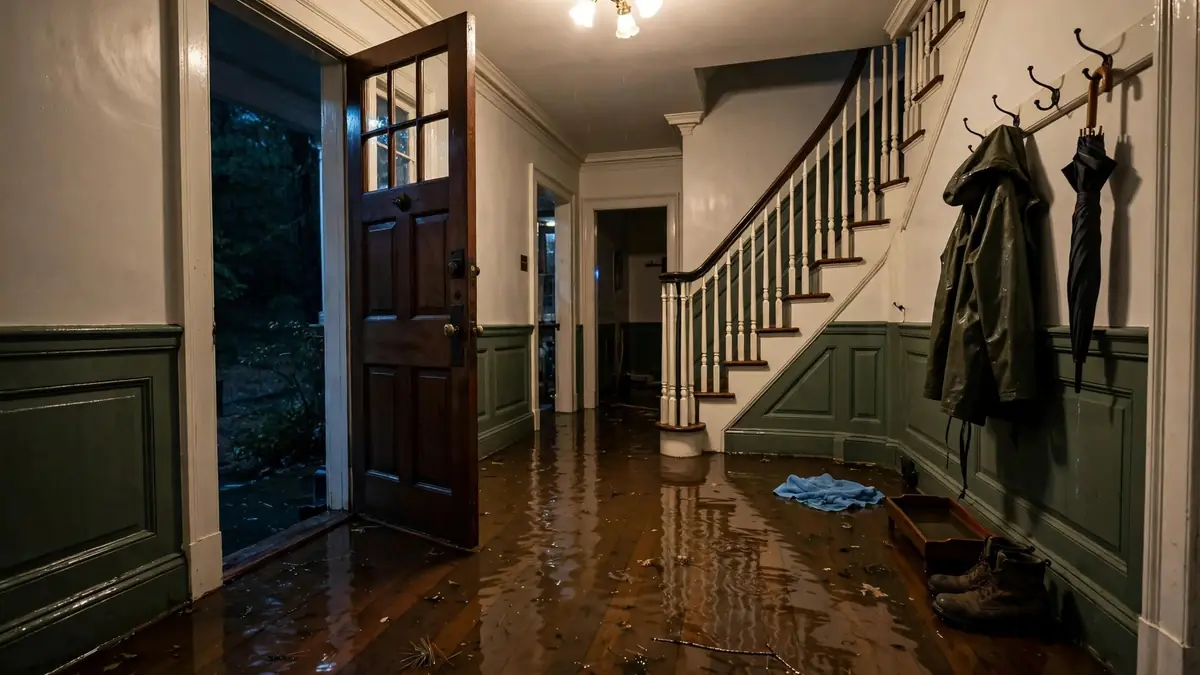
Key facts: Emergency Water Damage Service
- Safety comes before cleanup: stay out of standing water until you know the electricity in that area is off.
- The line is answered 24 hours a day, 7 days a week including holidays, and connects you to an independent contractor.
- The EPA says water-damaged areas and items should be dried within 24 to 48 hours to prevent mold growth.
- Photographs taken before anything is moved are among the most useful things you can give an insurer.
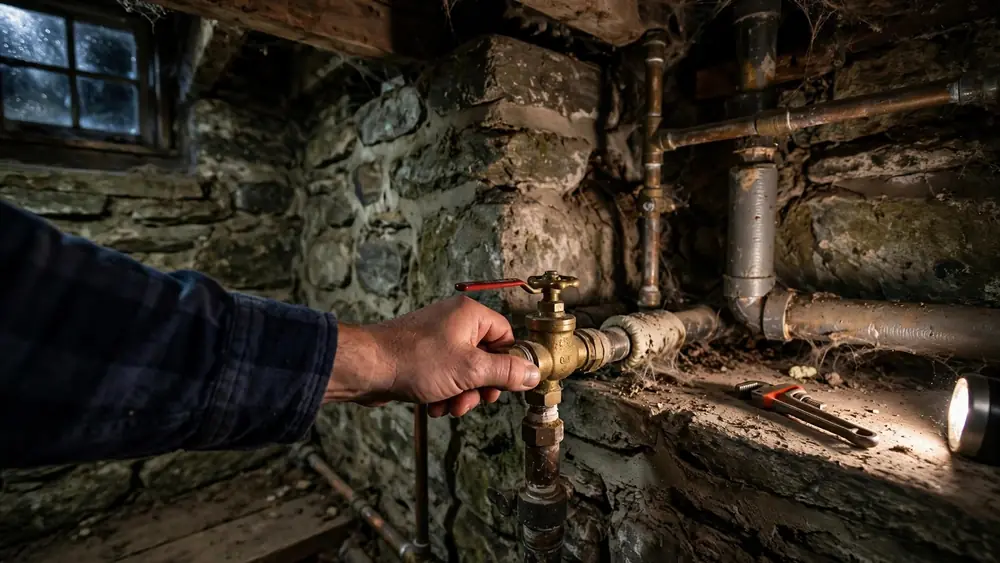
Stay or go
Deciding whether anyone should stay inside tonight
Most households with a contained leak can stay put, but a few conditions change that answer immediately. The EPA warns that standing water creates a shock hazard if outlets are wet, and it tells people not to enter a flooded home until they are sure the electricity is off [2]. Ready.gov adds a plain rule worth repeating to everyone in the house: do not touch electrical equipment if it is wet or if you are standing in water [3]. If your panel sits in a basement that is taking on water, as it does in a great many Connecticut homes, treat that basement as closed and ask the utility or an electrician to deal with the power.
Look up as well as down. A roof that sags or a wall that has stopped being straight means nobody should go back in until a qualified professional has confirmed it is safe to enter [2]. Inside, a ceiling with a growing belly deserves the same respect, so shut that door and keep the household on the far side of it.
A strong smell of gas or fuel oil overrides everything else on this page. Walk out, leave switches alone and call 911 from outdoors. Many Connecticut houses keep an oil tank in the basement, and a tank that has shifted or floated is a matter for your fuel supplier and the fire department before any water contractor sets foot downstairs.
Pick your situation
Which emergency page fits what you are looking at
Different water calls for different first moves, so jump to the closest match. Water spraying from a split line or pouring from a ceiling belongs on the burst pipe emergency page, where the shutoff valve is the whole story. A basement filling from below, whether from groundwater, a dead sump or a storm, is covered on the flooded basement emergency page. Dark, foul water rising from a floor drain or toilet is a health problem first, so go straight to the sewage backup emergency page and stop using every drain in the building.
If the source is already stopped and your problem is simply a great deal of water sitting on floors and carpet, the emergency water extraction page is the better read. Everything else, including a failed appliance, a roof leak during a downpour or an ice dam dripping through a bedroom ceiling, can follow the general order set out here.
On the phone
Six details that make the call useful
- 1
Town and street
Give the town, ZIP code and nearest cross street so the call reaches someone working in your area.
- 2
Source
Say what you believe the water came from, and whether it has stopped.
- 3
Color and smell
Clear, brown or foul-smelling water each point toward a different kind of job.
- 4
Rooms and floors
List which levels are wet and whether water has passed through a ceiling.
- 5
Hazards
Mention wet outlets, sagging ceilings, gas or oil smells and anyone vulnerable at home.
- 6
Ownership
State whether you own or rent, and whether a condo association or landlord is involved.
The conversation
What to ask the contractor before you hang up
The phone line runs 24 hours a day, 7 days a week, holidays included, and the person you reach works for an independent business rather than for this website. Because that business sets its own schedule, it is sensible to ask directly what timing it can offer for your address tonight, and to write down the answer along with the name of the company and the person you spoke to. No arrival time is promised by this site, and arrival can depend on weather, roads and how many households are calling during the same storm.
Two more questions are worth a moment. Ask what the contractor would like you to do, and not do, while you wait, since their advice is based on what you have just described. Then ask whether they can work with your insurer and what paperwork you should expect to see. Before signing anything, read it. A contractor's licences, insurance and credentials are theirs to show you, so request them directly, and the Connecticut Department of Consumer Protection is a reasonable place to check any registration you are given.
Clock
What cannot wait, and what can
- Tonight: making people safe and stopping the water
- Tonight: photos of every wet room, before anything moves
- Tonight: calling the contractor line if water is still spreading or has reached ceilings or walls
- Tonight: telling your landlord or building manager
- Tomorrow: reporting the loss to your insurer, unless your policy line is open now
- Tomorrow: sorting belongings and listing damaged items
- Tomorrow: non-urgent plumbing, cosmetic repairs and comparing rebuild options
Tonight or tomorrow
When an overnight call makes sense
A small spill on a tile floor, wiped up and already stopped, can usually wait for a daytime call. The picture changes when water has soaked into something you cannot wipe: carpet with a pad beneath it, the bottom of a drywall wall, the underside of a ceiling, a finished basement. In those cases the time pressure is real, because the EPA says water-damaged areas and items should be dried within 24 to 48 hours to prevent mold growth [1], and the hours you spend waiting for Monday count against that window.
Holiday weekends and winter storms are exactly when people talk themselves into waiting. If a freeze hits on a Sunday night or a nor'easter pushes water in during Thanksgiving, the phones are still answered, so there is no reason to assume you must sit tight. Calling does not commit you to hiring anyone; it gets you a conversation and a clearer sense of what your particular house needs. Check whether your town is listed in the areas served too, since coverage is by ZIP code and does not reach every Connecticut community.
Storm nights
When the power is out as well
Connecticut's big weather often takes the lights along with it, and a dark house full of water invites poor decisions. Use flashlights, not candles. Ready.gov is firm that a generator and its fuel must stay outdoors and at least 20 feet from windows, doors and attached garages, and that a gas stove or oven should never be used to heat a home because of the carbon monoxide risk [4]. That applies even when the house feels bitterly cold after a furnace has been knocked out.
Outside, the rule is simpler still. Ready.gov notes that six inches of moving water can knock you down and one foot can sweep a vehicle away [3]. If your street along a river or the Sound is under water, there is nothing in the house worth going back for, and you should return only when local authorities say it is safe [3].
Records
Protecting your claim in the first hour
You do not need to be an expert in your policy tonight; you only need to preserve the evidence. Walk each room with your phone and record wide shots, close shots and the water line on walls, and do it before you start moving anything if you can do so safely. Note the time you discovered the problem and the time the source stopped. Hold onto receipts for anything you buy to protect the house, such as tarps or buckets, and keep damaged items until your adjuster says they may go.
Coverage turns on the cause, so give your insurer facts rather than guesses about why it happened. Sudden pipe failures, outside flooding and drain backups are often handled very differently. The guide to working with your insurance adjuster explains what comes next, and the Connecticut Insurance Department offers help to consumers with questions [5].
Sharing a building
Renters, condo owners and two-family houses
Water ignores property lines. In a Bridgeport three-family or a New Haven condo, your leak may be someone else's ceiling within minutes, so knock on the door below and above before you do anything else that is not a safety step. Tenants should tell the landlord immediately and put it in a text or email so that a time stamp exists, then photograph their own belongings for any renters insurance claim. Condo owners should alert the manager or association, because a valve serving a whole riser may be locked behind a door you cannot open.
FAQ
Urgent questions from Connecticut households
Can I really reach someone at 3 a.m. or on Christmas?
Yes. The line is answered 24 hours a day, 7 days a week including holidays, and connects you to an independent contractor who can discuss your situation.
How soon will someone get to my house?
This site cannot promise a time, because scheduling belongs to the independent contractor. Ask on the call what they can offer for your address tonight.
Should I start pulling up carpet while I wait?
Hold off. Photograph it first and leave the removal alone unless the contractor asks, since you may be standing in contaminated water or near live wiring.
Do I phone my insurer or the contractor first?
When water is still spreading, stabilize the house and reach the contractor first. Report the loss to your insurer as soon as you reasonably can after that.