
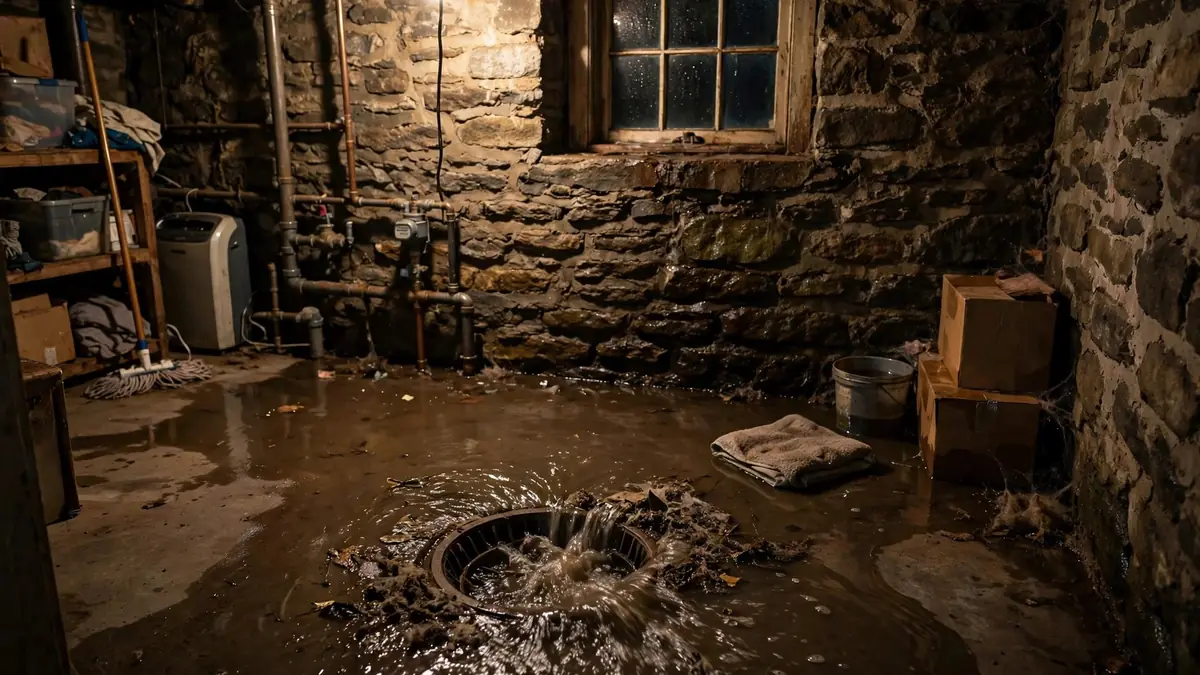
Key facts: Emergency Sewage Backup Service
- Stop all water use in the building at once: toilets, sinks, showers, dishwasher and laundry.
- Sewage falls in the highest contamination category and should not be handled without protection.
- Knowing whether you are on city sewer or septic decides who else needs to be called.
- Many standard homeowners policies cover sewer backup only through an added endorsement.
Health first
Why this is not a mop-and-bucket night
Sewage belongs in the top contamination class used by restoration standards, often called black water [6] and explained in the guide to water damage categories, and it can carry bacteria, viruses and parasites. Household cleaners do not change that picture, and wiping at it mainly moves the contamination onto shoes, mops and clean rooms. Anyone pregnant, very young, elderly or with a weakened immune system should stay well away and may be better off spending the night elsewhere if the bathroom is unusable. If someone has been exposed and later feels ill, tell a doctor about the contact.
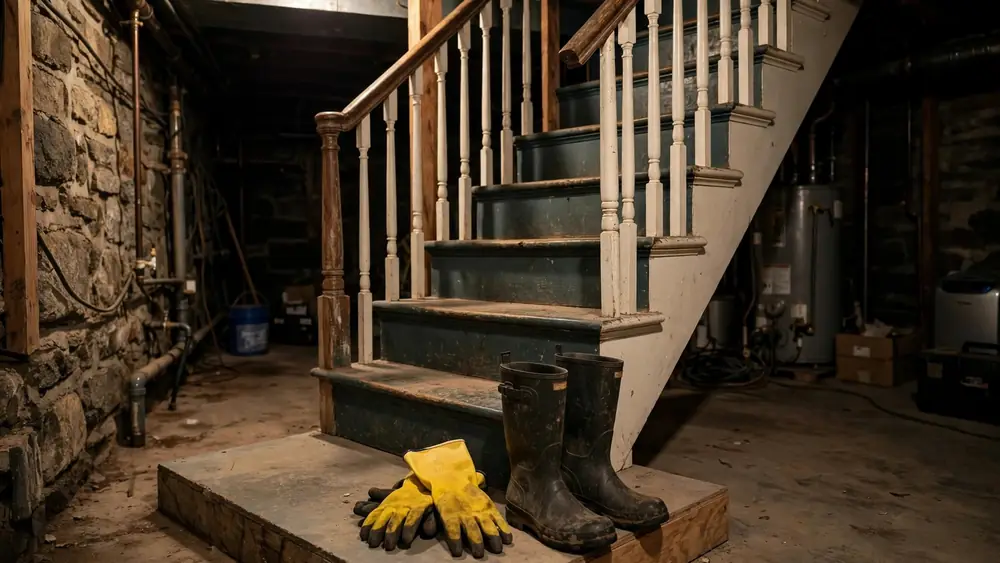
Electricity stays on the list here too. A backup often arrives in a basement that also holds the panel and the laundry, and the EPA warns that standing water can create a shock hazard if outlets are wet [1]. Stay out if the water may have reached anything electrical. Do not run a fan to fight the smell, since that can push contaminated air into the clean part of the house, and leave the furnace off if its blower pulls air from the affected space and a technician has not checked it. Should you have to pass through the area, rubber gloves, long pants and sturdy shoes are the minimum [1], and everything you wore should stay at the door.
Whose pipe
City sewer or septic changes your next call
If you pay a sewer bill to a town or authority, the trouble is either in your own lateral or in the public main. A quick clue: check with a neighbor. If several homes on the street are backing up, particularly during heavy rain, the main is the likely culprit, so report it to your town's sewer or public works department, using its after-hours number if there is one. Some older Connecticut city systems still carry stormwater and sewage in the same pipes [2], which is why a big storm can send backups into low-lying basements. If you alone are affected on a dry day, suspect a blockage in your line and call a plumber or drain service.
Many homes beyond the cities, including much of Litchfield County and the rural parts of Fairfield, New Haven and New London counties, rely on a private septic system. In that case you need a septic contractor to check the tank and field, and heavy rain may be part of the problem if the leach field is saturated. Either way, clearing the blockage and cleaning the house are normally two different jobs for two different companies. If you are not sure which system you have, the absence of a sewer charge on your bills is a strong hint.
Please do not
Tempting ideas that make it worse
- Pouring bleach onto standing sewage
- Running a shop vac you plan to use again
- Tracking through the house in the same shoes
- Plunging or snaking when the main line is the problem
- Throwing out belongings before they are photographed
- Using the upstairs bathroom because it seems unaffected
What to say
Giving the contractor the full picture
- 1
Say sewage
Use the word plainly, since it changes how the job is planned from the first moment.
- 2
Where it came up
Floor drain, basement toilet, shower, laundry standpipe or ejector pit.
- 3
Still rising?
Report whether the level has stopped now that all water use is off.
- 4
System type
City sewer or septic, and whether anyone has been called to clear the line.
- 5
What it touched
Carpet, drywall, stored belongings, the furnace or a finished room.
- 6
Who is home
Note infants, older adults or anyone with a health condition in the house.
The call itself
Questions worth asking a sewage contractor at midnight
The number is staffed 24 hours a day, 7 days a week, including holidays, and it reaches an independent contractor. Ask whether the company handles sewage specifically, as not every water business does, and ask what timing it can realistically offer your address. If the line has not been cleared, find out whether they want that done first, because cleaning a basement that can flood again in an hour may waste everybody's night. Their answer may be to start protecting the rest of the house while you line up a plumber.
It is also fair to ask how they will keep the mess from spreading through the home, what they plan to remove and how they will document it for your insurer. A contractor who is comfortable explaining these things on the phone will usually be easier to work with through the rest of the job. Any licence, registration or insurance details are for the contractor to show you directly; ask for them before you sign. Nothing here should pressure you to agree to anything on the first call.
Tonight or tomorrow
Almost always tonight, with one narrow exception
Raw sewage inside a home is not something to sleep on. The contamination soaks further into porous materials as the hours pass, the odor spreads through ductwork and stairwells, and the household has no working plumbing until the blockage is cleared. Call as soon as everyone is clear and the drains are off; what happens after that is set out under sewage backup cleanup. If the only sign is one gurgling drain or a slow toilet, with nothing actually on the floor, you may reasonably stop using water, phone a plumber in the morning and watch that drain in the meantime. Should anything start to come up, treat it as the full emergency described above.
Rainstorms deserve particular caution. When a downpour has filled the sewers, a basement can back up, seem to drain away and then fill again with the next heavy band. Low-lying blocks near rivers and the Sound can see this repeat, and a falling level does not mean the contamination has gone with it. Older sections of Bridgeport, New Haven, Waterbury and Norwalk also have aging clay or cast iron laterals, where root blockages can return even in dry weather.
For the claim
Check the endorsement before you throw anything away
Sewer and drain backup is the classic surprise on a homeowners policy, as many standard policies only respond if a specific endorsement was added [3]. If outside flooding caused the backup, separate flood insurance such as the National Flood Insurance Program may be the relevant coverage instead [4]. You can look for backup wording on your declarations page tonight, but you do not need to settle the question before calling for help. Photograph the level on the wall, the fixture it came from and every damaged item, from the doorway if that is the only safe place. The Connecticut Insurance Department handles consumer questions if a claim becomes confusing [5].
FAQ
Sewage emergency questions
Is it safe to stay in the house tonight?
That depends on the extent. If the backup is confined, no one vulnerable is home and you can avoid the area, some families stay. With no usable toilet or a strong smell, go elsewhere.
Who do I call at 2 a.m. about the blockage itself?
A plumber or drain service for your own line, a septic contractor for a tank, and your town's sewer department if neighbors are affected too.
Will a holiday delay getting through to someone?
The line is answered on holidays just as on any other day. Ask the independent contractor you reach what scheduling is possible.
My clothes got splashed. Are they ruined?
Not necessarily. Keep them apart from everything else, bag them and ask the contractor about laundering. Soaked soft goods are harder to rescue.