
Key facts: Hardwood Floor Drying in New Haven
Old floors
Original floors in New Haven housing
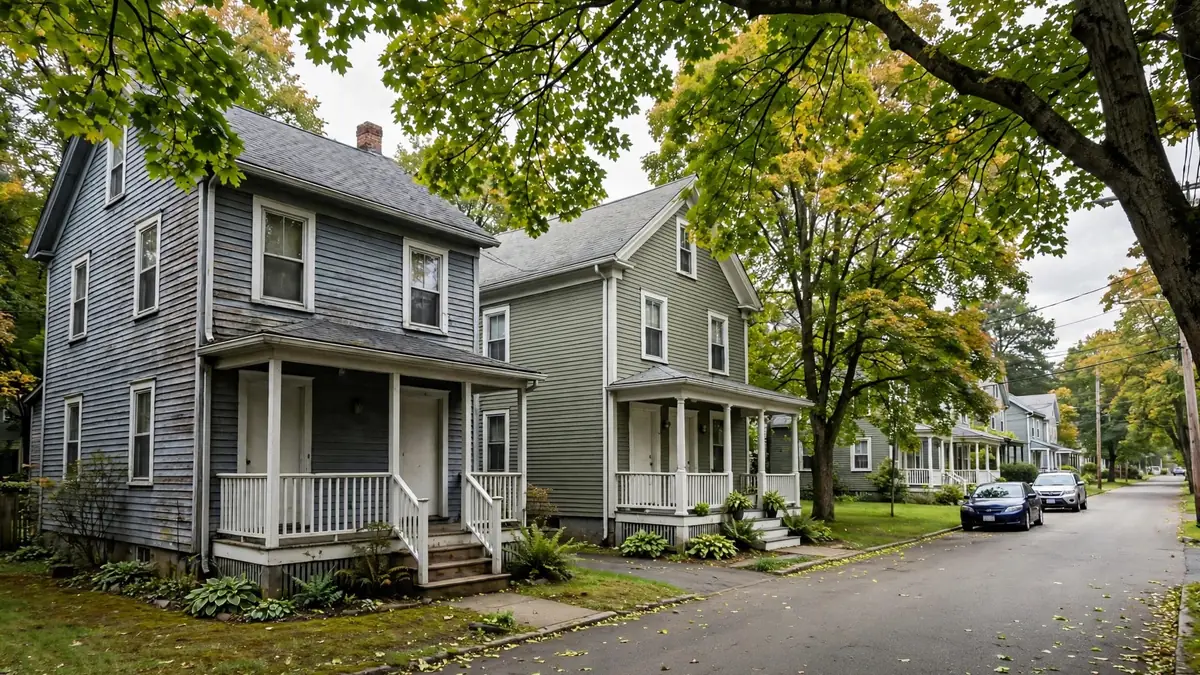
Older buildings in the city often have tongue-and-groove oak or maple strip floors nailed over diagonal board subfloors, and some of the oldest houses have softwood planks. Many have been sanded several times, so the wear layer can be thin. That makes patient drying more important than aggressive sanding later [1].
When owners pull up wet carpet, they sometimes find a floor worth restoring underneath.
Cupping
Why the boards cup
Water soaks into the underside and edges of the boards first. The bottom swells more than the top, and because the boards are tight together, their edges rise. That is cupping. Drying the boards and subfloor evenly lets them relax. Sanding a cupped floor before it has dried and settled leaves the boards crowned later, with the middle higher than the edges.
Coverings
Floors under carpet and vinyl
Carpet, pad and sheet vinyl laid over hardwood trap water against it after a leak. Pull them up so the wood can breathe; otherwise the floor beneath stays wet for weeks. The covering may be discarded anyway if it was soaked, and the restorer can then judge whether the wood can be dried.
Radiators
Damage around radiators
Radiator valves and vents leak slowly, often for months. The floor around a leaking radiator darkens and cups, and the ceiling below may stain. A heating contractor repairs the radiator; the restorer dries the floor and subfloor. Small, long-term leaks can also rot the subfloor, which the contractor should check.
Subfloor
Plank subfloors and drying from below
Board subfloors have small gaps between boards, so water runs through to the ceiling below. That spreads damage but also lets drying air move. On the first floor over a basement, the crew can direct air and dehumidification at the subfloor from underneath while mats work from above. On upper floors, a section of ceiling below may be opened to reach the subfloor.
Mats
Drying mats on old floors
Mats taped to the floor surface and connected to a vacuum pull moisture up through the joints. Older floors with slightly open seams respond well. Dehumidifiers in the room capture the moisture. The crew seals mat edges carefully so the vacuum draws through the floor rather than around the mat.
Kitchens
Renovated kitchens in old apartments
Kitchens updated with dishwashers and ice makers bring new leak sources over old floors. Water spreads under cabinets and appliances. Pull the appliance if it is safe, remove the toe kick and let air reach the floor beneath.
Finishes
Old finishes that cloud
Older floors may carry shellac, varnish or wax. Moisture under these finishes can turn them cloudy white. The haze often clears as the floor dries; if it stays, light refinishing usually fixes it. Sanding should follow lead-safe practices in buildings from before 1978 [3].
Patience
Waiting before deciding
Old wood relaxes slowly. Boards may stay slightly cupped after the readings say dry and flatten over several weeks of normal humidity. Photograph the floor weekly and decide on sanding only when it stops changing.
Repairs
Patching an old New Haven floor
If boards must be replaced, standard oak strip is easy to find, though aged color differs. Softwood planks and unusual widths may need salvaged material, sometimes taken from a closet. Refinishing the whole room blends the repair.
Tenants
If you rent and the floor is wet
The floor is part of the building, so the owner decides on drying and repair. Tenants help by keeping furniture and rugs off the wet area, keeping equipment running and reporting new cupping or soft spots.
Steps
Helping a wet New Haven floor
- Pull up carpet, pad or vinylSo the wood can dry.
- Move furnitureOff swollen boards.
- Report radiator dripsBefore they soak the floor.
- Wait before sandingLet it settle.
Nearby
Wood floors in Hamden, North Haven and Milford homes
Single-family homes in the covered towns near New Haven often have oak strip floors over plywood, with an open or finished basement below. An open basement makes drying from below easy. Newer and renovated houses may have engineered floors or laminate; engineered floors can sometimes be dried, while laminate usually swells at the seams and is replaced. Tell the contractor which you have.
Kitchen appliance leaks and burst pipes in rooms over garages are the usual causes in these homes.
Stairs
Stairs in older New Haven houses
Water from an upstairs bathroom often runs down the main staircase. Old treads and risers are thick and dry slowly. The crew may dry the stringers from below, through a closet or basement ceiling. Split treads are replaced individually. Pull up any runner so the treads can dry.
Calling
What to mention about a New Haven floor
Say whether the floor is strip, plank, engineered or laminate, what covers it, how long it was wet and what is underneath. Note cupping, dark seams, soft spots and any radiators nearby. That lets the contractor judge whether mats, drying from below or replacement is realistic.
Seasons
Seasonal movement in New Haven floors
Wood floors in New Haven swell slightly in humid summers and shrink in dry, radiator-heated winters, opening small gaps between boards. A floor wetted in August starts more swollen than one wetted in January. The contractor sets the drying goal from unaffected boards in the same apartment at the same time, rather than a fixed number. After drying, seasonal gaps that appear in winter are usually normal and should not be filled until the floor has gone through a full year, or the filler can crack when the boards swell again.
Records
Keeping the floor record
Keep photos of the floor on day one, the drying readings and photos after it settles. They help with the claim and show a future buyer or tenant how the floor was handled.
Prevention
Protecting old floors from the next leak
Put leak sensors under the kitchen sink, next to the dishwasher and near any radiator that has dripped before. Ask the landlord to service radiator valves before the heating season starts, and keep rugs dry and off any area that recently got wet.
FAQ
Hardwood floor questions from New Haven
Can a floor that has been sanded many times be saved in New Haven?
Often, by drying rather than more sanding. A thin wear layer limits sanding later.
The floor by my radiator is cupped and dark. Why?
Usually a slow radiator leak. Get the radiator fixed and the floor dried.
Should the carpet over my hardwood come up?
If water got under it, yes; it traps moisture against the wood. Plaster and radiators in older New Haven buildings slow drying.
How long does floor drying take in New Haven?
Often one to two weeks including settling time. Hamden and North Haven homes nearby face the same issue.