
Key facts: Structural Drying in New Haven
Plaster
Plaster walls and ceilings
Plaster absorbs water more slowly than drywall, which gives some protection, but it also releases it slowly [1]. Firm plaster is usually dried in place, with small vent holes drilled near the base of walls or at ceiling edges so dry air can reach the cavity behind. Expect drying to run longer than in a modern house.
Any drilling or cutting should be done with lead-safe methods in buildings this old [3], and young children should stay away from the work area.
Framing
Balloon framing and moisture that travels
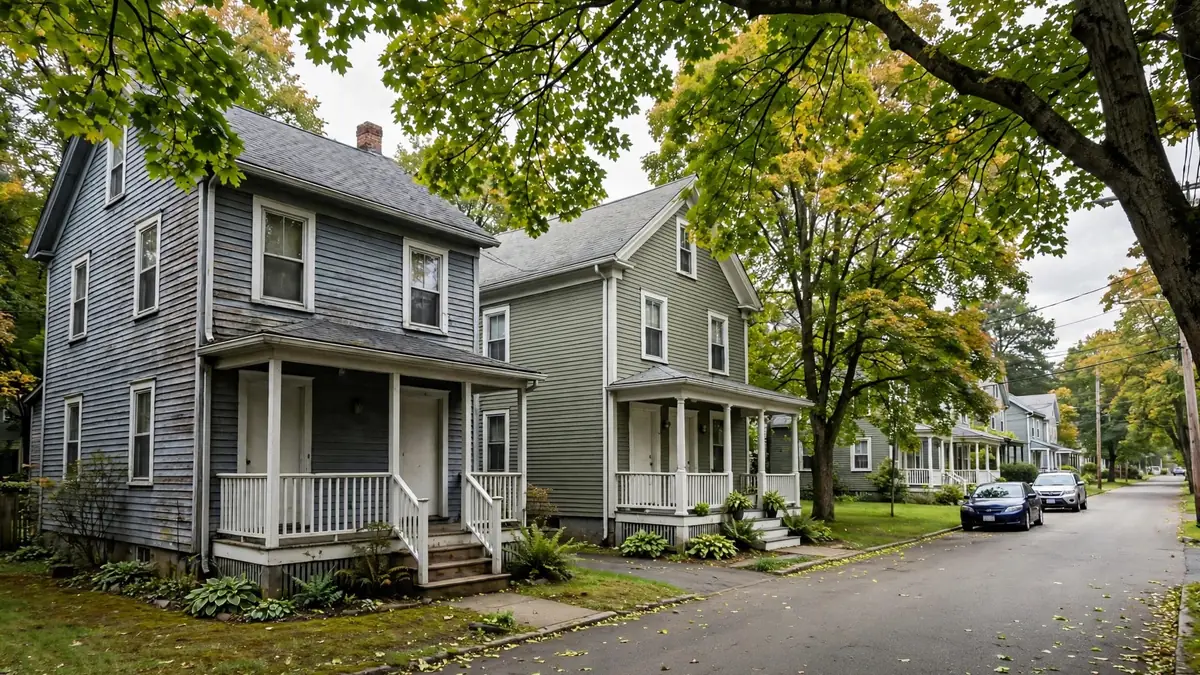
Many wooden houses in the city were balloon framed, with studs running from the sill to the roof and no blocking between floors. Moisture and even water can move inside those tall cavities from one floor to the next. Restorers check walls above and below the obvious damage, and a musty smell in a room that never looked wet often traces back to a cavity like this.
Multiple units
Running equipment in several apartments
When a leak passes through two or three units, each one becomes its own drying area with a dehumidifier and air movers. Plastic sheeting may close doorways to keep the dry air in. That means agreeing on access times, outlet use and how long equipment will run with every household.
Older wiring in some buildings cannot carry many machines on one circuit, so the contractor should spread the load and avoid chained extension cords.
Radiators
Steam and hot-water heat during drying
Most older New Haven buildings have boilers and radiators. Steady heat helps drying, but radiators also leak; a stain under a radiator may be part of the problem rather than a coincidence. If the heating system leaked, a heating contractor fixes it before drying can finish.
Readings
How the drying log protects owners and tenants
The technician reads the same spots in each unit every day and compares them with unaffected areas of the same material. The log shows when each unit reached normal. In a rental, that record helps if a tenant later reports a smell or stain, because it shows what was dried and when [2].
Seasons
Drying through New Haven's seasons
Summer humidity near the harbor means windows stay shut and dehumidifiers do the work. Winter heat helps upstairs, but cold basements and exterior walls slow drying. Keep the boiler running at a normal setting while equipment is in place, even if tenants are away for a break.
Finishing
Repairs once the building reads dry
Plaster cracks and stains are patched and painted only after readings confirm dryness. Some owners replace a damaged plaster ceiling with drywall; that is fine once the framing is dry. Painting damp plaster leads to blistering and stains that come back.
Noise
Living with drying equipment in a small unit
Equipment is loud and warm. Many tenants close a bedroom door or stay with friends for a few nights. Switching machines off for quiet adds days to the job, so ask the technician before changing anything.
Nearby
Drying in Hamden, West Haven and East Haven
In the covered towns around New Haven, houses are more often single-family with drywall and finished basements. Drying there looks more like a typical suburban job, with fewer households to coordinate and faster-drying materials, though older village houses can still have plaster.
For tenants
What New Haven tenants can do during drying
- Keep machines runningDay and night.
- Keep doors and plastic in placeSo the drying chamber works.
- Allow access for readingsMissed visits slow the job.
- Report new stains or smellsTo the landlord and technician.
Converted houses
Drying irregular spaces in divided Victorians
Houses cut into many apartments over the decades have odd layouts: closets built into old hallways, kitchens in former bedrooms, bathrooms tucked under stairs. Air does not move through them the way it does in an open modern floor plan. Drying chambers have to be set up around these quirks, sometimes with ducting to push dry air into small or closed spaces. Readings in each space confirm nothing has been left damp in a corner nobody uses.
These buildings also hide earlier repairs, such as drywall over plaster or new floors over old ones, and each layer can trap moisture until it is opened.
Floors
Old floors over plank subfloors
Original strip or wide-plank floors over board subfloors are common in New Haven's older housing. Water runs between the subfloor boards to the ceiling below, which spreads the damage but also lets drying air move. Drying mats on the floor and air directed at the subfloor from below, through a basement or an opened ceiling, help both levels dry together.
If the floor is covered by carpet or vinyl, those coverings often need to come up so the wood can dry.
Calling
What to mention about a New Haven drying job
Say which units got wet, whether walls are plaster or drywall, whether there are radiators near the damage and how long the water sat. Mention anyone in the building with breathing problems or young children, since dust control matters when plaster is drilled in old buildings.
Students
Drying apartments around the universities
Many apartments near campus are rented by students who may leave for breaks or move out at semester's end. Drying equipment needs daily access, so landlords and tenants should agree who will be there for the technician. If an apartment will be empty, leave a key with the landlord. Students should move laptops, books and clothing away from the drying area, since the moving air can blow papers around and dust can settle on belongings.
After
Keeping the record after drying
Owners should keep the final drying readings for every unit with the building's records. If a later tenant reports a stain or smell, that log shows exactly which spaces were dried and when.
FAQ
Structural drying questions from New Haven
Why does drying take longer in my old apartment?
Plaster, plank subfloors and dense old framing hold water longer than modern drywall and plywood.
Will holes be drilled in my plaster walls?
Often small vent holes near the floor or ceiling, so air reaches the cavity. They are patched afterwards.
Can the equipment overload old wiring?
It can, so contractors spread it across circuits.
Who pays for drying in a rental?
Generally the owner, since it is the building being dried.