
Key facts: Structural Drying in Bridgeport
Plaster
Drying plaster walls in older Bridgeport apartments
A lot of Bridgeport's pre-war housing still has plaster on lath. It takes on water slowly, which gives some protection, but once soaked it gives the water back slowly too [2]. Restorers usually leave firm plaster in place, drill small vent holes near the floor or ceiling line and aim air movers and dehumidifiers at it for longer than drywall would need.
Before drilling or cutting, the contractor should ask the building's age. Paint layers from before 1978 may contain lead, and dust from cutting needs to be controlled [3].
Across units
Running drying equipment in several Bridgeport apartments
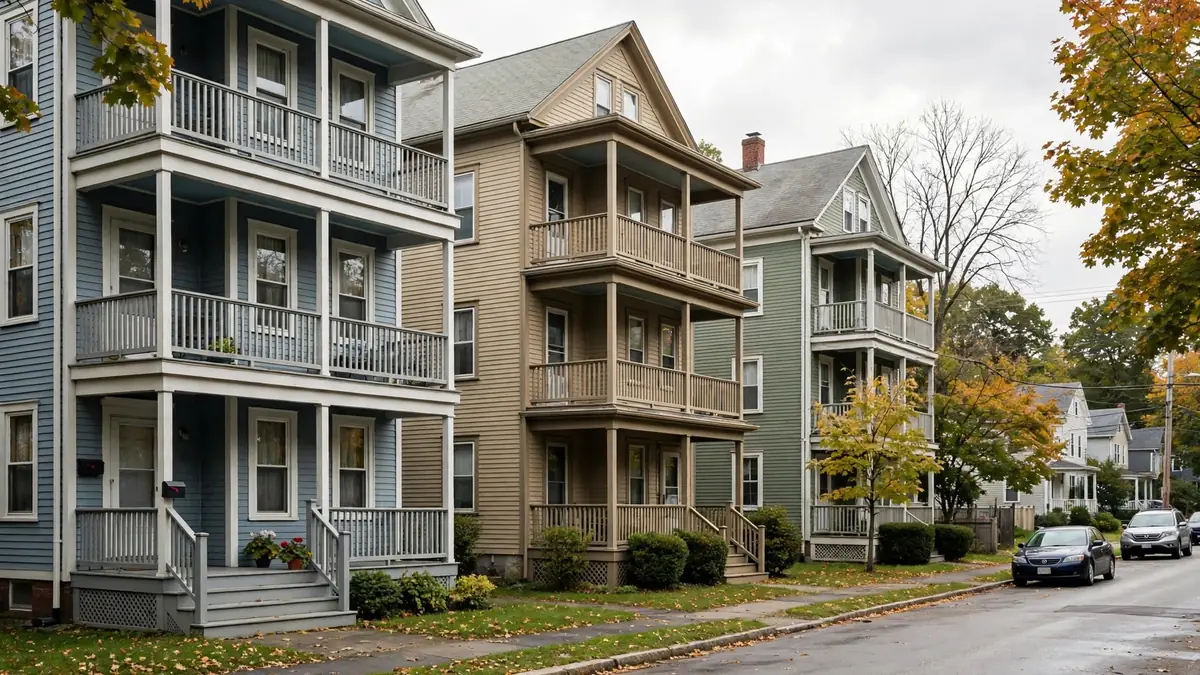
When water falls from a top-floor unit to the basement, each floor becomes its own drying chamber. A typical setup puts a dehumidifier and several air movers in each affected kitchen or bathroom, with plastic sheeting closing doorways so the dry air stays where it is needed.
That means coordinating with every household: when the technician can get in for readings, which outlets the equipment can use and how long it will run. Old wiring in some buildings can only carry so much load, so the contractor should spread equipment across circuits.
Basement
Bringing a damp Bridgeport basement under control
Stone and brick foundations in older Bridgeport houses rarely dry completely; they are porous and sit in damp soil. The goal is to dry the framing above, the stair stringers and anything stored, then hold humidity down. A dehumidifier draining to the floor drain or a pump is usually left running long after the restorer leaves.
Readings
What the daily readings tell a Bridgeport owner
Each day the technician reads the same marked spots in every unit and compares them with unaffected walls of the same material. Plaster, pine studs and oak floors each have their own normal reading. When a number stalls, equipment is moved or a wall cavity is opened.
For an owner juggling several tenants, the drying log is also proof that every unit was brought back to normal before repairs, which helps if a musty smell turns up later in one apartment.
Seasons
Shoreline humidity and winter heat
Summer air near the harbor is humid, so windows stay shut and dehumidifiers do the work. In winter, heated indoor air helps drying upstairs, but a cold basement or an unheated hallway slows it. Keep the boiler running at a normal setting while equipment is in place.
For tenants
What Bridgeport tenants can do during drying
- Leave the machines onUnplugging them overnight adds days.
- Keep doors as setPlastic sheeting and closed doors keep the chamber working.
- Report new stainsTell the owner and technician right away.
- Keep cords clearEspecially with children or pets in the apartment.
Balloon framing
Moisture moving through tall wall cavities
Many older wooden houses in the city were built with balloon framing, where wall studs run continuously from the sill to the roof. Without fire blocking at each floor, a cavity can carry moist air and even water from one level to the next. A restorer may check walls on floors above and below the obvious damage and open a small hole at the base of a cavity to let dry air in.
This is also why a smell can appear in a room that never looked wet: moisture travelled inside the wall.
Hallways
Common hallways and stairwells
Front and rear stairwells in multi-family houses are shared, often unheated and sometimes carpeted. Water that ran down the stairs soaks treads and stringers. Drying them may mean running equipment in a space everyone uses, so cords need to be kept out of the way and the area kept passable for tenants.
Materials
How Bridgeport building materials dry
Typical behavior in older multi-family houses.
| Material | Behavior | Usual handling |
|---|---|---|
| Plaster on lath | Slow to wet and slow to dry | Vent holes and longer drying |
| Plank subfloor | Gaps let water through to the floor below | Dry from above and below |
| Old strip hardwood | Cups readily | Drying mats and dehumidification |
| Stone or brick foundation | Never fully dry | Dry framing above; control humidity |
| Later drywall patches | Wicks quickly | Dry in place if firm; replace if sagging |
After drying
Repairs once the building reads dry
Plaster cracks and stains are patched only after readings confirm dryness; patching damp plaster leads to blistering paint. Owners often take the chance to replace a damaged plaster ceiling with drywall, which is fine as long as the framing behind it has dried. Keep the final readings for each apartment with your building records.
Access
Getting into every unit for daily readings
Drying only works if the technician can reach the equipment each day. In a building with three households, that means agreeing on times, leaving keys with the owner or arranging for someone to be home. A missed visit can leave a stalled area unnoticed for an extra day. A shared group text between the owner, tenants and contractor keeps everyone in step.
Tenants who work nights or travel should say so early so readings can be scheduled around them.
Noise and heat
Living with drying equipment in a small apartment
Bridgeport apartments are not large, and a dehumidifier plus several air movers in a kitchen make the whole unit warm and loud. Many tenants sleep with a door closed or stay with family for a few nights. The noise is temporary; switching equipment off to get some quiet makes the job last longer.
Finishing
Who handles repairs after drying
Once readings are normal, the owner arranges repairs: plaster or drywall patching, painting and any floor work. Some restorers do repairs; others hand off to a general contractor. Either way, keep the final readings, because a buyer or a future insurer may ask about past water damage in the building.
Nearby towns
Drying homes in Stratford, Fairfield and Trumbull
Covered towns around Bridgeport, including Stratford, Fairfield and Trumbull, have more single-family colonials, capes and ranches with finished basements. Drying there looks less like a multi-unit puzzle and more like a basement or kitchen job: drywall instead of plaster, carpet over concrete and fewer households to coordinate. The same rule applies everywhere, though: equipment stays until each material reads normal.
FAQ
Structural drying questions from Bridgeport
How long does drying take in a Bridgeport three-decker?
Often four to seven days, because plaster and old framing dry more slowly than modern drywall. Several units drying at once can stretch the schedule.
Will my plaster ceiling have to come down?
Not if it is still firmly attached. Sagging plaster that has separated from the lath is removed for safety.
Can drying equipment overload old wiring?
It can. A good contractor spreads the load across circuits and avoids chaining extension cords.
Why is the basement still damp after the job?
Old stone foundations stay damp by nature. A basement dehumidifier keeps humidity down over the long term.